
Ingredients
The termites
- 500 gwinged termites
- alates, freshly caught
- wings removed
- or dried termites, rehydrated
- see the notes on sourcing
For cooking
- no oil is usually needed
- the termites render their own fat
- or 1 tablespoon groundnut oil
- if the batch is lean
The seasoning
- salt, to taste
- 1hot chilli, finely chopped
- or a pinch of chilli powder
- 1 clovegarlic, crushed
- optional
- a squeeze of lime
To serve
- cassava chikwangue
- or boiled plantain
- or simply on their own
- as a snack with beer
Directions
- Cook insects thoroughly, as you would any food. Never eat wild-caught insects raw at all. Spread the catch on a tray and toss them gently. Pick out any twigs, soil or dead insects. Rinse the termites in a bowl of cold water.
- Lift them out rather than pouring the bowl away. Drain them well and pat them dry with cloth. Wet termites will steam rather than fry.
- Soak them in warm water for ten minutes. Drain them and pat them completely dry. Heat a dry heavy frying pan over medium heat. Add the termites in a single layer in the pan. Do not crowd them or they will steam instead.
- Cook in batches if you have a large quantity. Stir them constantly with a wooden spoon. They will release fat within a minute or two.
- Keep stirring so they colour evenly all over. They turn golden brown and then crisp. Add a spoonful of oil if the batch is lean. Dried termites always need a little added oil.
- Season them with salt while still in the pan. Add the chopped chilli in the last minute. Add the crushed garlic at the same time. Garlic burns quickly, so keep it to the end.
- Tip them out onto a plate lined with paper. Squeeze a little lime over them if you like. Serve them hot and crisp, straight away. The texture is crisp with a soft centre. Cook them the same day they are caught. Cooked termites keep two days in the fridge.
Technique
- The swarm is the whole point. Winged termites emerge in enormous numbers for a few days after the first heavy rains, at dusk, and they are caught in bulk with a lamp over a basin of water. That timing often coincided with the leanest weeks of the year, which is exactly what made them valuable.
- Never collect insects from ground that has been sprayed with insecticide, or from roadsides and areas treated for mosquitoes. Insects concentrate what is in their environment.
- Buy from an edible-insect food supplier, never from a pet shop. Pet-feed insects are not raised or handled to food-safety standards.
- Edible insects share tropomyosin with crustaceans and dust mites, and cross-reactivity is documented. Anyone with a shellfish allergy or a severe dust-mite allergy should ask a doctor before eating insects rather than experimenting.
- Cook them thoroughly and never eat wild-caught insects raw. They carry parasites and bacteria like any other wild-caught food.
- A fresh fatty batch needs no oil at all. The termites render enough of their own fat to fry themselves, which is the technique the dish is built on. Dried ones always need a little oil added.
- Insects are ordinary food across much of the world, eaten by choice as well as by necessity. The atlas records this dish the same way it records any other.
Substitutions
- Dried edible termites replace fresh; rehydrate briefly, dry thoroughly and add a little oil to the pan.
- Other edible winged insects are caught and cooked identically in the region, including flying ants at the same season.
- A spoonful of groundnut oil compensates for a lean batch that renders little fat of its own.
- Chilli powder replaces fresh chilli directly.
- The termites can be seasoned with salt alone, which is the plainest and probably most common way.
Variations
- Sun-dried termites are stored for months and pounded into a powder that thickens and enriches sauces, spreading the windfall across many meals.
- A version stirred into a groundnut sauce and served over cassava or rice turns the snack into a full dish.
- Some households boil the termites briefly before frying, which is said to clean them further.
- Closely related dishes are eaten across the Congo basin, in Uganda where they are called nsenene alongside grasshoppers, and across Central and Southern Africa.
- A version fried with onion and tomato into a thick relish is eaten with maize porridge in parts of the region.
- Smoked termites, dried over a low fire rather than in the sun, keep equally well and taste stronger.
History
Swarming termites are trapped by lamplight after the first rains, a Congo basin windfall eaten fried or dried and pounded into sauces.
Frequently asked questions
What is Termites grillés?
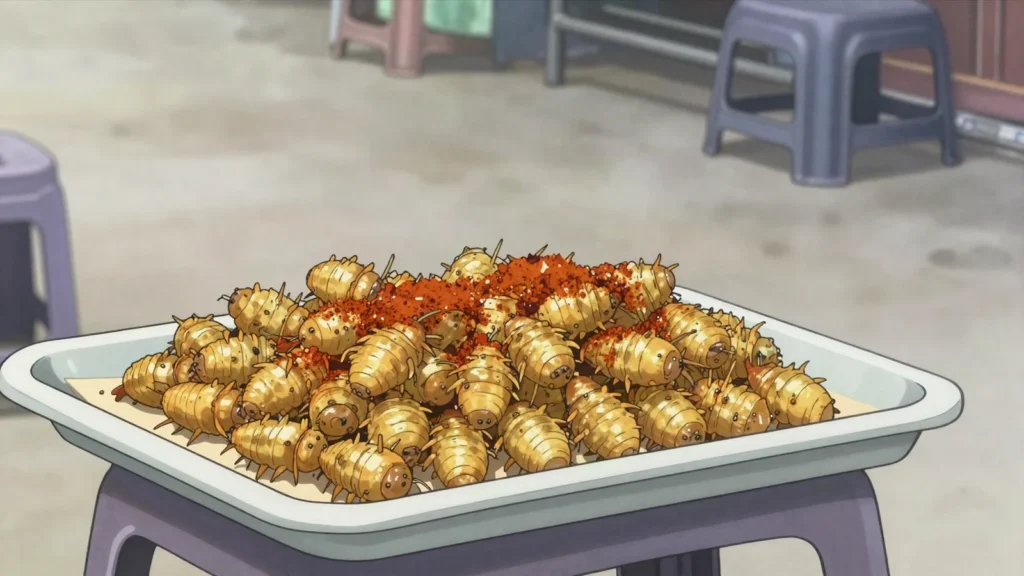
Termites grillés is a street food from Central African Republic: winged termites caught at dusk and fried crisp in their own fat. Swarming termites are trapped by lamplight after the first rains, a Congo basin windfall eaten fried or dried and pounded into sauces.
How long does Termites grillés take to make?
Termites grillés takes 20 minutes of preparation and 10 minutes of cooking. The recipe makes serves 4 as a snack. It is rated easy to make.
What can I substitute in Termites grillés?
Yes, within limits. Dried edible termites replace fresh; rehydrate briefly, dry thoroughly and add a little oil to the pan. Other edible winged insects are caught and cooked identically in the region, including flying ants at the same season. A spoonful of groundnut oil compensates for a lean batch that renders little fat of its own. Chilli powder replaces fresh chilli directly. The termites can be seasoned with salt alone, which is the plainest and probably most common way.
What is the most important thing to get right in Termites grillés?
Cook insects thoroughly, as you would any food. Never eat wild-caught insects raw at all. Spread the catch on a tray and toss them gently. Pick out any twigs, soil or dead insects. Rinse the termites in a bowl of cold water.