
Ingredients
Meat
- 1.5 kgmutton or lamb flaps
- cut into pieces
- boiling water, for the first blanch
Leaves
- about 40 taro leaves
- young and tender
- stems removed
- banana leaves or foil, to wrap
The filling
- 3onions, sliced
- 400 mlthick coconut cream
- 4garlic cloves, crushed
- salt and black pepper
- 2tomatoes, chopped, optional
To serve
- boiled cassava or taro
- kumala, sweet potato
- a sharp cabbage salad
Directions
- Taste a very small piece once cooked. There should be no itch or prickle at all. Cook it on until that disappears entirely. It causes itching that lasts for hours.
- Put on gloves before you start. Pick young tender taro leaves. Discard any that are yellowed or damaged. Cut out the thick central stem. The thick stem is fibrous and tough. Cut it out of every single leaf. Rinse the leaves in cold water.
- Shake them as dry as you possibly can. Cut the flaps into manageable pieces. Trim off any very thick fat edges. Rinse them thoroughly in cold water. Put the pieces in a large pot. Cover them well with cold water. Bring the pot up to a full boil. Let it boil for about twenty minutes. A thick layer of fat rises to the surface.
- Tip the pot out into the sink. Rinse the meat under hot water. Pat every single piece of it dry. Let it cool and put it in the bin. Season the pieces with salt and pepper. Rub the crushed garlic over them.
- Lay four or five taro leaves in a stack. Use more of them rather than fewer. Put meat in the centre of the stack. Add the sliced onion over the meat. Add chopped tomato if you are using it. Pour coconut cream over the whole thing. It becomes a thick sauce around the meat. Fold the leaves up over the filling. Fold them in from all of the sides.
- Wrap the whole bundle in banana leaf. Tie each parcel firmly with string. The leaves then dry out and burn. Tie it more firmly than feels necessary. Set the parcels in a deep baking dish. Add a little water to the dish.
- Cover the whole dish with foil. That keeps the parcels from drying out. Heat the oven to one hundred and sixty degrees. Bake them for about three hours. Check the water level partway through. Add more if the dish has gone dry. It also gives the leaves the time they need.
- Taste a very small piece of leaf. There should be no itch or prickle at all. Return it all to the oven if so. Take them out and let them rest. Give them about fifteen minutes. Set each parcel onto a warm plate. Serve boiled cassava or taro alongside. It keeps two days refrigerated. Lift off the set fat before reheating.
Technique
- Taro leaves contain needle-shaped calcium oxalate crystals that cause severe itching and burning, and only long thorough cooking breaks them down; two to three hours is the standard, and the test is to taste a very small piece — any itch or prickle at all means it needs longer. Wear gloves for the raw leaves and never rub your eyes.
- New Zealand and Australia export lamb and mutton and their domestic markets prefer lean cuts, so flaps sell for very little at home and are exported cheaply to Pacific markets. Pacific countries have among the world’s highest rates of obesity and diabetes and fatty imported meat has been blamed, with Fiji banning mutton flap imports in the year two thousand. Researchers have questioned the simple story, since imported rice, sugar and tinned foods, urbanisation and less physical work all contributed, and some argue the bans are paternalistic and remove cheap protein. What is not in dispute is that the cut is very high in fat and eating a lot of it regularly is not good; how much it explains is what is argued about. The atlas also carries lamb flaps from Papua New Guinea, the same cut and the same trade.
- Taro leaves collapse to almost nothing, so four or five go into each parcel, and they leak considerably on their own — wrap the bundle in banana leaf or foil and tie it firmly, since the parcel fills with liquid and a loose one lets it all out and the leaves then burn.
Substitutions
- Spinach is used in place of taro leaves outside the Pacific, though it is a different dish.
- Foil holds the liquid better than banana leaf, which gives a faint aroma instead.
Variations
- Lu pulu with corned beef and lu ika with fish use the same leaf parcel.
- It is traditionally cooked in the umu, the earth oven, which gives a faint smokiness.
- Blanching the flaps first removes a real amount of the fat.
History
Cheap mutton flaps exported from New Zealand became a Tongan staple from the 1970s and are widely blamed for the region’s obesity and diabetes rates.
Frequently asked questions
What is Lu Sipi?
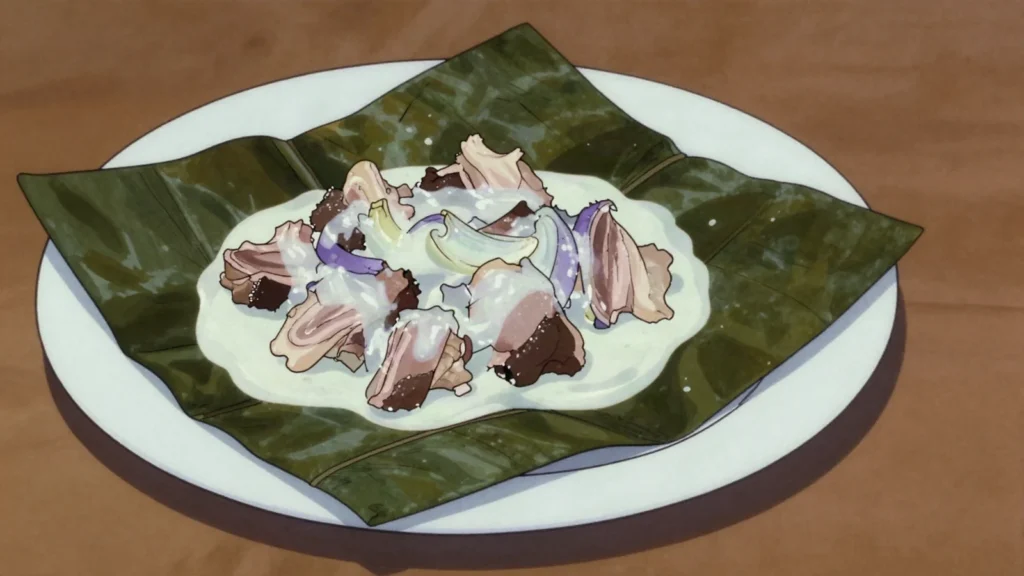
Lu Sipi is a main from Tonga: fatty mutton flap baked with onion and coconut cream inside taro leaves. Cheap mutton flaps exported from New Zealand became a Tongan staple from the 1970s and are widely blamed for the region’s obesity and diabetes rates.
How long does Lu Sipi take to make?
Lu Sipi takes 45 minutes of preparation and 3 hours of cooking. The recipe makes serves 8. It is rated medium to make.
What can I substitute in Lu Sipi?
Yes, within limits. Spinach is used in place of taro leaves outside the Pacific, though it is a different dish. Foil holds the liquid better than banana leaf, which gives a faint aroma instead.
What is the most important thing to get right in Lu Sipi?
Lay four or five taro leaves in a stack. Use more of them rather than fewer. Put meat in the centre of the stack. Add the sliced onion over the meat. Add chopped tomato if you are using it. Pour coconut cream over the whole thing. It becomes a thick sauce around the meat. Fold the leaves up over the filling. Fold them in from all of the sides.