
Ingredients
Parcels
- 40large taro leaves (lū), thick stems cut out
- 800 gtinned corned beef (pulu masima), broken up
- 2large onions, finely chopped
- 500 mlthick coconut cream
- 1 tspblack pepper
- 1tomato, chopped (optional)
- Banana leaves or foil, for wrapping
ʻUmu bed
- 6taro corms or 2 kg sweet potato, peeled
- 2ripe breadfruit or 4 green plantains (optional)
Directions
- Wash the taro leaves and cut out the thick central rib from each.
- Lay 5–6 leaves in a cross, overlapping, in the palm of your hand or in a small bowl to make a cup with no gaps.
- Spoon in a sixth of the corned beef and onion, add the tomato if using, grind over pepper, then pour in about 80 ml coconut cream – enough to soak the meat without overflowing.
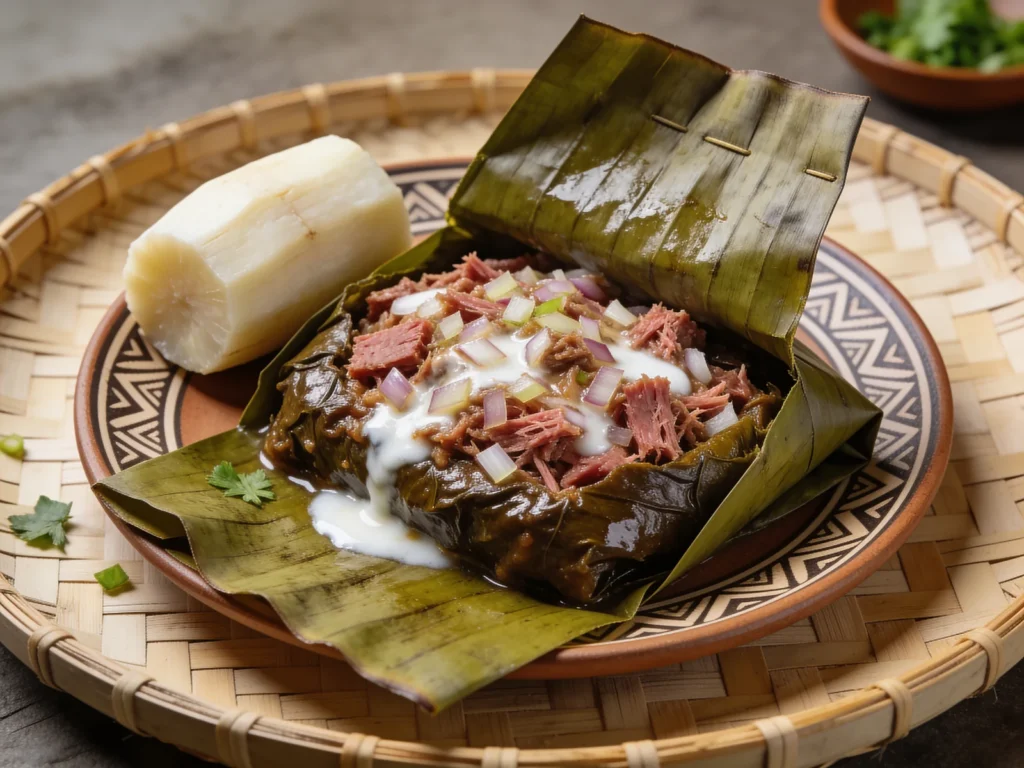
- Fold the leaves over the filling one at a time, tucking as you go, until you have a tight sealed parcel, then wrap it again in banana leaf or a double layer of foil and tie with a strip of leaf. For an ʻumu, heat volcanic stones in a pit fire for 2 hours, rake them level, lay taro and breadfruit on top, set the parcels above, cover with more leaves, sacks and earth and leave 2–3 hours.
Technique
- Raw taro leaves contain calcium oxalate crystals that irritate the mouth and throat. Only long, thorough cooking – well over an hour – breaks them down, so never shortcut the steaming time.
- Tinned corned beef is not a compromise here. Pulu masima has been part of Tongan cooking since the nineteenth century and is what the dish is named for.
- The parcel is a cooking vessel, not a garnish. It traps the coconut cream so the meat braises in it rather than boiling away.
Substitutions
- Frozen taro leaves from an African or Asian grocer work well; spinach or silverbeet can be used but gives a much milder, less silky result and needs only 45 minutes.
- Fresh diced beef or mutton, salted overnight, is used in place of the tin in some households.
Variations
- Lū sipi, made with mutton flaps instead of corned beef.
- Lū moa with chicken, and lū ika with fish, both cooked identically.
History
Corned beef, onion and coconut cream are wrapped in taro leaves and baked in the umu, the standard Sunday dish after church.
Frequently asked questions
What is Lū Pulu?
Lū Pulu is a main from Tonga: corned beef and coconut cream baked in taro-leaf parcels underground. Corned beef, onion and coconut cream are wrapped in taro leaves and baked in the umu, the standard Sunday dish after church.
How long does Lū Pulu take to make?
Lū Pulu takes 30 min of preparation and 3 hr of cooking. The recipe makes 6 servings. It is rated medium to make.
What can I substitute in Lū Pulu?
Yes, within limits. Frozen taro leaves from an African or Asian grocer work well; spinach or silverbeet can be used but gives a much milder, less silky result and needs only 45 minutes. Fresh diced beef or mutton, salted overnight, is used in place of the tin in some households.
What is the most important thing to get right in Lū Pulu?
Raw taro leaves contain calcium oxalate crystals that irritate the mouth and throat. Only long, thorough cooking – well over an hour – breaks them down, so never shortcut the steaming time.