
Ingredients
Cassava
- 1.5 kgcassava
- peeled and cut into chunks
- water, to cover
- salt
To serve with
- 400 mlthick coconut cream
- grated fresh coconut
- a little salt water
Alongside
- grilled or stewed meat
- fish
- lu, taro leaves in coconut
- as the starch of the meal
Directions
- Cut away the outer pink layer entirely. Never eat cassava raw or undercooked. Pull it out right after boiling. Cassava on its own is quite dry. Cut down through it with a knife. Take off the pink layer beneath as well.
- Cut it away generously rather than thinly. Cut the peeled cassava into thick chunks. Aim for about five centimetres.
- Put the cut pieces into cold water. That stops them all discolouring. Put the chunks in a large pot. Cover them well with cold water. Add plenty of salt to the water.
- Bring the pot up to a full boil. Cooking it takes about half an hour. Let it boil steadily throughout. Give it about thirty full minutes. Keep it at a proper rolling boil. Judging it takes a careful test.
- Take it off as soon as it is tender. Drain all the cassava thoroughly. Discard all of the cooking water. Never use it for anything else. Return the drained chunks to the hot pot.
- Let them steam dry for a minute. Pull out the fibrous central cord. Discard all of that cord entirely. The cord comes out most easily while hot.
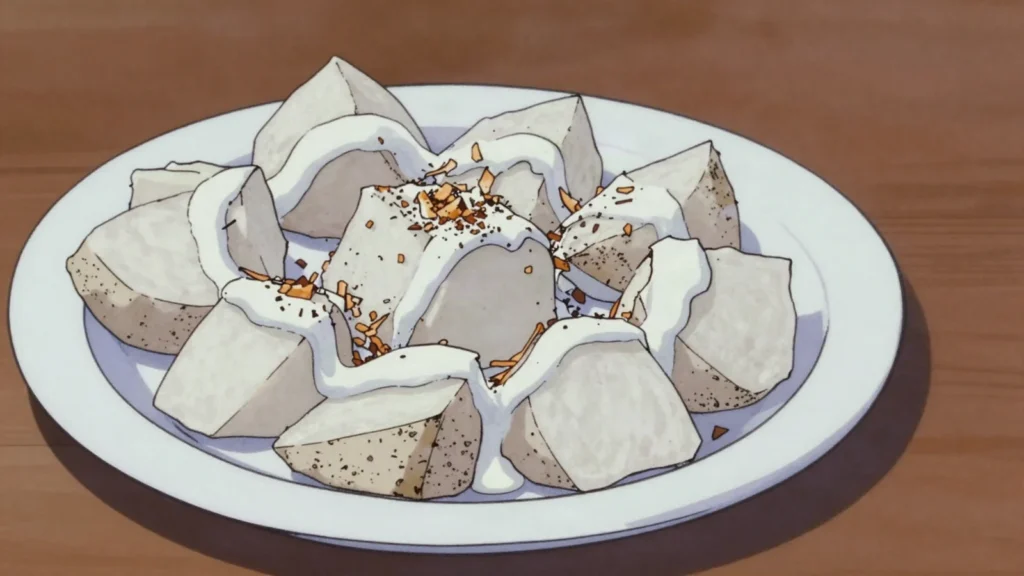
- Set the chunks out on a platter. Serve fish or meat alongside them. Pour thick coconut cream over the chunks. Both of them are done in Tonga. Scatter grated fresh coconut over them. Sprinkle a little salt water over it. It needs salt to taste of anything.
Technique
- Cassava spread through the Pacific because it tolerates poor soil and drought and, crucially, survives cyclones: breadfruit and banana are destroyed and low-lying taro can be flooded out, but cassava roots stay undamaged underground and can be dug up afterwards. It is a practical rather than a culinary choice, being lower in protein than taro and carrying less ceremonial weight.
- Cassava contains cyanogenic compounds and is genuinely dangerous raw: peel it thickly with a knife including the pink layer beneath the skin, where they concentrate, boil it hard rather than simmering, and discard that water entirely, since the compounds dissolve into it.
- A fibrous cord runs through the centre that stays tough however long it cooks; it lifts out most easily while the cassava is still hot, so pull it out as soon as you can handle the chunks.
Substitutions
- Coconut cream is poured over or served alongside to dip into, and both are done.
- Ordinary salted water does the job of the sea water sprinkled over it in some places.
Variations
- Grated fresh coconut scattered over gives texture as well as richness.
- Lu, taro leaves cooked in coconut cream, goes alongside it very well.
- It is the starch of the plate rather than a side dish.
History
Cassava spread through Tonga in the colonial period because it tolerates poor soil and cyclones far better than yam or taro.
Frequently asked questions
What is Manioke?
Manioke is a salad & side from Tonga: boiled cassava served in thick chunks alongside meat and coconut cream. Cassava spread through Tonga in the colonial period because it tolerates poor soil and cyclones far better than yam or taro.
How long does Manioke take to make?
Manioke takes 20 minutes of preparation and 40 minutes of cooking. The recipe makes serves 6. It is rated easy to make.
What can I substitute in Manioke?
Yes, within limits. Coconut cream is poured over or served alongside to dip into, and both are done. Ordinary salted water does the job of the sea water sprinkled over it in some places.
What is the most important thing to get right in Manioke?
Cut away the outer pink layer entirely. Never eat cassava raw or undercooked. Pull it out right after boiling. Cassava on its own is quite dry. Cut down through it with a knife. Take off the pink layer beneath as well.