
Ingredients
Meat
- 1.5 kglamb or mutton on the bone, in large pieces
- 2onions
- 6 clovesgarlic
- 3cm ginger
Spices
- 2cinnamon sticks
- 6cardamom pods
- 6cloves
- 1 tspblack peppercorns
- 2dried limes, loomi, pierced
- 1 tspturmeric
- salt
Rice
- 600 gshort or medium grain rice, rinsed
To finish
- 150 gghee or clarified butter
- a little ground cardamom
To serve
- hot, from a communal platter, at Eid
Equipment
- a heavy wooden pestle, or a sturdy potato masher
Directions
- Use lamb or mutton with bones, since the collagen and marrow are what give the finished dish its body and gloss. Cut it into large pieces, since it will be pulled apart later anyway.
- Put the meat in a large pot with the onions, garlic, ginger and whole spices and cover with water. Bring it to a boil and skim the surface thoroughly. Simmer it gently for two hours, or until the meat is falling off the bone with no resistance. Do not rush this, since meat that is not completely tender will never pound smooth.
- Pierce them before adding them, since an unpierced lime floats and gives almost nothing. Remove them before pounding, since the bitter pulp would spoil the finished dish. Take the meat out, strip it from the bones and shred it, discarding any gristle.
- Strain the cooking broth and skim off some of the fat. Keep all the broth, since it is the cooking liquid for the rice. Return the shredded meat and the broth to the pot and add the rinsed rice.
- Use plenty of liquid, considerably more than for a pilaf. The rice is meant to overcook and disintegrate, so it needs a generous amount of broth. Simmer it gently, stirring often, for thirty to forty minutes. Cook the rice well past the point of being done, until the grains have burst and collapsed. If it looks like an overcooked mess, it is going in the right direction.
- Add more hot broth or water whenever it starts to look dry. Take the pot off the heat and begin beating it with a heavy wooden pestle. Pound and press against the sides and base, folding the mass over on itself as you go.
- Keep going for fifteen to twenty minutes, longer than seems reasonable. It is genuinely hard work, which is why it is done by several people taking turns. Add hot broth as you pound if it becomes too stiff to work. It should be thick enough to hold a shape on a spoon but soft enough to spread on a plate.
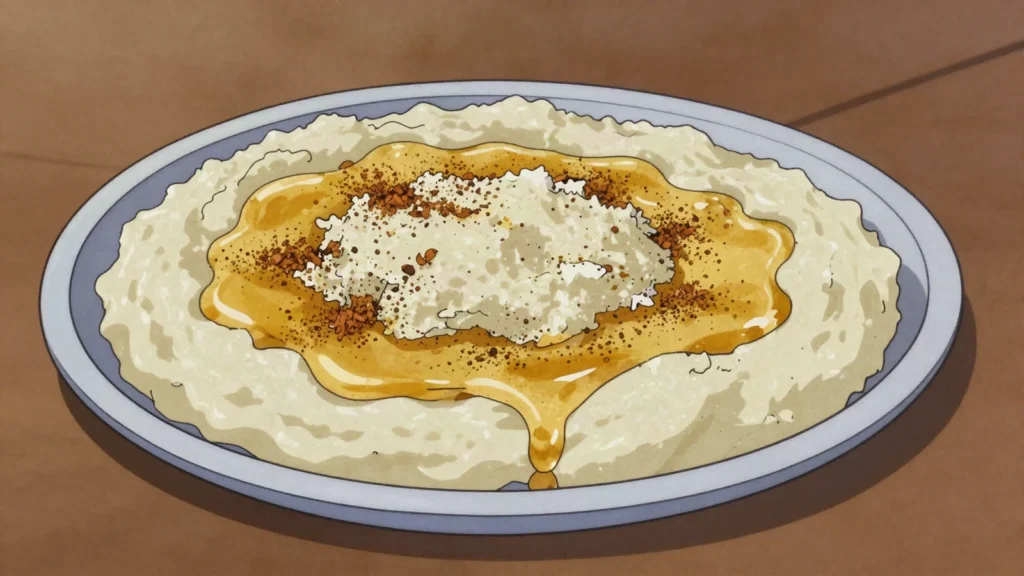
- Melt a generous quantity of ghee and pour it over the surface just before serving. Season with salt and a little ground cardamom. Spread it on a large communal platter, make a well in the centre and fill it with more melted ghee.
Technique
- The rice is deliberately overcooked until it collapses, unlike a pilaf.
- The pounding takes fifteen to twenty minutes and is genuinely hard work.
- The ghee poured over at the end is a defining element.
Substitutions
- Beef or chicken in place of lamb.
- A sturdy potato masher in place of a wooden pestle.
Variations
- Made with chicken, which is lighter.
- Harees, the closely related pounded wheat and meat dish.
- With more dried lime, for a sourer version.
History
Speciality of Nizwa and the interior, beaten with a wooden pestle until silky and served at Eid.
Frequently asked questions
What is Arsia?
Arsia is a main from Oman: rice pounded with lamb into a smooth mash and finished with ghee. Speciality of Nizwa and the interior, beaten with a wooden pestle until silky and served at Eid.
How long does Arsia take to make?
Arsia takes 20 min of preparation and 3 hr of cooking. The recipe makes 8 servings. It is rated hard to make.
What can I substitute in Arsia?
Yes, within limits. Beef or chicken in place of lamb. A sturdy potato masher in place of a wooden pestle.
What is the most important thing to get right in Arsia?
Put the meat in a large pot with the onions, garlic, ginger and whole spices and cover with water. Bring it to a boil and skim the surface thoroughly. Simmer it gently for two hours, or until the meat is falling off the bone with no resistance. Do not rush this, since meat that is not completely tender will never pound smooth.