
Ingredients
Fish
- 600 gvery fresh tuna, mahi-mahi or snapper, skinned and cut in 1.5 cm dice
- 180 mllemon or lime juice (about 6 limes)
- 1 tspsea salt
Coconut cream
- 1mature coconut, grated, or 400 ml thick coconut cream
- 120 mlwarm water (if squeezing fresh coconut)
Vegetables
- 1cucumber, deseeded and diced
- 2firm tomatoes, deseeded and diced
- 1small onion, finely diced
- 3spring onions, sliced
- 1red chilli, finely chopped (optional)
- 1green capsicum, diced (optional)
- Sea salt and black pepper
Directions
- Choose fish you would eat raw – firm, glossy, smelling of the sea and nothing else. Trim away any bloodline, then cut into even 1.5 cm cubes so they cure at the same rate.
- Toss the fish with the salt and citrus juice in a glass or ceramic bowl, cover and refrigerate 20–30 minutes, stirring once.
- Watch it closely: the cubes should turn opaque white on the outside but stay slightly translucent and glassy at the centre. Over-curing makes the flesh chalky and dry.
- If using fresh coconut, squeeze the grated flesh in a cloth to extract the first thick cream, then add the warm water, squeeze again and combine.
- Drain the fish in a sieve, pressing gently, and discard most of the citrus juice – keeping it all makes the finished dish sharp and thin.
- Return the fish to the bowl and fold through the cucumber, tomato, onion, spring onion, chilli and capsicum.
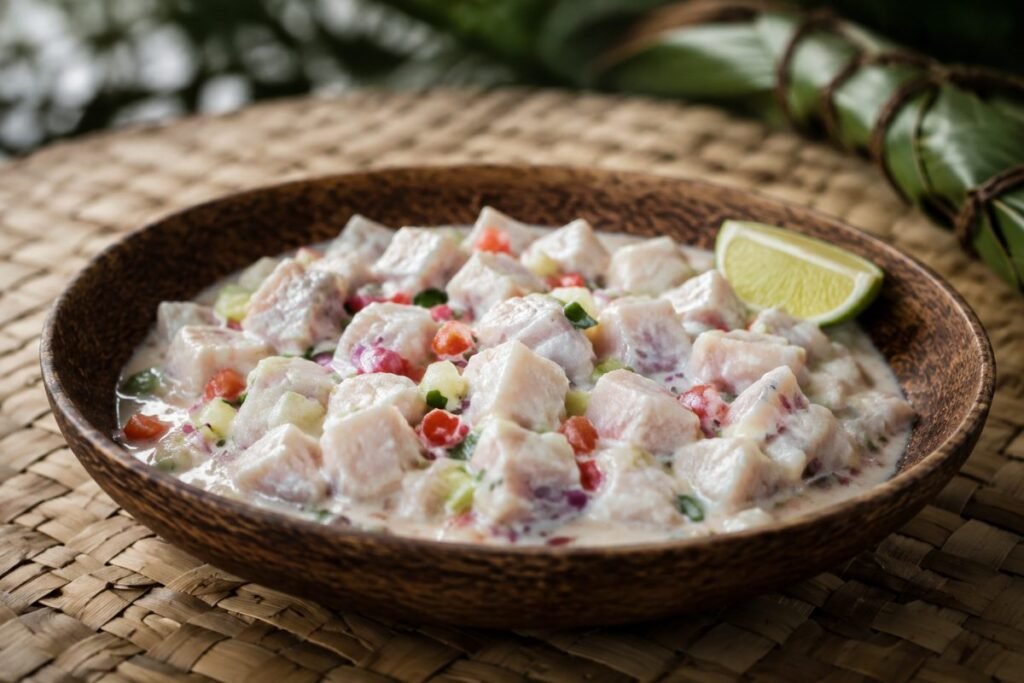
- Pour over the coconut cream, season with salt and pepper and turn everything gently with a spoon until the cream coats every piece and turns faintly pink from the fish juices.
- Chill 15 minutes and serve cold in the coconut shell halves or a bowl, as part of a Sunday meal or a feast table.
Technique
- The acid denatures the surface proteins – it firms the fish but does not kill parasites the way heat does. Buy sashimi-grade fish, or freeze it at -20°C (-4°F) for 48 hours first.
- Drain before adding the coconut cream. This is the step home cooks skip, and it is the difference between a rich Tongan ʻota and a watery ceviche.
- Fresh-squeezed coconut cream is markedly sweeter and less waxy than tinned. If using tinned, buy one with no emulsifiers and stir it smooth.
Substitutions
- Any firm white fish works – snapper, kingfish or trevally. Avoid oily mackerel, which turns muddy against coconut.
- Lemon juice is used as often as lime in Tonga; a mix of the two is common.
Variations
- A simpler island version with only onion, coconut cream and salt.
- Samoan oka i’a and Fijian kokoda are the same idea with local seasonings.
History
Raw fish, marinated in citrus juice and combined with coconut cream, onion and tomato, closely related to other Pacific Islander raw fish preparations including Fijian kokoda and Samoan oka, reflecting a shared regional Polynesian culinary tradition of marinating fresh reef fish in citrus rather than cooking it with heat. Coconut cream’s role in giving ʻota ʻika a rounder, creamier flavour compared to Latin American ceviche traditions reflects the coconut’s central importance across Pacific Islander cooking more broadly, found in a wide range of both savory and sweet Tongan and wider Polynesian dishes. ʻOta ʻika remains a popular Tongan dish, particularly associated with gatherings and celebrations, valued for showcasing very fresh, high-quality local fish.
Frequently asked questions
What is ʻOta ʻIka?
ʻOta ʻIka is a main from Tonga: raw fish in citrus and coconut cream with cucumber and tomato. Raw fish, marinated in citrus juice and combined with coconut cream, onion and tomato, closely related to other Pacific Islander raw fish preparations including Fijian kokoda and Samoan oka, reflecting a shared regional Polynesian culinary tradition of marinating fresh reef fish in citrus rather than cooking it with heat. Coconut cream’s role in giving ʻota ʻika a rounder, creamier flavour compared to Latin American ceviche traditions reflects the coconut’s central importance across Pacific Islander cooking more broadly, found in a wide range of both savory and sweet Tongan and wider Polynesian dishes. ʻOta ʻika remains a popular Tongan dish, particularly associated with gatherings and celebrations, valued for showcasing very fresh, high-quality local fish.
How long does ʻOta ʻIka take to make?
ʻOta ʻIka takes 25 min of preparation and 30 min of cooking. The recipe makes 4 servings. It is rated easy to make.
What can I substitute in ʻOta ʻIka?
Yes, within limits. Any firm white fish works – snapper, kingfish or trevally. Avoid oily mackerel, which turns muddy against coconut. Lemon juice is used as often as lime in Tonga; a mix of the two is common.
What is the most important thing to get right in ʻOta ʻIka?
Drain before adding the coconut cream. This is the step home cooks skip, and it is the difference between a rich Tongan ʻota and a watery ceviche.