
Ingredients
Meat
- 1.5 kglamb on the bone
- shoulder or leg, in large pieces
- 2 teaspoonssalt
- black pepper
The pot
- 1.5 litreswhole milk
- or milk and a little water
- 1 kgpotatoes
- peeled and quartered
- 2onions, halved
- 1whole head of garlic
- 3bay leaves
- a few sprigs of rosemary
- or thyme
- 3 tablespoonsoil or lard
Sometimes added
- 2carrots, in pieces
- a piece of dried smoked meat
- a little kajmak, at the end
To serve
- bread
- raw onion
- pickled vegetables
- red wine
Directions
- Cut the lamb into large pieces. Leave the bones in throughout. Season it with salt and black pepper. Let it sit for twenty minutes. Pat it dry before you brown it. Heat the oil in a large heavy pot. Add the lamb pieces in batches. Brown them well on all of their sides. Do not crowd the pot at any point.
- Set each batch aside as it browns. Return the browned lamb to the pot. Add the halved onions in with it. Add the whole head of garlic to it. Add the bay leaves and rosemary.
- Pour the milk over all the lamb. It should just cover the meat. Warm it slowly over a low heat. Never bring it to a rolling boil. Warm it gently and watch it closely. Bring it to the barest simmer. Cover the pot and lower the heat right down. Give it about ninety full minutes.
- Stir it gently now and then as it goes. A gentle stir prevents that happening. Add the quartered potatoes to the pot. Add a little more milk if needed. Cover the pot and cook it on again. Cooking them takes about an hour.
- Cook it until tender rather than by the clock. The liquid should have reduced considerably. Take the lid off for the last half hour. Taste it and adjust the salt as needed.
- Add plenty of black pepper as well. Milk dishes need generous salt. Taste it properly before serving. Stir a spoonful of kajmak in at the end. Do not let it boil afterwards. Take the pot right off the heat.
- Let it stand for fifteen minutes. Serving it is always done piping hot. Ladle it out into deep warm bowls. Serve fresh bread alongside it. It keeps three days refrigerated.
Technique
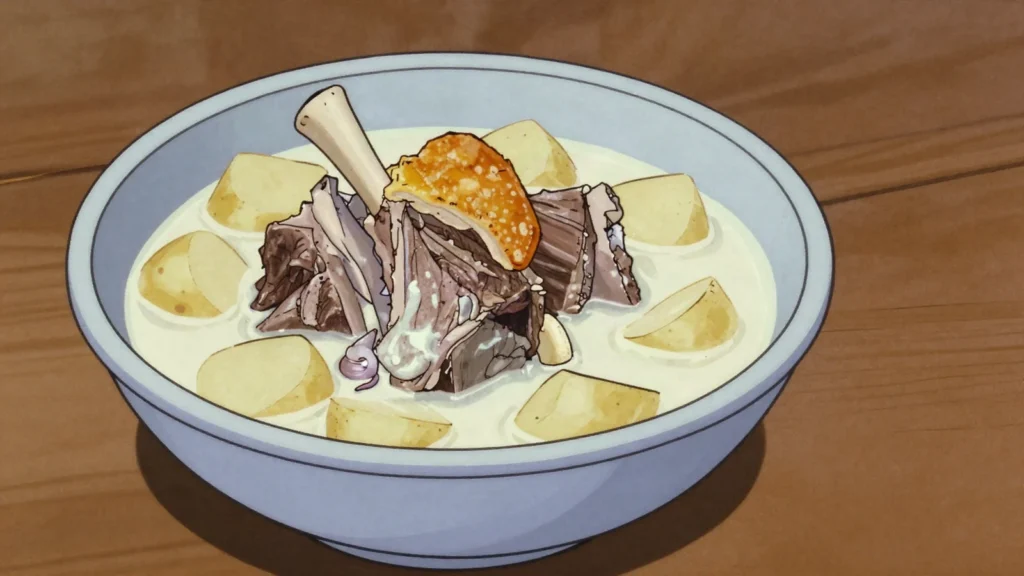
- Milk curdles when cooked with meat and the pot looks split and grainy with soft pale curds through it; that is exactly how the dish looks and is not a fault to be corrected. Italian maiale al latte works the same way.
- There is no stock or water in the pot at all: the milk both cooks and sauces the lamb, and its enzymes and acids tenderise the meat while giving a mild sweetness quite different from a stock braise.
- Milk boils over almost instantly and scorches the moment it catches, so warm it slowly, keep it at the barest simmer, use a heavy based pot and scrape the base with a wooden spoon every twenty minutes.
Substitutions
- Lamb shoulder is the best cut, since leg is leaner and drier.
- A spoonful of kajmak stirred in at the end enriches it considerably.
Variations
- Some cooks brown the lamb first and others simply put everything into the milk.
- Carrots or a piece of dried smoked meat are added in some households.
- The lid comes off for the last half hour to reduce the liquid.
History
Jagnjetina u mlijeku, lamb simmered in milk with potatoes, a dish of the karst villages of the coastal hinterland.
Frequently asked questions
What is Lamb in milk?
Lamb in milk is a main from Montenegro: lamb slow-simmered in milk with potatoes, highland dish. Jagnjetina u mlijeku, lamb simmered in milk with potatoes, a dish of the karst villages of the coastal hinterland.
How long does Lamb in milk take to make?
Lamb in milk takes 25 minutes of preparation and 2 hours 30 minutes of cooking. The recipe makes serves 6. It is rated medium to make.
What can I substitute in Lamb in milk?
Yes, within limits. Lamb shoulder is the best cut, since leg is leaner and drier. A spoonful of kajmak stirred in at the end enriches it considerably.
What is the most important thing to get right in Lamb in milk?
Cut the lamb into large pieces. Leave the bones in throughout. Season it with salt and black pepper. Let it sit for twenty minutes. Pat it dry before you brown it. Heat the oil in a large heavy pot. Add the lamb pieces in batches. Brown them well on all of their sides. Do not crowd the pot at any point.