Ingredients
Pork
- 700 gpork belly, skin on, cut by hand into 1 cm dice
- 1 tbsplard or vegetable oil
Aromatics and braise
- 80 gdried red shallots, thinly sliced, or 6 fresh Asian shallots
- 150 mlvegetable oil, for frying the shallots
- 4garlic cloves, minced
- 40 grock sugar
- 120 mllight soy sauce
- 1 tbspdark soy sauce
- 80 mlTaiwanese rice wine (mijiu)
- 1 tspfive-spice powder
- 1 tspground white pepper
- 2star anise
- 1cinnamon stick
- 600 mlwater
- 1 tbspfried shallot oil, reserved from the shallots
To serve
- 400 gshort-grain rice, steamed
- 4eggs, soft-boiled 7 min then braised in the sauce
- 150 gpickled daikon or suan cai, chopped
- 2 headsbaby bok choy, blanched
Directions
- Chop the pork belly by hand into small even dice, keeping skin and fat on every piece. Taiwanese cooks insist on hand-chopping rather than mincing; the texture of distinct fat and lean is the dish.
- Fry the sliced shallots in the 150 ml oil over medium-low heat for 8 to 10 minutes, stirring, until evenly golden. Pull them out the moment they turn the colour of straw, since they darken off the heat and burnt shallots make the whole pot bitter. Reserve the shallots and 1 tbsp of their oil.
- Render the pork in a heavy pot with the lard over medium heat for 10 minutes, stirring, until the fat runs and the edges brown. Pour off all but 2 tbsp of the rendered fat.
- Add the garlic and the rock sugar and stir until the sugar melts and turns amber, about 2 minutes, coating the meat.
- Deglaze with the rice wine, then add both soy sauces, five-spice, white pepper, star anise and cinnamon and cook 1 minute so the soy loses its raw edge.
- Pour in the water, add the fried shallots and bring to a simmer.
- Cook uncovered at the barest simmer for 75 to 90 minutes, stirring every 20 minutes, until the fat has gone translucent and jelly-soft, the sauce is glossy and dark and it coats the back of a spoon.
- Add the peeled soft-boiled eggs for the last 25 minutes so they take colour without overcooking.
- Taste and adjust: it should be savoury and lightly sweet with a clear hit of white pepper, and salty enough to season plain rice on its own.
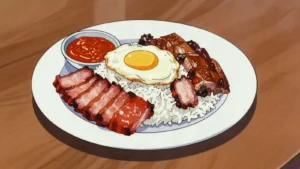
- Ladle a generous spoonful over a bowl of hot steamed rice, add half a braised egg, some pickled daikon and blanched greens, and drizzle a little of the reserved shallot oil over the top.
Technique
- Fried red shallots are the soul of the dish. They are sold ready-fried in Taiwanese shops and every night-market kitchen keeps a tub, along with the perfumed oil they leave behind.
- The naming is genuinely regional: in Taipei lu rou fan means the minced or finely diced version, while in Tainan and the south lu rou fan means chunks of braised belly and the minced one is called rou zao fan.
- Do not skim all the fat. This is a fatty dish by design, and a lean version tastes thin and salty rather than rich.
Substitutions
- No dried red shallots: use fresh Asian shallots sliced paper-thin, or 4 tbsp shop-bought crisp fried shallots stirred in at the end.
- No mijiu: Shaoxing wine works, though it is darker and slightly sweeter than the Taiwanese original.
- A pressure cooker does it in 35 minutes, but reduce the sauce uncovered afterwards or it stays watery.
Variations
- Rou zao fan, the southern name for the finely minced version.
- Lu rou fan with a spoonful of braised bamboo shoot, common in Chiayi.
- Ke zai mi gao, the same braise served over glutinous rice cake in Taipei.
History
Braised minced pork over rice, the pork cooked slowly in a sauce of soy sauce, rice wine, sugar and five-spice until deeply tender, considered one of Taiwan’s most iconic comfort foods, with roots tracing to Fujianese immigrant cooking brought across the Taiwan Strait by settlers from mainland China’s Fujian province. Its long, slow braise, allowing the pork fat and skin to render into the sauce and coat each grain of rice, reflects a broader Chinese culinary tradition of transforming inexpensive cuts of pork into a rich, satisfying dish through patient cooking rather than costly ingredients. Lu rou fan remains a staple of Taiwanese night markets and home kitchens alike, widely considered one of the clearest expressions of everyday Taiwanese comfort food.
Frequently asked questions
What is Lu Rou Fan?
Lu Rou Fan is a main from Taiwan: minced pork belly braised in soy and shallots, ladled over steamed rice. Braised minced pork over rice, the pork cooked slowly in a sauce of soy sauce, rice wine, sugar and five-spice until deeply tender, considered one of Taiwan’s most iconic comfort foods, with roots tracing to Fujianese immigrant cooking brought across the Taiwan Strait by settlers from mainland China’s Fujian province. Its long, slow braise, allowing the pork fat and skin to render into the sauce and coat each grain of rice, reflects a broader Chinese culinary tradition of transforming inexpensive cuts of pork into a rich, satisfying dish through patient cooking rather than costly ingredients. Lu rou fan remains a staple of Taiwanese night markets and home kitchens alike, widely considered one of the clearest expressions of everyday Taiwanese comfort food.
How long does Lu Rou Fan take to make?
Lu Rou Fan takes 25 min of preparation and 1 hr 30 min of cooking. The recipe makes 4 servings. It is rated easy to make.
What can I substitute in Lu Rou Fan?
Yes, within limits. No dried red shallots: use fresh Asian shallots sliced paper-thin, or 4 tbsp shop-bought crisp fried shallots stirred in at the end. No mijiu: Shaoxing wine works, though it is darker and slightly sweeter than the Taiwanese original. A pressure cooker does it in 35 minutes, but reduce the sauce uncovered afterwards or it stays watery.
What is the most important thing to get right in Lu Rou Fan?
Chop the pork belly by hand into small even dice, keeping skin and fat on every piece. Taiwanese cooks insist on hand-chopping rather than mincing; the texture of distinct fat and lean is the dish.