
Ingredients
Kimchi
- 500 gwell-fermented sour napa kimchi
- 150 mlkimchi brine from the jar
Pork
- 300 gpork belly, sliced thin
- 1 tbspgochugaru, Korean chilli flakes
- 1 tbspgochujang
- 1 tspsugar
Base
- 1 tbspsesame oil
- 1onion, sliced
- 5garlic cloves, crushed
- 700 mlwater, or anchovy stock
- 1 tbspsoy sauce
- 1 tspdoenjang, if wanted
To finish
- 300 gmedium-firm tofu, in thick slabs
- 3spring onions, cut in lengths
- 1green chilli, sliced
To serve
- steamed short-grain rice
- other banchan side dishes
Directions
- Keep the brine from the jar, since it carries much of the sourness. Squeeze the kimchi lightly and chop it into pieces about four centimetres long. Do not rinse it, since you would be washing away the whole point.
- Slice it thinly across into strips about five millimetres thick. Heat the sesame oil in a heavy pot over a medium heat. Add the pork and stir-fry it for five minutes until it renders and colours. Let the fat come out, since it will carry the chilli.
- Add the sliced onion and the garlic. Cook them for three minutes until the onion softens. Add the chopped kimchi to the pot. Stir-fry it with the pork for a full five minutes. Add the gochugaru, gochujang and sugar.
- Stir them through and let them fry for one minute. The chilli needs oil and heat to release its colour. Pour in the water or anchovy stock and the reserved kimchi brine. Add the soy sauce and the doenjang if you are using it. Bring it to the boil, then lower it to a steady simmer.
- Simmer it uncovered for twenty minutes. The kimchi should become tender and lose its raw crunch. Taste it and adjust the soy sauce and sugar. It should be sour first, then savoury, then hot.
- Cut the tofu into thick slabs about two centimetres wide. Lay them gently on top of the stew rather than stirring them in. Simmer for another five minutes so they heat through. Now finishing it, which takes a moment. Scatter the spring onion and green chilli over the top. Simmer it for one more minute.
- Turn off the heat and bring the pot straight to the table. Now serving, which is done from the shared pot. Serve it still bubbling, with a bowl of rice for each person.
Technique
- The kimchi must be properly sour; young kimchi gives a flat, thin stew.
- Fry the kimchi with the pork before adding liquid, which is what deepens the flavour.
- Lay the tofu on top rather than stirring it in, or it breaks up.
Substitutions
- Tinned tuna in place of pork, which is a common home version.
- Anchovy stock or plain water, both of which are used.
Variations
- Chamchi kimchi jjigae, made with tinned tuna.
- With spam, which is genuinely popular.
- Vegetarian, with mushrooms and vegan kimchi.
History
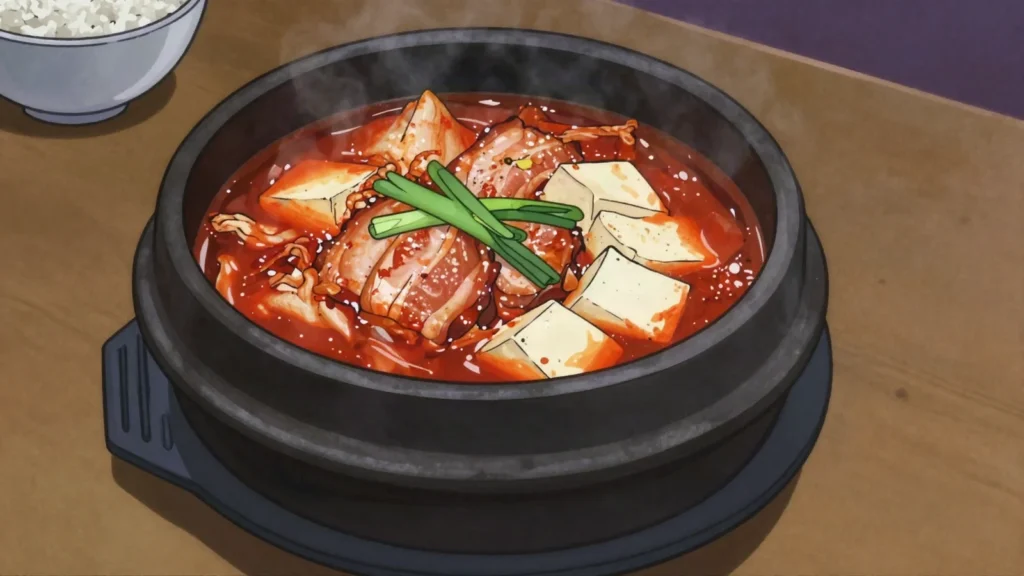
A stew made from fermented kimchi, cooked with pork or tuna, tofu and spring onion in a spicy, sour broth, documented across South Korea as one of the country’s most essential everyday comfort dishes, reflecting kimchi’s foundational role across virtually all of Korean cuisine as both a standalone side dish and a cooking ingredient in its own right. Its use of well-fermented, notably sour kimchi, generally considered superior to fresher kimchi for this particular dish, reflects Korean culinary wisdom about how fermentation changes and deepens over time, with more fully fermented kimchi providing the pronounced tanginess considered essential to a properly made kimchi jjigae. Kimchi jjigae remains one of the most commonly eaten everyday dishes across South Korean households.
Frequently asked questions
What is Kimchi Jjigae?
Kimchi Jjigae is a soup & stew from South Korea: bubbling stew of aged kimchi, pork and tofu. A stew made from fermented kimchi, cooked with pork or tuna, tofu and spring onion in a spicy, sour broth, documented across South Korea as one of the country’s most essential everyday comfort dishes, reflecting kimchi’s foundational role across virtually all of Korean cuisine as both a standalone side dish and a cooking ingredient in its own right. Its use of well-fermented, notably sour kimchi, generally considered superior to fresher kimchi for this particular dish, reflects Korean culinary wisdom about how fermentation changes and deepens over time, with more fully fermented kimchi providing the pronounced tanginess considered essential to a properly made kimchi jjigae. Kimchi jjigae remains one of the most commonly eaten everyday dishes across South Korean households.
How long does Kimchi Jjigae take to make?
Kimchi Jjigae takes 15 min of preparation and 40 min of cooking. The recipe makes 4 servings. It is rated easy to make.
What can I substitute in Kimchi Jjigae?
Yes, within limits. Tinned tuna in place of pork, which is a common home version. Anchovy stock or plain water, both of which are used.
What is the most important thing to get right in Kimchi Jjigae?
Keep the brine from the jar, since it carries much of the sourness. Squeeze the kimchi lightly and chop it into pieces about four centimetres long. Do not rinse it, since you would be washing away the whole point.