
Ingredients
Broth
- 1 kgwhole catfish, cleaned (or 800 g catfish fillet plus the head and bones)
- 3 litreswater
- 6lemongrass stalks, bruised and knotted, 3 for the poach and 3 for the pot
- 1 tspturmeric
- 2 tspsalt
Aromatic paste
- 3onions, roughly chopped
- 8garlic cloves
- 40 gfresh ginger, peeled
- 1 tspturmeric
- 1 tspchilli powder
- 120 mlpeanut oil
To build and thicken
- 3 tbspngapi (fermented fish paste), or 3 tbsp fish sauce
- 3 tbspfish sauce
- 300 gbanana stem core, sliced into thin half moons and held in acidulated water (or 300 g tender young banana blossom)
- 80 gtoasted rice, ground to a coarse powder
- 60 gchickpea (gram) flour, dry-toasted until sandy and fragrant
- 1 tbsppaprika
Noodles and toppings
- 600 gthin round rice vermicelli (mont di), cooked and rinsed
- 6eggs, boiled 9 minutes, peeled and halved
- 6baya kyaw (split-pea fritters) or 2 handfuls crisp fried split peas
- 1large bunch coriander, chopped
- 4spring onions, sliced
- 1 tbspchilli flakes fried in oil
- 3limes, in wedges
- Fried garlic and its oil, to drizzle
Directions
- Poach the catfish in the water with 3 lemongrass stalks, the turmeric and the salt over medium heat for 15–20 minutes, until the flesh flakes off the bone. Lift the fish out and keep every drop of the liquid; that stock is the base of the whole soup.
- Flake the fish carefully, discarding skin and every bone you find, and strain the stock through a fine sieve back into a clean pot.
- Blitz the onions, garlic and ginger to a paste and fry it in the peanut oil in a wide pan over medium heat for 15–20 minutes, stirring often, until it darkens to a deep russet and the oil separates and pools at the edges. This long fry is what gives mohinga its depth; underdone paste tastes raw and thin.
- Stir in the turmeric and chilli powder, fry 1 minute, then add the flaked fish and cook 5 minutes, breaking it down into the paste until it is almost a floss.
- Scrape the whole lot into the stock, add the remaining 3 lemongrass stalks, the ngapi and the fish sauce, and simmer 30 minutes.
- Add the banana stem and simmer a further 15 minutes, until it is tender but still has a slight resistance.
- Whisk the toasted rice powder and toasted chickpea flour with 300 ml of the hot broth in a bowl until completely smooth, then stir that slurry back into the pot in a thin stream, stirring constantly.
- Simmer 15–20 minutes more, stirring regularly so it does not catch. The broth should thicken to the consistency of thin single cream, coating a spoon but still pourable, and should no longer taste floury.
- Stir in the paprika for colour, then taste: it should be savoury, faintly funky from the ngapi, lemongrass-scented and only mildly hot. Adjust with fish sauce, not salt.
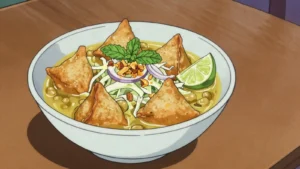
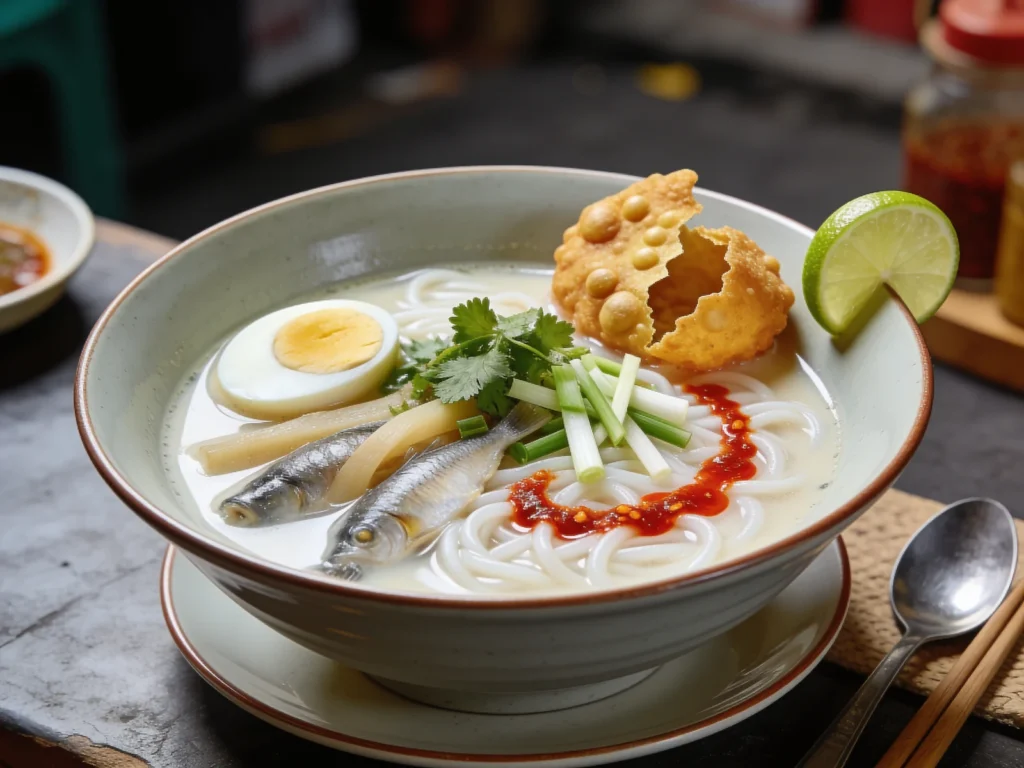
- Serve by putting a nest of warm rice noodles in each bowl, ladling the hot broth over, then adding half an egg, a broken fritter, coriander, spring onion, chilli oil and a squeeze of lime at the table.
Technique
- Mohinga is breakfast. It is carried through Yangon streets in two pots on a shoulder pole, and every vendor’s thickener ratio is a little different, which is why locals have a stall they are loyal to.
- The thickener is toasted rice plus chickpea flour, never cornflour. Toasting both until they smell nutty is what stops the broth tasting pasty.
- Banana stem core is the authentic body and gives a faint crunch and a clean vegetal note; it is worth chasing at a Southeast Asian grocer before substituting.
- Ngapi is pungent from the jar and mellows completely once simmered. Leaving it out makes a decent noodle soup but not mohinga.
Substitutions
- No catfish: use any firm freshwater or oily white fish, such as tilapia, whiting or mackerel. Mackerel gives a stronger, more Delta-style broth.
- No banana stem: use 250 g tender heart of banana blossom, or as a distant stand-in, thin batons of peeled broccoli stalk or tinned bamboo shoot rinsed well.
- No ngapi: double the fish sauce and add 1 tsp shrimp paste; the funk is shallower but the balance holds.
Variations
- Rakhine mohinga, thinner, much hotter and served with a fiercer chilli condiment.
- Mandalay-style mohinga, thicker and heavier on the chickpea flour.
- Mohinga topped with fried gourd fritters or fried whole chillies instead of baya kyaw.
History
A fish-based noodle soup, thickened with ground toasted rice or chickpea flour and built on a broth of catfish or other freshwater fish, lemongrass and banana stem, widely considered Myanmar’s national dish and commonly eaten as breakfast, sold from street carts and stalls particularly in the morning hours across the country. Its exact origin is not well documented in written sources, though freshwater fish and rice have long been the two most reliably available staples across much of Myanmar’s river-fed lowlands, making a fish-and-rice-based soup a logical, longstanding combination rather than a recent invention. Regional versions vary considerably in exact broth thickness, fish type and garnish, with no single version treated as more authentic than the many local variations found across the country.
Frequently asked questions
What is Mohinga?
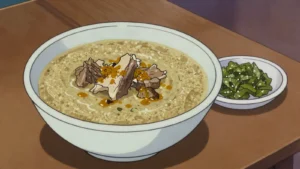
Mohinga is a soup & stew from Myanmar: national breakfast: rice noodles in catfish-lemongrass broth with crispy fritters. A fish-based noodle soup, thickened with ground toasted rice or chickpea flour and built on a broth of catfish or other freshwater fish, lemongrass and banana stem, widely considered Myanmar’s national dish and commonly eaten as breakfast, sold from street carts and stalls particularly in the morning hours across the country. Its exact origin is not well documented in written sources, though freshwater fish and rice have long been the two most reliably available staples across much of Myanmar’s river-fed lowlands, making a fish-and-rice-based soup a logical, longstanding combination rather than a recent invention. Regional versions vary considerably in exact broth thickness, fish type and garnish, with no single version treated as more authentic than the many local variations found across the country.
How long does Mohinga take to make?
Mohinga takes 45 min of preparation and 1 hr 30 min of cooking. The recipe makes 6 servings. It is rated hard to make.
What can I substitute in Mohinga?
Yes, within limits. No catfish: use any firm freshwater or oily white fish, such as tilapia, whiting or mackerel. Mackerel gives a stronger, more Delta-style broth. No banana stem: use 250 g tender heart of banana blossom, or as a distant stand-in, thin batons of peeled broccoli stalk or tinned bamboo shoot rinsed well. No ngapi: double the fish sauce and add 1 tsp shrimp paste; the funk is shallower but the balance holds.
What is the most important thing to get right in Mohinga?
Poach the catfish in the water with 3 lemongrass stalks, the turmeric and the salt over medium heat for 15–20 minutes, until the flesh flakes off the bone. Lift the fish out and keep every drop of the liquid; that stock is the base of the whole soup.