
Ingredients
Meat
- 1 kgbeef, in cubes
- or 1 kg goat meat, in cubes
- with some fat left on
- 2 teaspoonssalt
Marinade
- 2onions, grated
- 6garlic cloves, crushed
- 3cm ginger, grated
- 2stock cubes
- 2 teaspoonschilli powder
- 1 teaspoonblack pepper
- 3 tablespoonsoil
- juice of 2 limes
To dust
- 3 tablespoonschilli powder
- 1 tablespoonsalt
- 2 tablespoonsground roasted peanut, optional
To serve
- chikwanga, cassava bread
- sliced raw onion
- lime wedges
- cold beer
Directions
- Cut the meat into even sized cubes. Aim for about three centimetres. Leave a little fat on each piece. Goat needs slightly longer than beef. Grate the onions into a large bowl. Add the crushed garlic and grated ginger. Crumble in the stock cubes as well. Add the chilli powder and black pepper.
- Add the oil and the lime juice. Mix it all into a thick paste. Put the meat cubes in the bowl. Work the paste over every piece. Cover it over and refrigerate it. Give it at least two full hours. Soak wooden skewers in water first. Give them a good thirty minutes.
- Thread the cubes onto the skewers. Leave a small gap between pieces. Put a piece of fat between some cubes. Wait until the coals are covered in grey ash.
- Spread them out into an even bed. The heat should be strong and steady. Lay the skewers across the fire. Turn them every couple of minutes. Give them about twelve minutes in total.
- Baste them with leftover marinade as they cook. Too much of it blackens the meat. Wait for the flames to die down. Judging when they are done takes a look.
- Cut into a cube to check the first skewer. Goat should be cooked right through. Take them off before they dry out. Mix the chilli powder with the salt. Add ground roasted peanut if using it. Scatter it generously over the hot skewers.
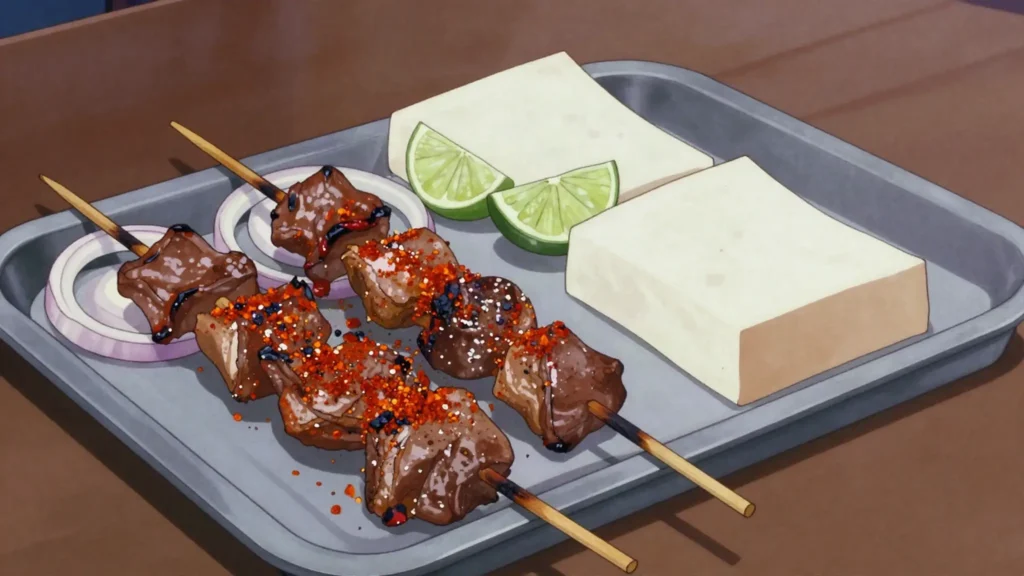
- Turn them so it coats all sides. The dust sticks to the hot fat. Serve them still on the skewer. Serve sliced raw onion with them. Cold beer is the usual drink with them.
Technique
- The atlas description says beef and its history says goat; both are genuinely used in the Congo, with goat the more traditional choice and beef common and often cheaper, which is why the two lines differ.
- The skewers are dusted with a dry mix of chilli and salt, sometimes with ground roasted peanut, after grilling rather than before, so the dust clings to the hot fat as a finishing seasoning rather than a marinade.
- Chikwanga is cassava fermented, pounded, wrapped in leaves and steamed into a firm slightly sour block that keeps for days; its plainness balances the hot chilli-dusted meat, and neither is as good alone.
Substitutions
- Goat or beef both work, with goat needing slightly longer on the fire.
- Ground roasted peanut in the dusting mix is optional but traditional in some places.
Variations
- Some sellers use offal rather than muscle meat on the skewers.
- The chilli dust varies from mild to genuinely fierce.
- Chikwanga is the standard partner, though bread is used as well.
History
Skewered goat meat grilled at roadside braziers in Katanga and Kinshasa, dusted with chili and eaten standing up.
Frequently asked questions
What is Kamundele?
Kamundele is a street food from DR Congo: goat or beef skewers grilled with onion and chili, eaten with chikwanga. Skewered goat meat grilled at roadside braziers in Katanga and Kinshasa, dusted with chili and eaten standing up.
How long does Kamundele take to make?
Kamundele takes 30 minutes plus marinating of preparation and 20 minutes of cooking. The recipe makes serves 6. It is rated easy to make.
What can I substitute in Kamundele?
Yes, within limits. Goat or beef both work, with goat needing slightly longer on the fire. Ground roasted peanut in the dusting mix is optional but traditional in some places.
What is the most important thing to get right in Kamundele?
The atlas description says beef and its history says goat; both are genuinely used in the Congo, with goat the more traditional choice and beef common and often cheaper, which is why the two lines differ.