
Ingredients
The goat
- 1.5 kggoat meat
- on the bone, cut into pieces
- shoulder, leg or ribs
- with some fat left on
The marinade
- 6 clovesgarlic, crushed
- a thumb of ginger, grated
- 2onions, grated or blended
- juice of 2 lemons
- 4 tablespoonsoil
- 2 tablespoonsmustard
- optional
- 1stock cube, crumbled
- or 2 teaspoons salt
- 1 teaspoonblack pepper
- 1 teaspoonpaprika
- 1or 2 hot chillies, chopped
- or to taste
- 1 teaspoondried thyme
- optional
For the fire
- charcoal
- long tongs
- a grill rack
To serve
- pili pili, the chilli sauce
- sliced raw onion
- with lemon squeezed over
- fried plantain
- chikwangue, or fufu
- cold beer
Directions
- Leave any fat that is there. Blend or grate the onions. Mix the onion with the garlic and ginger. Add the lemon juice and oil. Add the mustard if using. Add the stock cube, pepper and paprika. Add the chillies and thyme. Rub the marinade into every piece. Work it into the cuts and around the bones. Cover and refrigerate. Two hours is a minimum.
- Marinate in the refrigerator, never on the counter. Keep raw meat away from other food. Wash hands, boards and knives afterwards. Discard the marinade after the raw meat comes out. Put the goat and its marinade in a pot. Add water to come halfway up. Bring it to a simmer.
- Simmer it covered for about an hour. Older goat takes an hour and a half. Lift the meat out and keep the liquid. Reduce it down to a thick glaze. Because it has been boiled hard, it is safe to baste with.
- Let it burn down to embers. That takes twenty to thirty minutes. Grill outdoors in open air only. Keep water or sand nearby. Keep children and animals away. Do not use petrol to light or revive a fire.
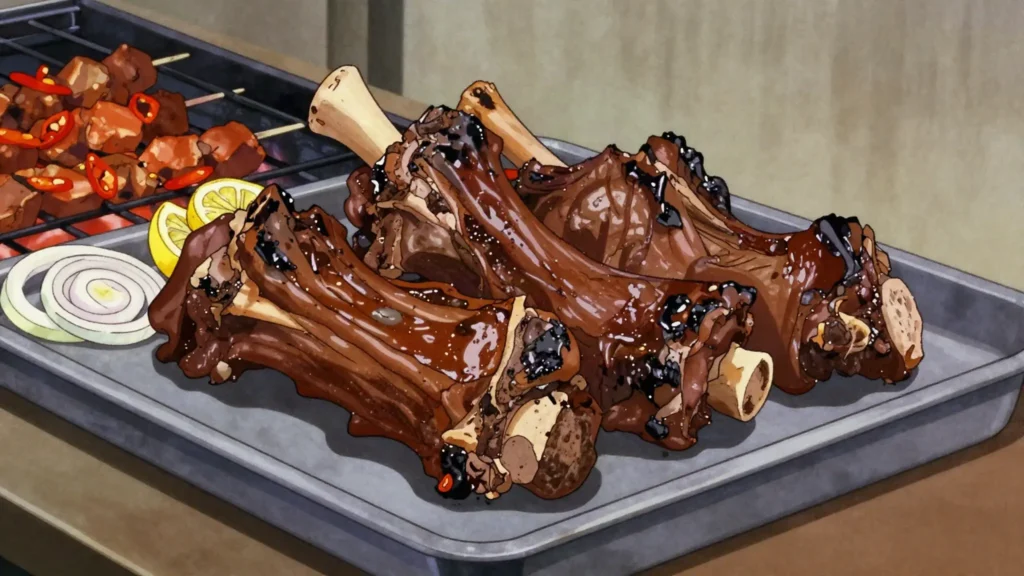
- Use proper firelighters or a chimney starter. Lay the pieces on the grill over the embers. Baste them with the reduced glaze. Turn them every three or four minutes.
- Baste at every turn. Give them fifteen to twenty minutes. Take it off when it looks right. Roast the simmered pieces at two hundred and twenty degrees. Baste them every ten minutes. Give them twenty-five minutes.
- Finish under a hot grill for colour. Pile it on a plate in the middle. Serve pili pili alongside. It is made from hot chillies with garlic and oil.
Technique
- Simmer the goat until tender before it goes near the grill. Goat is lean with a great deal of connective tissue and grilling it from raw gives tough meat — the two-stage method is what makes this work, and neither stage alone gives both tenderness and char.
- Stop the simmering just short of falling off the bone. Meat that falls apart will not hold together on the grill.
- Reduce the simmering liquid to a thick glaze and baste with it. It is intensely flavoured, and because it has been boiled hard it is safe to use — unlike the raw marinade, which must be discarded or boiled first.
- Blend or grate the onion for the marinade. Chopped pieces burn on the grill; blended onion coats evenly.
- Marinate overnight in the refrigerator, not for days. Lemon juice tenderises the surface but does not penetrate far, and prolonged acid contact makes the surface mushy.
- Let the fire burn down to grey-ashed embers with no flames. Fat dripping onto flames causes flare-ups that char the meat black — keep a cooler part of the grill to move pieces to, and never spray water on the coals, which raises ash onto the food.
- Charcoal produces carbon monoxide, which has no colour, smell or taste and kills in enclosed spaces. Grill outdoors only, never in a garage, tent or shed, and never bring a used grill inside. Keep water or sand nearby and never use petrol to light or revive a fire.
- Baste at every turn and turn every three or four minutes. The meat is already cooked, so the grilling is entirely about char and building up a sticky glaze.
- Leave any fat on the goat. It is a lean meat and that fat bastes it as it grills.
- Marinate in the refrigerator, keep raw meat away from other food, and wash hands, boards and knives afterwards.
- Stock cubes are a standard seasoning in African cooking rather than a shortcut, and the atlas records that plainly.
- The simmered goat keeps three days refrigerated and freezes for three months, which makes this genuinely practical to prepare ahead and grill to order.
Substitutions
- Lamb or mutton replaces goat, needing slightly less simmering.
- Beef short ribs work by the same two-stage method.
- An oven at 220 degrees finished under a hot grill replaces charcoal, at the cost of the smoke.
- Mustard in the marinade is optional and helps the glaze cling.
- Any hot sauce replaces pili pili.
- Chips, fried plantain, chikwangue or fufu all serve as the accompaniment.
Variations
- Mbuzi choma in Kenya and Tanzania is the East African grilled goat.
- Nyama choma covers grilled meat generally across East Africa.
- Poulet braisé is the grilled chicken sold from the same stands.
- Liboke, fish cooked in a leaf parcel, is the other Congolese grill dish.
- Suya in Nigeria uses a groundnut spice crust on grilled meat.
- A version grilled from raw with a long marinade is made with young tender goat.
History
Lingala for goat; grilled goat sold at Brazzaville roadside stalls with chili and cassava, a staple of evening street eating.
Frequently asked questions
What is Ntaba?
Ntaba is a street food from DR Congo: charcoal-grilled goat, Kinshasa nightlife staple. Lingala for goat; grilled goat sold at Brazzaville roadside stalls with chili and cassava, a staple of evening street eating.
How long does Ntaba take to make?
Ntaba takes 20 minutes plus marinating of preparation and 40 minutes of cooking. The recipe makes serves 6. It is rated easy to make.
What can I substitute in Ntaba?
Yes, within limits. Lamb or mutton replaces goat, needing slightly less simmering. Beef short ribs work by the same two-stage method. An oven at 220 degrees finished under a hot grill replaces charcoal, at the cost of the smoke. Mustard in the marinade is optional and helps the glaze cling. Any hot sauce replaces pili pili. Chips, fried plantain, chikwangue or fufu all serve as the accompaniment.
What is the most important thing to get right in Ntaba?
Marinate in the refrigerator, never on the counter. Keep raw meat away from other food. Wash hands, boards and knives afterwards. Discard the marinade after the raw meat comes out. Put the goat and its marinade in a pot. Add water to come halfway up. Bring it to a simmer.