
Ingredients
The groundnuts
- 500 gbambara groundnuts
- in their shells
- fresh if you can get them
- or dried, soaked overnight
- picked over for damaged nuts
For cooking
- plenty of cold water, to cover
- 1 tablespoonsalt
- or to taste
- a pinch of bicarbonate of soda
- optional, for dried nuts
Sometimes added
- a little sugar
- for a sweeter version
- a pinch of chilli
- a knob of butter
- to toss through
To serve
- warm, in a bowl
- with the shells still on
- sour milk, emasi
- or plain water
Directions
- Discard any that look mouldy or discoloured. Discard any that smell musty or stale. Fresh nuts in the shell need only washing. Rinse them in several changes of cold water. Fresh nuts cook in about an hour. Cover them generously with cold water.
- Soak them overnight, or for twelve hours. Change the soaking water once if you can. Drain them and discard the soaking water. Cover them with plenty of fresh cold water. Cover them by at least five centimetres.
- Bring the pot up to a full rolling boil. Boil it hard for the first ten minutes. Skim off any foam that rises to the surface.
- Simmer them for at least an hour and a half. Dried nuts can take two hours or longer. Check the water level every twenty minutes.
- Top up with boiling water, never cold water. Cold water halts the cooking and hardens them. Add salt only in the last half hour. Salt added early can toughen the skins. A pinch of bicarbonate of soda helps dried nuts.
- Use only a small pinch, since too much tastes soapy. The kernel inside should be soft and floury.
- Serve them warm in a bowl with the shells on. Leftovers keep three days in the fridge. Freeze them shelled to save space. Dried unshelled nuts keep for a year.
Technique
- Bambara groundnut is not a peanut. It is Vigna subterranea, an African legume domesticated in West Africa, which ripens underground like a peanut but is a different plant. Whether someone with a peanut allergy can safely eat it is a medical question the atlas cannot answer — legume cross-reactivity is genuinely complicated. Ask an allergy specialist; do not assume either way.
- They are among the hardest legumes to soften and there is no shortcut. Dried nuts need an overnight soak and then an hour and a half to two hours of simmering. Test several by cracking them open — the kernel should be soft and floury, with no chalky centre.
- Top up with boiling water, never cold. Cold water halts the cooking and can leave the nuts permanently hard.
- Stored nuts can carry aflatoxins from mould, which cooking does not destroy. Sort them and discard anything mouldy, discoloured or musty-smelling.
- A pinch of bicarbonate of soda speeds up dried nuts considerably. Too much tastes soapy and it damages some nutrients, so many cooks skip it and simply wait.
- They ripen before the maize harvest, in the leanest weeks of the year when the previous harvest is running out. That timing is exactly why the crop matters in Eswatini.
- Bambara groundnut has long been called a neglected or orphan crop, because research funding went to maize and wheat instead. Interest has risen as droughts have worsened, since it survives dry years that maize does not.
Substitutions
- Dried bambara groundnuts replace fresh and are far easier to obtain outside the region; they need an overnight soak and a much longer cook.
- They are sold under several names — njugo or jugo beans in South Africa, nyimo in Zimbabwe — and all are the same crop.
- Fresh broad beans boiled in the pod give a broadly similar eating experience, though the flavour is quite different and it is not the same dish.
- Salt alone is the standard seasoning; sugar, chilli or butter are all optional household variations.
- Sour milk is the traditional drink alongside, and plain water does the job equally well.
Variations
- Siphuphe setindlubu is the thick Swazi porridge made from the same nuts, mashed after boiling.
- Roasted bambara groundnuts, dried and then roasted rather than boiled, are eaten as a crunchier snack.
- Ground into flour, they are used to thicken soups and porridges across the region.
- Nyimo beans in Zimbabwe are cooked identically and eaten the same way.
- In West Africa the same nuts are ground and steamed into a savoury cake, closely related to the moin moin made from cowpeas.
- A version boiled with a little sugar is served as a sweeter snack for children.
History
Grown by Swazi women in small plots and boiled as a filling snack before the maize harvest comes in.
Frequently asked questions
What is Tindlubu?
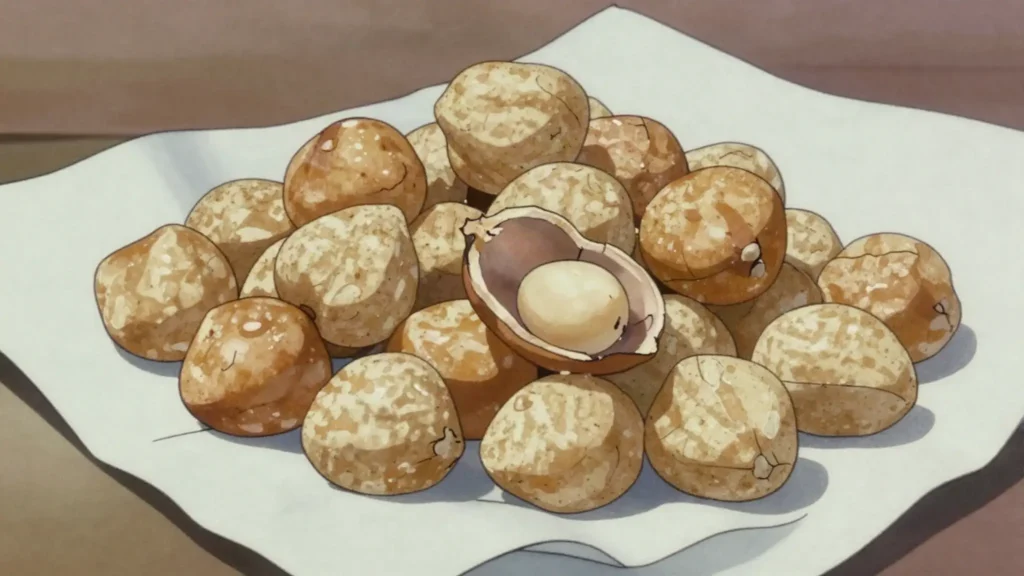
Tindlubu is a snack from Eswatini: bambara groundnuts boiled in their shells and eaten warm. Grown by Swazi women in small plots and boiled as a filling snack before the maize harvest comes in.
How long does Tindlubu take to make?
Tindlubu takes 10 minutes plus soaking of preparation and 1 hour 30 minutes of cooking. The recipe makes serves 4 as a snack. It is rated easy to make.
What can I substitute in Tindlubu?
Yes, within limits. Dried bambara groundnuts replace fresh and are far easier to obtain outside the region; they need an overnight soak and a much longer cook. They are sold under several names — njugo or jugo beans in South Africa, nyimo in Zimbabwe — and all are the same crop. Fresh broad beans boiled in the pod give a broadly similar eating experience, though the flavour is quite different and it is not the same dish. Salt alone is the standard seasoning; sugar, chilli or butter are all optional household variations. Sour milk is the traditional drink alongside, and plain water does the job equally well.
What is the most important thing to get right in Tindlubu?
Top up with boiling water, never cold water. Cold water halts the cooking and hardens them. Add salt only in the last half hour. Salt added early can toughen the skins. A pinch of bicarbonate of soda helps dried nuts.