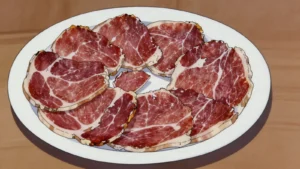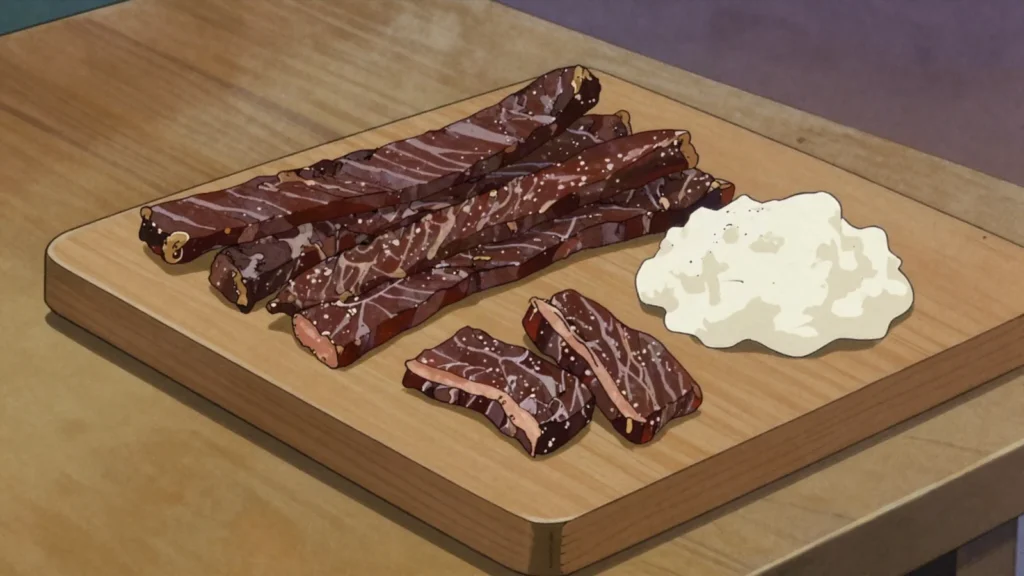

Strips of beef salted and hung to dry uncooked — the Nguni dried meat that predates settler biltong in the region. It is harder and plainer than biltong, seasoned with little beyond salt.
Drying raw meat with salt alone and no acid gives very little margin: it depends on air dry enough to pull water out faster than bacteria can multiply, which a humid climate does not supply.
What goes into it
- beef, cut in strips along the grain
- coarse salt
How it is made
Strips are rubbed with salt and hung in dry moving air, out of direct sun, for several days until they lose most of their weight and turn hard and dark. Unlike biltong there is usually no vinegar, so the salt and the dryness of the air are doing all the work.
How long it takes: three days to two weeks depending on humidity
How it is eaten
Torn and chewed as it is, or pounded and cooked into stews and relishes.
History
Strips of beef salted and hung to dry uncooked, the Nguni dried meat that predates settler biltong in the region.
Frequently asked questions
What is Umncweba?
Umncweba is a charcuterie & cured from Eswatini: salted sun-dried meat, the Swazi biltong. Strips of beef salted and hung to dry uncooked, the Nguni dried meat that predates settler biltong in the region.
How is Umncweba made?
Strips are rubbed with salt and hung in dry moving air, out of direct sun, for several days until they lose most of their weight and turn hard and dark. Unlike biltong there is usually no vinegar, so the salt and the dryness of the air are doing all the work. It takes three days to two weeks depending on humidity.
Can I make Umncweba at home?
No, and the atlas gives no method for it. Drying raw meat with salt alone and no acid gives very little margin: it depends on air dry enough to pull water out faster than bacteria can multiply, which a humid climate does not supply.
What goes into Umncweba?
Beef, cut in strips along the grain, coarse salt.
How is Umncweba eaten?
Torn and chewed as it is, or pounded and cooked into stews and relishes.