
Ingredients
Guiso (filling)
- 500 gbeef skirt or chuck, in 1 cm dice
- 500 gpork shoulder, in 1 cm dice
- 300 gchicken thigh, in 1 cm dice
- 500 gonions, finely diced
- 300 gleeks and spring onions, sliced
- 1red and 1 green pepper, diced
- 8garlic cloves, minced
- 150 gcapers, rinsed
- 200 gpitted green olives
- 150 graisins
- 250 mldry white wine
- 200 mlpapelon or brown sugar syrup
- 3 tbspWorcestershire sauce
- 2 tbspmustard
- 1 tbspground cumin
- 1 tspground annatto (onoto)
- 500 mlstock
- 40 gcornflour, slaked, to bind
- Salt and pepper
Masa
- 1 kgharina P.A.N. (precooked white maize flour)
- 1.4 litreswarm stock from the meat
- 250 mlannatto-infused oil (onoto simmered in oil 3 minutes and strained)
- 2 tspsalt
Adornos and wrapping
- 12pitted green olives, 3 tbsp capers, 100 g raisins
- 1red pepper, in 24 strips
- 200 gcooked chickpeas, optional
- 1onion, in rings
- 24large banana leaf pieces, about 30 x 30 cm, plus 12 narrow strips
- Kitchen twine (pabilo)
Directions
- Make the guiso the day before: brown the three meats separately in hot oil, then set aside; browning in one crowded pan steams them grey.
- In the same pot soften the onion, leek, pepper and garlic 15 minutes, add the cumin and annatto, then return the meats with the wine, stock, papelon syrup, Worcestershire and mustard.
- Simmer 1.5 hours until the meats are tender and the sauce is thick and dark, then stir in the olives, capers and raisins, thicken with the slaked cornflour, and cool. Refrigerate overnight so the flavours settle; this rest is traditional and makes a real difference.
- Pass the banana leaves briefly over a flame or through boiling water until they turn glossy and pliable, then wipe them clean and trim.
- Knead the masa: mix the harina with the warm stock and salt, then work in the annatto oil until the dough is deep orange, soft and completely smooth, about 5 minutes. It should not crack when flattened.
- Oil a leaf, put a ball of masa the size of a large orange on it, and press it out with the back of an oiled ladle or a plastic sheet into a 20 cm round about 3 mm thick.
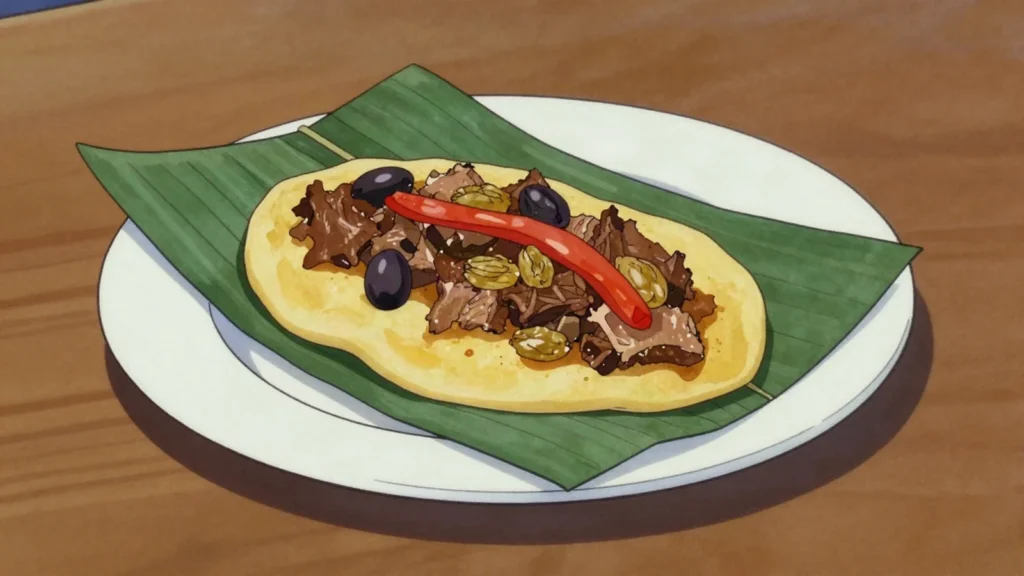
- Spoon 3 tbsp of cold guiso down the centre and lay on the adornos: olives, capers, raisins, pepper strips, onion rings and chickpeas.
- Fold the leaf to bring the two sides of the masa together over the filling, seal the masa edge, fold the ends in to make a rectangular parcel, wrap in a second leaf the other way round, and tie in a cross with twine.
- Boil the parcels in plenty of salted water for 45–60 minutes, weighted with a plate so they stay submerged. Drain, cool and rest at least 1 hour; they are eaten warm, reheated in the water, at Christmas.
Technique
- The hallaca is a family assembly line, not a solo job: one person presses the masa, one fills, one wraps, one ties. Every family swears by its own guiso.
- The guiso must be cold and thick before it touches the masa. Warm, loose filling melts the dough and the parcel bursts in the pot.
- Annatto oil is what makes the masa orange and gives its faint earthy flavour; it is not a dye you can leave out without changing the dish.
Substitutions
- No banana leaves? Some Venezuelans abroad use baking parchment inside foil. It works structurally, but the leaf’s green, tea-like perfume is a large part of the flavour.
- Papelon (unrefined cane sugar) can be replaced with dark muscovado dissolved in a little water.
Variations
- Hallaca andina, from the Andes, sweeter and often made with a milder guiso.
- Hallaca oriental, from the east coast, which includes seafood.
- Hallaca centralista from Caracas, the most heavily adorned version with chickpeas and almonds.
History
Christmas parcel of maize dough and stewed filling tied in plantain leaves; tradition holds it began when estate workers combined the master’s leftovers.
Frequently asked questions
What is Hallaca?
Hallaca is a main from Venezuela: christmas corn-dough parcels of beef, pork, olives, raisins in banana leaves. Christmas parcel of maize dough and stewed filling tied in plantain leaves; tradition holds it began when estate workers combined the master’s leftovers.
How long does Hallaca take to make?
Hallaca takes 3 hr of preparation and 1 day resting the guiso, 1 hr boiling of cooking. The recipe makes 12 hallacas. It is rated hard to make.
What can I substitute in Hallaca?
Yes, within limits. No banana leaves? Some Venezuelans abroad use baking parchment inside foil. It works structurally, but the leaf’s green, tea-like perfume is a large part of the flavour. Papelon (unrefined cane sugar) can be replaced with dark muscovado dissolved in a little water.
What is the most important thing to get right in Hallaca?
The guiso must be cold and thick before it touches the masa. Warm, loose filling melts the dough and the parcel bursts in the pot.