
Ingredients
Dough
- 500 gplain flour
- 7 ginstant yeast
- 60 gcaster sugar
- 1 tspsalt
- 250 mlwarm milk
- 2egg yolks
- 60 gbutter, melted
- 1 tspvanilla extract
- grated zest of 1 lemon
For frying
- 1.5 litressunflower oil
To finish
- 150 gcaster sugar, for rolling
- 2 tspground cinnamon, if wanted
- icing sugar, to dust
Filling, if wanted
- 250 gthick plum or sour cherry jam
- a piping bag with a long nozzle
Directions
- Warm the milk until it is blood temperature and no hotter. Milk that is too hot will kill the yeast, so test it on your wrist. Put the flour, yeast, sugar and salt in a large bowl and whisk them.
- Make a well and add the warm milk, egg yolks, melted butter, vanilla and lemon zest. Mix it to a soft, slightly sticky dough with a wooden spoon. Turn it onto a lightly floured surface and knead for eight minutes. Resist adding much flour, since a soft dough gives a light doughnut.
- Put it in an oiled bowl, cover it and leave it in a warm place. Let it rise for about an hour and a half, until well doubled. Now shaping, which is done gently to keep the air in. Turn the risen dough out and press it out to two centimetres thick. Do not knock it back hard, since the trapped air is what makes them puff.
- Cut rounds with a seven-centimetre cutter dipped in flour. Lay the rounds on floured trays with space between them. Cover them loosely and prove for another thirty minutes. They should look visibly puffed and feel light when lifted.
- Heat the oil in a deep pan to 170C and use a thermometer if you can. Fry them for about ninety seconds until the underside is deep gold. Turn them once with a slotted spoon and fry the other side. Lift them onto a rack over paper and let them drain.
- Let the oil come back to temperature before the next batch. Now finishing them, which is done while they are still hot. Mix the caster sugar with the cinnamon in a wide bowl. Roll each warm doughnut in the sugar until it is coated all over. The sugar sticks only while they are hot, so do not let them cool first.
- Dust the filled ones with icing sugar rather than rolling them in caster sugar. Serve them within an hour, since gogoși go heavy once cold. They are never reheated, and any left over are eaten the same day.
Technique
- Fry at a steady 170C, since hotter oil browns them before the middle cooks.
- Roll them in sugar while still hot, or the sugar will not stick.
- A pale band around the middle shows the dough was properly proved.
Substitutions
- Plum magiun, which is the most traditional Romanian filling.
- Water in place of milk for a plainer, older-style dough.
Variations
- Filled with sour cherry jam.
- Filled with sweetened curd cheese.
- Plain with a hole, rolled in cinnamon sugar.
History
Fried at Romanian fairs and metro-station stalls, a cheap sweet eaten straight from the paper.
Frequently asked questions
What is Gogosi?
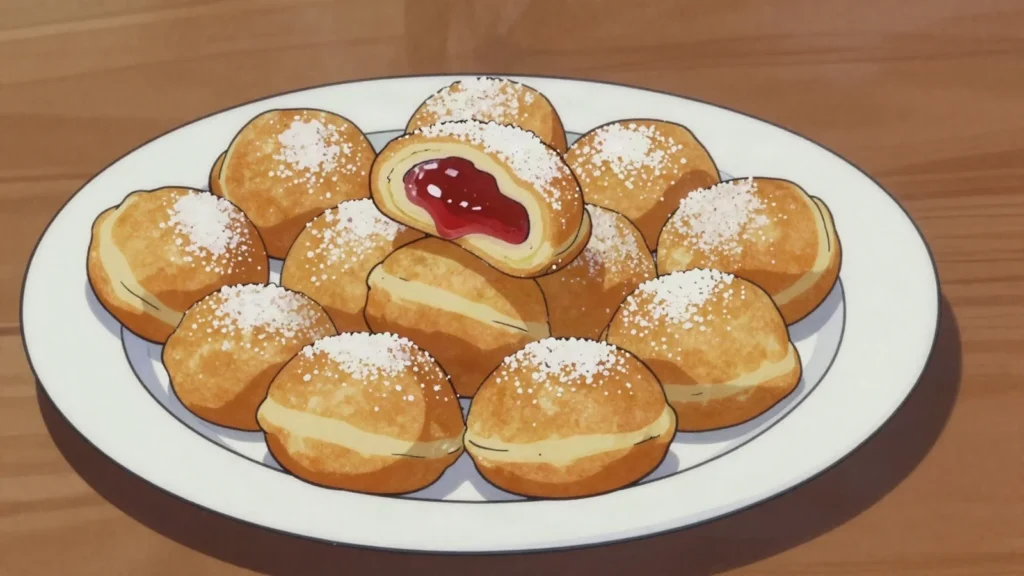
Gogosi is a street food from Romania: puffy fried dough rounds, sugared or filled with jam, sold hot. Fried at Romanian fairs and metro-station stalls, a cheap sweet eaten straight from the paper.
How long does Gogosi take to make?
Gogosi takes 30 min plus 90 min rising of preparation and 25 min of cooking. The recipe makes 16 doughnuts. It is rated medium to make.
What can I substitute in Gogosi?
Yes, within limits. Plum magiun, which is the most traditional Romanian filling. Water in place of milk for a plainer, older-style dough.
What is the most important thing to get right in Gogosi?
Put it in an oiled bowl, cover it and leave it in a warm place. Let it rise for about an hour and a half, until well doubled. Now shaping, which is done gently to keep the air in. Turn the risen dough out and press it out to two centimetres thick. Do not knock it back hard, since the trapped air is what makes them puff.