The small stone fruit of early summer — sweet and eaten by the handful, or sour and cooked into pies, soups, jams and the liqueurs and brandies of Central Europe.
Where it comes from
Cherries grow wild across Europe and western Asia and were cultivated by the Greeks and Romans; the Roman general Lucullus is said to have brought them from Cerasus, on the Black Sea, which gave the fruit its name in most European languages. They divide into sweet cherries, eaten fresh and rarely cooked, and sour or tart cherries — the morello and the amarelle — too acid to eat raw and made for cooking, which Germany, Hungary, Poland, Turkey and the Balkans do with devotion.
The sour cherry gave the world the Black Forest gateau, Hungarian cold cherry soup, Turkish vişne juice and jam, kirsch and maraschino liqueur, and the cherry pie of the American Midwest, where Michigan grows most of the crop. Sweet cherries are a fresh-fruit treat with a short season; Turkey, the United States and Chile grow the most. The stones are used too — cracked into a syrup or infused, they taste faintly of almond.
Varieties
- Bing and other dark sweet cherries — Large, firm, dark red to black, very sweet. For eating; the supermarket cherry.
- Rainier and Napoleon (white cherries) — Yellow blushed red, sweet and delicate; eating cherries.
- Morello (griotte, Schattenmorelle) — Dark red, sour, juicy. The cooking cherry of Europe: for jam, Black Forest gateau, kirsch and soup.
- Montmorency — The American sour cherry, bright red; for pie and juice.
- Vişne (Turkish sour cherry) — Small, sour, intensely flavoured; for juice, jam and the sour cherry bread pudding vişneli ekmek.
- Maraschino and Marasca — The small bitter Dalmatian cherry of the liqueur; the red cocktail cherry is a candied imitation.
In the kitchen
Sour cherries need sugar and heat and reward both: pitted and cooked briefly with sugar they make a compote or pie filling that sets with their own pectin; longer, a jam. Sweet cherries are best raw, or barely warmed in a clafoutis or a syrup — cooked long they turn bland. Leave the stones in a clafoutis for flavour, or pit them and warn no one.
A cherry pitter is worth owning for any quantity; a paperclip or the tip of a piping nozzle does the job slowly. Cherries pair with almond, chocolate, kirsch, vanilla and duck; sour cherries with lamb in Persian and Turkish rice, and with cream cheese and yoghurt.
Choosing and keeping
Firm, glossy, plump cherries with green, fresh stems; the darker the sweet cherry, the sweeter. They do not ripen after picking and keep only a few days in the fridge. Do not wash until eating.
Sour cherries are rarely sold fresh outside their regions; frozen, jarred in syrup, or as juice they are excellent and are what most European cooks use. Dried sour cherries keep for months.
Dishes with cherry
 PunschkrapfenPink-glazed cube of cake crumbs soaked in rum, jam and chocolate
 AnushaburSweet porridge of hulled wheat with dried fruit, nuts and cinnamon.
 Rabo-de-galoCachaça stirred with vermouth and served in a small glass
 Sherbetchilled syrup drink of fruit, rose or basil seeds, poured at weddings
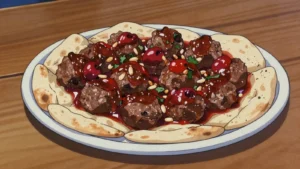 Kebab karazAleppo meatballs simmered with sour cherries, served on flatbread
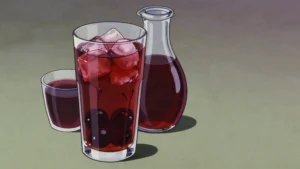 Sharbat-e albalooSour cherry syrup diluted with iced water, deep red and tart.
 FifteensNo-bake traybake of digestives, marshmallows and cherries rolled in coconut
 Havana SpecialWhite rum, pineapple juice and a dash of maraschino over ice
Cherries is tagged on 83 dishes from 51 countries in the atlas. These notes are written from general knowledge and carry no per-fact citation — see About.