
Ingredients
Cabbage
- 6firm white cabbages, about 8 kg
- 400 gcoarse salt, for the cores
Brine
- 5 litreswater
- 250 gcoarse non-iodised salt — 5% of the water’s weight
Aromatics
- 2 tbspblack peppercorns
- 1 tbspcoriander seed
- 6bay leaves
- 1 handfulmaize kernels
- 2quinces or apples, quartered
- 1horseradish root, sliced
- 3 sprigsdill, dried
Directions
- Cut a deep cone out of the core of each cabbage with a knife, leaving the head otherwise whole, and pack the cavity tight with coarse salt. This is how salt reaches the middle of a head that is never cut open.
- Stand the heads core-up in a scrubbed barrel, packed close so they cannot float or shift.
- Dissolve the 250 g of salt fully in the water and pour it over until the cabbages are covered by 5 cm. Weigh the salt — 5% is what protects the barrel through the weeks before the acidity builds.
- Tuck the peppercorns, coriander, bay, maize, quince, horseradish and dill among the heads. The maize starch feeds the bacteria in the first days and gets the ferment moving.
- Weight everything down under a scrubbed plate or stone so nothing rises above the brine.
- Once a week, draw several litres of brine off the bottom with a jug and pour it back over the top. Moldovan households never skip this: without it the salt sinks, the top heads sit under-brined and go slimy, and the barrel is lost.
- Ferment somewhere cold — 10 to 15°C (50 to 59°F) — for four to six weeks, until the leaves are translucent, sharply sour and pliable enough to roll without cracking.
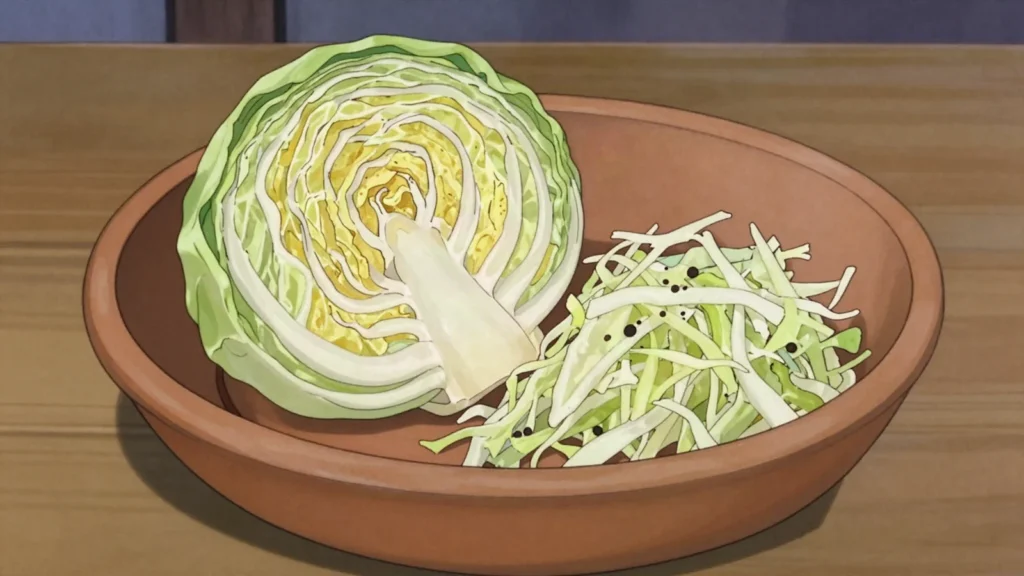
- Keep cold through the winter. Peel off whole leaves for sarmale, shred the rest for salad, and drink the brine cold.
Technique
- The weekly brine circulation is the single thing that decides whether the barrel works.
- Cold and slow. Fermented warm the leaves go brittle and tear as soon as you try to roll them.
- Anything above the brine will mould. Check the weight every time you circulate.
Substitutions
- A food-grade plastic bucket in place of a wooden barrel.
- Shredded cabbage in jars if there is no cold space — but then no whole leaves for sarmale.
Variations
- The Romanian varză murată is identical; the Bulgarian kiselo zele and Croatian kiseli kupus are the same preserve.
- A beetroot in the barrel turns everything pink.
History
Fermented in barrels in Moldovan cellars alongside the year’s wine and pickled tomatoes.
Frequently asked questions
What is Varza murata?
Varza murata is a fermented & pickled from Moldova: whole cabbage soured in brine, its leaves rolled into sarmale. Fermented in barrels in Moldovan cellars alongside the year’s wine and pickled tomatoes.
How long does Varza murata take to make?
Varza murata takes 45 min plus 4 to 6 weeks fermenting of preparation and no cooking at all. The recipe makes fills a 10-litre barrel, about 6 cabbages. It is rated medium to make.
What can I substitute in Varza murata?
Yes, within limits. A food-grade plastic bucket in place of a wooden barrel. Shredded cabbage in jars if there is no cold space — but then no whole leaves for sarmale.
What is the most important thing to get right in Varza murata?
Cut a deep cone out of the core of each cabbage with a knife, leaving the head otherwise whole, and pack the cavity tight with coarse salt. This is how salt reaches the middle of a head that is never cut open.