
Ingredients
Vegetables
- 2 kgsmall cucumbers
- 2 kggreen tomatoes
- 1small watermelon, cut in wedges, or 2 kg more vegetables
- 1small cabbage, in wedges through the core
- 500 gcarrots, in thick batons
- 4green peppers, pricked
- 1celery head with leaves
Brine
- 6 litreswater
- 300 gcoarse non-iodised salt — 5% of the water’s weight
Aromatics
- 2 headsgarlic, cloves peeled
- 3 tbspblack peppercorns
- 2 tbspcoriander seed
- 6bay leaves
- 1large bunch dill
- 1horseradish root, sliced
- 3hot chillies
Directions
- Wash everything and cut it large — wedges and thick batons. Small pieces go soft long before winter is over.
- Prick the peppers and the watermelon rind so the brine can get inside them. Pickled watermelon — harbuji murați — is a Moldovan speciality and it needs the rind pricked or it never sours through.
- Dissolve the salt completely in the water and weigh it. Five percent is what protects the barrel in the weeks before the acidity builds.
- Pack everything into a scrubbed barrel or bucket, layering the garlic, peppercorns, coriander, bay, dill, horseradish and chilli through as you go, and pressing down to drive out air pockets.
- Pour over the brine so everything sits at least 5 cm below the surface, and weight it all down under a scrubbed plate or stone.
- Once a week, draw several litres of brine off the bottom and pour it back over the top. Without this the salt sinks, the top of the barrel sits under-brined and goes slimy, and the whole thing is lost.
- Ferment somewhere cold, 10 to 15°C (50 to 59°F), for four to six weeks until everything is sour and the brine is cloudy and sharp.
- Keep it cold through the winter. Serve alongside roast meat, sarmale and beans, and drink the brine cold.
Technique
- The weekly brine circulation is the one thing that decides whether a barrel succeeds.
- Everything under the brine, checked each time you circulate.
- Cold and slow. Fermented warm it is ready in ten days and everything in it goes flabby.
Substitutions
- A food-grade plastic bucket in place of a wooden barrel.
- Any autumn vegetable — cauliflower, small aubergines, green beans — at the same brine strength.
- Grape or oak leaves for extra crunch.
Variations
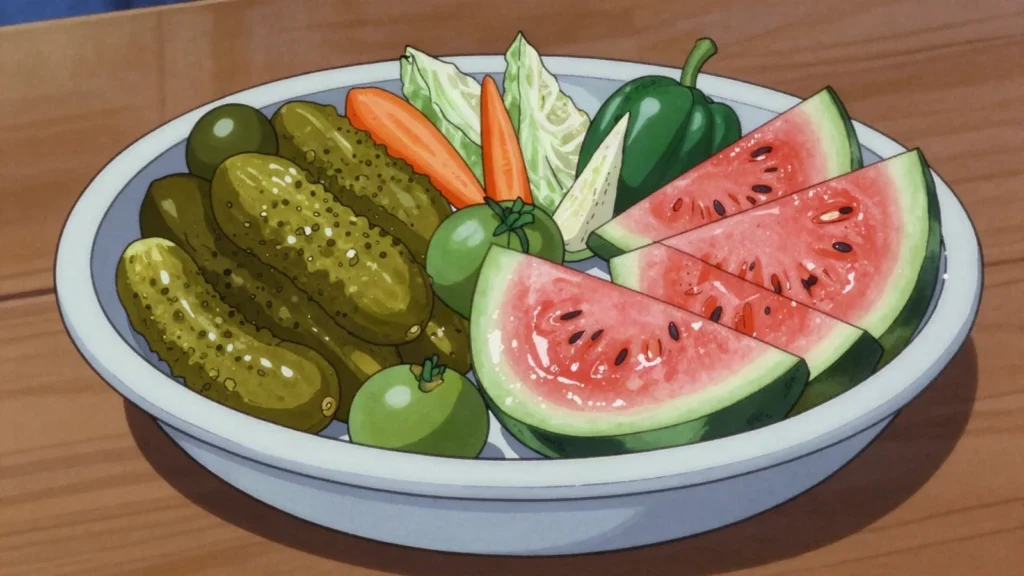
- Pickled watermelon is the Moldovan speciality and the reason many barrels are made at all.
- A vinegar version is faster and keeps indefinitely, but it is sharp rather than sour.
History
Moldovan cellars store barrels of soured vegetables; pickled watermelon, harbuji murați, is a local speciality.
Frequently asked questions
What is Murături?
Murături is a fermented & pickled from Moldova: watermelon, cabbage, tomatoes and cucumbers soured in barrels. Moldovan cellars store barrels of soured vegetables; pickled watermelon, harbuji murați, is a local speciality.
How long does Murături take to make?
Murături takes 1 hour plus 4 to 6 weeks fermenting of preparation and no cooking at all. The recipe makes fills a 10-litre barrel. It is rated medium to make.
What can I substitute in Murături?
Yes, within limits. A food-grade plastic bucket in place of a wooden barrel. Any autumn vegetable — cauliflower, small aubergines, green beans — at the same brine strength. Grape or oak leaves for extra crunch.
What is the most important thing to get right in Murături?
Prick the peppers and the watermelon rind so the brine can get inside them. Pickled watermelon — harbuji murați — is a Moldovan speciality and it needs the rind pricked or it never sours through.