
Ingredients
Pastry
- 500 gthin phyllo (kore za pitu), 12 to 16 sheets, at room temperature
- 100 mlsunflower oil, for brushing
Filling
- 700 gyoung Serbian white cheese (mladi sir), or 500 g feta plus 200 g curd cheese, crumbled
- 200 gkajmak, or 200 g full-fat cream cheese
- 6large eggs
- 300 mlsparkling mineral water
- 200 mlsunflower oil
- 200 gthick sour cream (kisela pavlaka)
- ½ tspsalt, or none if the cheese is very salty
To finish
- 1egg yolk beaten with 2 tbsp sour cream
- 2 tbspmelted butter
- A splash of mineral water, for the last trick
Directions
- Crumble the white cheese finely into a large bowl and mash in the kajmak until there are no big lumps. Serbian mladi sir is soft, slightly sour and salty; taste it before you add any salt.
- Whisk the eggs until frothy, then beat them into the cheese with the sour cream, the oil and finally the sparkling mineral water. The mixture should be loose, pourable and airy, like a thin pancake batter with curds in it.
- Oil a 30 by 35 cm baking tin. Lay two whole phyllo sheets flat in the base, letting them come up the sides, and brush with oil. These form the floor and stop the filling leaking.
- Take one phyllo sheet at a time, hold it over the bowl, and either dip it briefly into the filling or spoon filling over it. Then crumple it loosely, like a handkerchief being scrunched, and drop it into the tin.
- Carry on until all the sheets are used, packing the crumpled bundles side by side so the tin is full but not compressed. The crumpling is the whole technique: it makes the air pockets and the ruffled, crisp peaks that define gibanica against a flat layered pita.
- Pour any remaining filling over the top so it runs into the gaps, and press the surface lightly with a flat hand so it settles evenly.
- Cover the top with the final one or two sheets, tuck the edges in, and brush with the yolk and sour cream mixture.
- Bake at 200°C (400°F) for 20 minutes, then reduce to 180°C (350°F) and bake a further 25–30 minutes until the top is deeply gilded and the centre is set with no wobble.
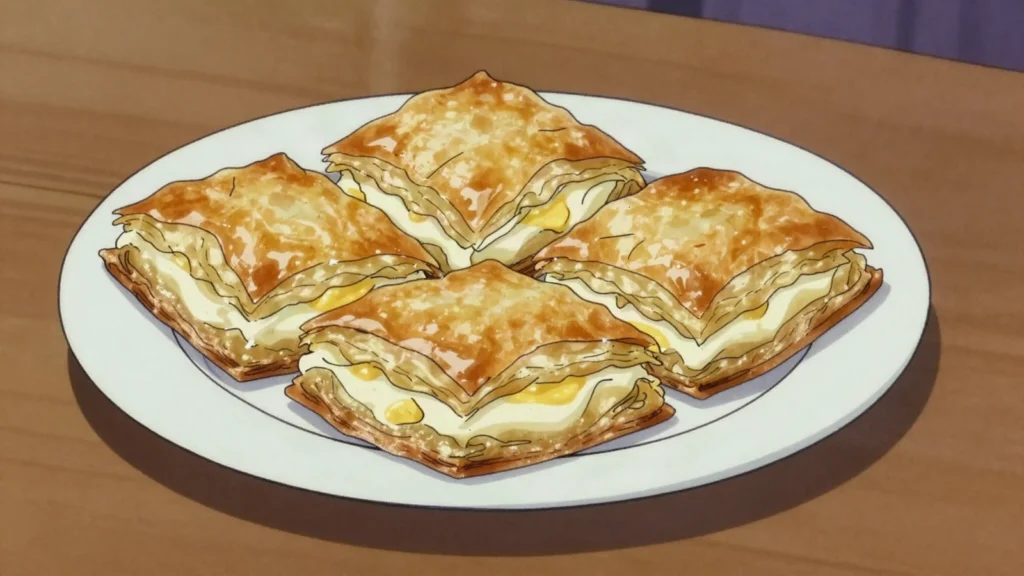
- The finishing trick, done in almost every Serbian household: pull the tin out, flick a little cold mineral water over the surface, brush with melted butter, cover with a clean cloth and rest 15 minutes. The steam softens the very top crust while the layers underneath stay crisp. Cut into squares and serve warm.
Technique
- The filling must be loose. A thick, stiff cheese mix gives a dense, dry pie; the sparkling water lightens it and creates steam that puffs the crumpled sheets apart.
- Do not stack the phyllo neatly. Gibanica means something like the folded or crumpled thing, from gibati, and the ruffled texture is the point of the dish.
- Kajmak is the traditional richness, a matured clotted cream skimmed from boiled milk. Where it is unavailable, full-fat cream cheese or clotted cream is the accepted stand-in.
- Gibanica is the centrepiece of Slava celebrations, Christmas and Easter tables across Serbia, and is eaten warm with yoghurt to drink. It is also good cold the next day, though the top loses its crackle.
Substitutions
- No mladi sir? A mix of feta (rinsed if very salty) with ricotta or curd cheese at roughly 2 to 1 comes close to the salt and sourness.
- No kajmak? 200 g of clotted cream or full-fat cream cheese; the pie is slightly less rich but behaves the same.
- Sparkling mineral water can be replaced by plain water plus ½ tsp of baking powder, though the bubbles do a better job.
Variations
- Zeljanica, the same crumpled construction with spinach and cheese.
- Gibanica sa jabukama, a sweet apple version made in Vojvodina.
- A richer Slava version with extra kajmak and an egg wash enriched with cream, baked in a round tin.
History
A layered pastry made from phyllo dough and a filling of cheese, egg and often kajmak, a Balkan clotted cream, baked until the layers puff and turn golden, documented across Serbian home cooking for generations as part of the same wider regional filled-pastry tradition introduced through Ottoman influence beginning in the 1400s and 1500s. Its specific technique, crumpling or loosely layering the phyllo sheets rather than rolling them tightly, gives gibanica a distinctively airy, irregular texture compared to more tightly rolled pastries within the same broader family. It remains a common Serbian breakfast and holiday food, particularly associated with Orthodox Christian celebrations and family gatherings, and different Serbian regions maintain their own particular preferred cheese and dairy combination for the filling.
Frequently asked questions
What is Gibanica?
Gibanica is a bread & pastry from Serbia: crumpled phyllo pie with white cheese and eggs. A layered pastry made from phyllo dough and a filling of cheese, egg and often kajmak, a Balkan clotted cream, baked until the layers puff and turn golden, documented across Serbian home cooking for generations as part of the same wider regional filled-pastry tradition introduced through Ottoman influence beginning in the 1400s and 1500s. Its specific technique, crumpling or loosely layering the phyllo sheets rather than rolling them tightly, gives gibanica a distinctively airy, irregular texture compared to more tightly rolled pastries within the same broader family. It remains a common Serbian breakfast and holiday food, particularly associated with Orthodox Christian celebrations and family gatherings, and different Serbian regions maintain their own particular preferred cheese and dairy combination for the filling.
How long does Gibanica take to make?
Gibanica takes 35 min of preparation and 50 min of cooking. The recipe makes 10 servings. It is rated medium to make.
What can I substitute in Gibanica?
Yes, within limits. No mladi sir? A mix of feta (rinsed if very salty) with ricotta or curd cheese at roughly 2 to 1 comes close to the salt and sourness. No kajmak? 200 g of clotted cream or full-fat cream cheese; the pie is slightly less rich but behaves the same. Sparkling mineral water can be replaced by plain water plus ½ tsp of baking powder, though the bubbles do a better job.
What is the most important thing to get right in Gibanica?
Carry on until all the sheets are used, packing the crumpled bundles side by side so the tin is full but not compressed. The crumpling is the whole technique: it makes the air pockets and the ruffled, crisp peaks that define gibanica against a flat layered pita.