
Ingredients
Cheese
- 400 gyoung white brined cheese, sir
- or feta, or a mix of feta and cream cheese
Peppers
- 3roasted red peppers, skinned
- or 3 tbsp ajvar
Heat
- 2to 4 hot chillies, fresh or dried
- 1 tbsphot paprika
- or 2 tbsp hot ajvar
Also
- 4 clovesgarlic
- 3 tbspsunflower oil
- 1 tspsweet paprika
- black pepper
- salt, carefully
To serve
- with grilled meat, ćevapi and pljeskavica
- with bread
- with rakija
Directions
- Use a young white brined cheese, the kind sold simply as sir across the Balkans. It should be crumbly and salty rather than creamy, since the texture of urnebes is its character.
- Taste it first, and soak it in cold water for an hour if it is very salty. Crumble it by hand or mash it with a fork rather than blending it. Blending gives a smooth paste, and urnebes should be lumpy and rough.
- Use hot paprika, fresh or dried chillies, or hot ajvar, or a combination. Southern Serbia grows a great deal of paprika and the local cooking is built on it, both sweet and hot. Roast red peppers over a flame or under a grill until blackened all over. Put them in a covered bowl for 10 minutes, then slip the skins off. Chop them finely and drain off any liquid.
- Drain them properly, since watery peppers make a sloppy urnebes. Ready-made ajvar is a perfectly respectable shortcut and many households use it. Crush it to a paste with a little salt. Crush rather than chop, so it disperses through rather than sitting in harsh pieces. Be generous, since urnebes should be clearly garlicky.
- Mash the cheese with the peppers, garlic, paprika and chillies. Work it with a fork, keeping it rough and crumbly. Beat in the sunflower oil a little at a time until it comes together into a thick spreadable mass.
- Add the oil slowly and stop when it holds together. Too much makes it greasy and it should be barely bound rather than smooth. Add plenty of freshly ground black pepper. Now let it stand for at least an hour, and refrigerate it overnight if you can. Serve it at room temperature rather than fridge-cold, which mutes it.
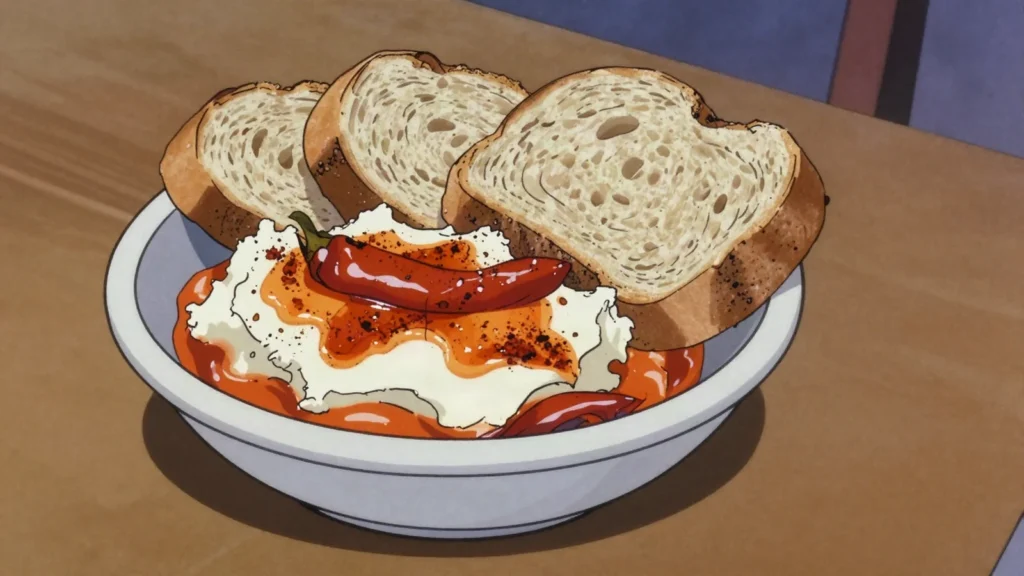
- Spread it thickly on grilled meat, particularly pljeskavica, or on bread. It keeps a week refrigerated and the heat builds slightly over time.
Technique
- The name means pandemonium, which describes both the heat and the texture.
- Leskovac in southern Serbia is the centre of Serbian grilling and of this dish.
- It is better on the second day.
Substitutions
- Feta in place of Balkan white cheese.
- Ready-made ajvar in place of roasting peppers.
Variations
- Made milder, with sweet paprika only.
- With cream cheese for a smoother version.
- With walnuts, which some households add.
History
Fiery salad of crumbled cheese, chilli and garlic from southern Serbia, spread on grilled meat; the name means pandemonium.
Frequently asked questions
What is Urnebes?
Urnebes is a salad & side from Serbia: spicy spread of white cheese and roasted paprika. Fiery salad of crumbled cheese, chilli and garlic from southern Serbia, spread on grilled meat; the name means pandemonium.
How long does Urnebes take to make?
Urnebes takes 20 min of preparation and no cooking at all. The recipe makes about 500 g. It is rated easy to make.
What can I substitute in Urnebes?
Yes, within limits. Feta in place of Balkan white cheese. Ready-made ajvar in place of roasting peppers.
What is the most important thing to get right in Urnebes?
Use a young white brined cheese, the kind sold simply as sir across the Balkans. It should be crumbly and salty rather than creamy, since the texture of urnebes is its character.