
Ingredients
Pork
- 1.5 kgpork neck bones or spine, gamjatang-yong
- water for soaking
- 1onion
- 6 clovesgarlic
- a thumb of ginger
- 10peppercorns
- 1 tbspdoenjang, for boiling
Seasoning paste
- 3 tbspgochugaru, Korean chilli flakes
- 2 tbspdoenjang, soybean paste
- 1 tbspgochujang
- 6 clovesgarlic, minced
- 1 tbspminced ginger
- 2 tbspsoy sauce
- 2 tbsprice wine
- 2 tbspperilla seed powder, deulkkae garu
Vegetables
- 4potatoes, halved
- 1 bunchnapa cabbage or ugeoji, blanched
- 1leek or 6 spring onions
- 1large bunch perilla leaves, kkaennip
- 2green chillies
To serve
- steamed rice
- and rice fried in the leftover broth at the end
Directions
- Soak the bones in cold water for at least an hour, changing the water two or three times. Soaking draws out the residual blood, which otherwise clouds the broth and gives it a strong, unpleasant metallic taste.
- Bring the drained bones to a boil in fresh water and boil hard for five to ten minutes. Drain them and rinse each bone under running water, scrubbing off anything clinging to it. Do not skip this, since it is the difference between a clean-tasting broth and a muddy one.
- Wash out the pot too before starting again. Return the cleaned bones to the pot with fresh water, onion, garlic, ginger, peppercorns and a spoonful of doenjang. Bring it to a boil, then simmer for an hour to an hour and a half.
- Simmer it rather than boiling it hard, which keeps the broth clear and stops the meat toughening. The meat should be nearly falling from the bone before anything else goes in.
- Combine the gochugaru, doenjang, gochujang, garlic, ginger, soy sauce and rice wine into a paste. Stir the paste into the simmering broth and cook for ten minutes. Add the halved potatoes and simmer for twenty minutes until nearly tender. Use waxy potatoes if you can, since floury ones disintegrate and thicken the broth into a sludge. Add the blanched cabbage or ugeoji and the leek.
- Stir in the perilla seed powder, which thickens the broth slightly and gives a nutty richness. Now lay whole perilla leaves over the top in the last few minutes. Add the leaves at the very end, since long cooking destroys their aroma entirely. They should wilt into the broth rather than boil in it.
- Add the sliced green chillies and simmer for five minutes more. Taste and adjust with more doenjang for depth or gochugaru for heat. Serve it bubbling at the table with rice and side dishes.
Technique
- The claim that gamja refers to a cut of pork is disputed folk etymology.
- The bones must be soaked and parboiled or the broth tastes muddy.
- Perilla seed powder and perilla leaves are both used, doing different jobs.
Substitutions
- Pork ribs in place of spine, which is easier to find.
- Regular napa cabbage in place of dried ugeoji.
Variations
- Ppyeo haejangguk, a closely related hangover soup.
- Made with more potato and less meat.
- With extra perilla seed powder, for a thicker broth.
History
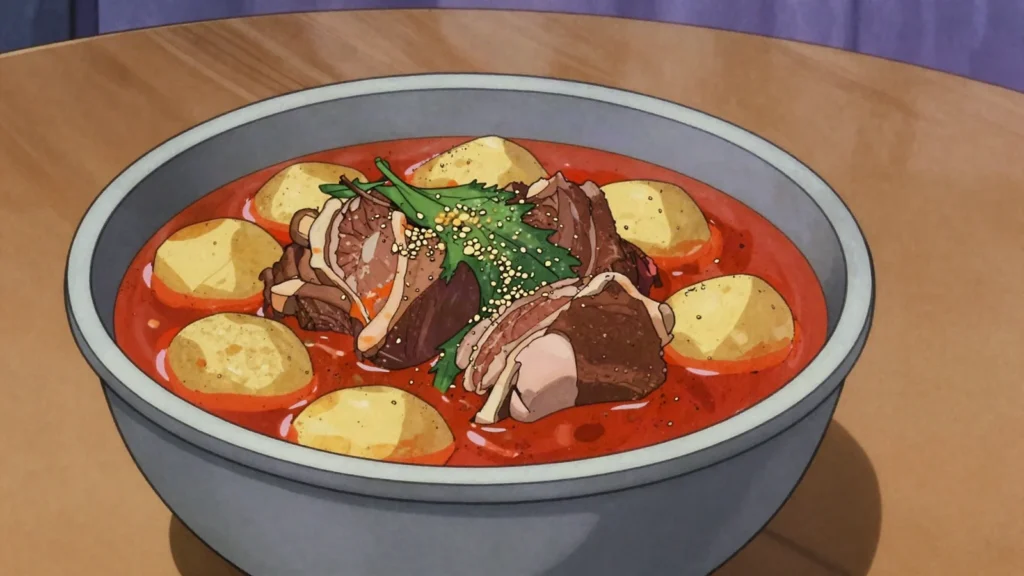
A spicy soup made from pork spine or neck bones, potato and vegetables, simmered for an extended period in a broth flavoured with gochugaru, Korean chili powder, and perilla seed, documented across South Korea as a significant traditional dish, its name combining the Korean words for potato and soup despite pork bone, rather than potato, generally serving as the dish’s primary defining ingredient. Its long, slow simmering process, required to properly tenderize the pork bones and extract their flavour into the broth, reflects a broader Korean culinary tradition of transforming less costly cuts of meat into deeply satisfying, flavourful dishes through patient cooking. Gamjatang remains a popular dish across South Korea, particularly favored as a hearty meal for cold weather or after a night of drinking.
Frequently asked questions
What is Gamjatang?
Gamjatang is a soup & stew from South Korea: spicy pork backbone stew with potatoes and perilla leaves. A spicy soup made from pork spine or neck bones, potato and vegetables, simmered for an extended period in a broth flavoured with gochugaru, Korean chili powder, and perilla seed, documented across South Korea as a significant traditional dish, its name combining the Korean words for potato and soup despite pork bone, rather than potato, generally serving as the dish’s primary defining ingredient. Its long, slow simmering process, required to properly tenderize the pork bones and extract their flavour into the broth, reflects a broader Korean culinary tradition of transforming less costly cuts of meat into deeply satisfying, flavourful dishes through patient cooking. Gamjatang remains a popular dish across South Korea, particularly favored as a hearty meal for cold weather or after a night of drinking.
How long does Gamjatang take to make?
Gamjatang takes 30 min plus 1 hr soaking of preparation and 2 hr of cooking. The recipe makes 4 servings. It is rated medium to make.
What can I substitute in Gamjatang?
Yes, within limits. Pork ribs in place of spine, which is easier to find. Regular napa cabbage in place of dried ugeoji.
What is the most important thing to get right in Gamjatang?
Soak the bones in cold water for at least an hour, changing the water two or three times. Soaking draws out the residual blood, which otherwise clouds the broth and gives it a strong, unpleasant metallic taste.