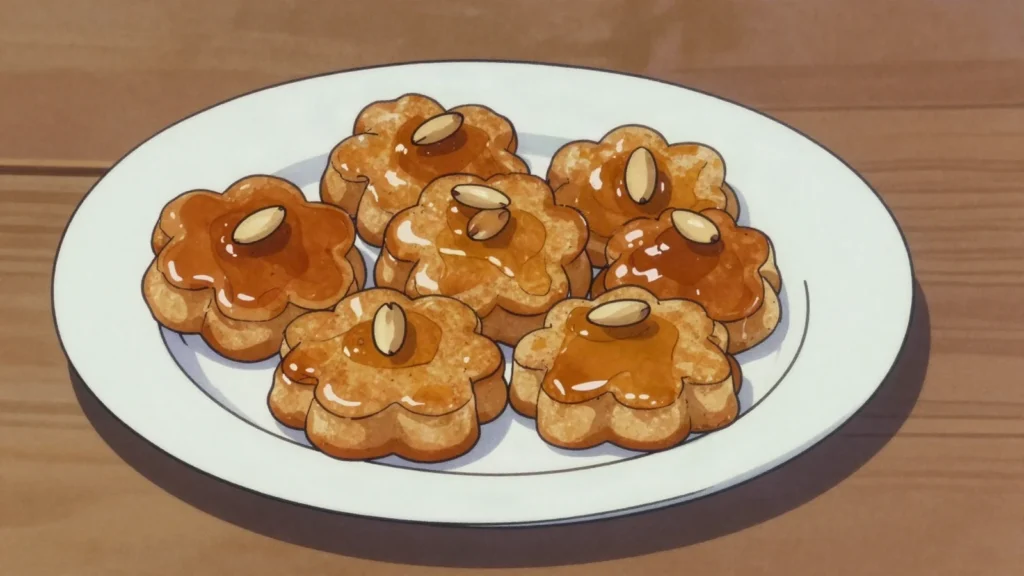

Ingredients
Dough
- 300 gplain flour
- 4 tbsptoasted sesame oil
- 3 tbsphoney
- 3 tbsprice wine or soju
- 2 tbspginger juice
- a pinch of salt
- ½ tspground cinnamon or ginger
Syrup
- 300 mljocheong, grain syrup, or honey
- 150 mlwater
- 2cm ginger, sliced
- 1 tbspsugar
To fry
- oil, for deep frying
To finish
- pine nuts, slivered
- jujube slices
Equipment
- a yakgwa mould, optional
- a fork
To serve
- with tea, at holidays and ancestral rites
Directions
- Mix it only until it just comes together and then stop. Rub the sesame oil thoroughly into the flour first, before any liquid. Rub it through until the flour looks like damp sand.
- Sift it after rubbing, which distributes the oil evenly and is traditional. Use genuinely toasted sesame oil, since its flavour is central rather than incidental.
- Bring it together with a spatula or your fingertips, pressing rather than working it. Press it into a mass and stop. Roll the dough out, fold it in three, and roll it again, two or three times. Do not overdo it, and stop after three folds.
- Roll it to about 1.5 cm thick. Prick right through to the other side. Now the frying, which is done at two temperatures. Heat the oil to only 100 to 110°C, which is far cooler than normal frying. The pieces need to cook slowly right through and puff, and hot oil browns the outside in two minutes while the centre stays raw.
- Drain them briefly on a wire rack. Simmer the jocheong, water, ginger and sugar for 10 minutes, then cool it completely. Now put the hot fried pieces straight into the cold syrup.
- Leave them in the syrup for at least 12 hours, turning them occasionally, and a full day is better. The syrup has to penetrate a dense fried dough all the way through, and an under-soaked yakgwa is dry in the middle.
- Lift them out and let them drain on a rack. Press a sliver of pine nut and a piece of jujube onto each. Serve them at room temperature with tea. They keep two or three weeks in an airtight container and they are made well ahead of a holiday.
Technique
- The dough is deliberately never kneaded.
- Jocheong is Korean grain syrup and is less sweet than honey.
- It has had a recent revival among young Koreans.
Substitutions
- Honey in place of jocheong for the syrup.
- Ginger juice made by grating and squeezing fresh ginger.
Variations
- Made in a patterned mould.
- With cinnamon in the dough.
- Modern flavoured versions, which are now common.
History
A Goryeo Buddhist confection once restricted by sumptuary law for using precious honey, oil and wheat.
Frequently asked questions
What is Yakgwa?
Yakgwa is a dessert from South Korea: fried honey-and-sesame-oil wheat cakes soaked in syrup; dense and floral. A Goryeo Buddhist confection once restricted by sumptuary law for using precious honey, oil and wheat.
How long does Yakgwa take to make?
Yakgwa takes 40 min plus 12 hr soaking of preparation and 40 min of cooking. The recipe makes about 20. It is rated hard to make.
What can I substitute in Yakgwa?
Yes, within limits. Honey in place of jocheong for the syrup. Ginger juice made by grating and squeezing fresh ginger.
What is the most important thing to get right in Yakgwa?
Sift it after rubbing, which distributes the oil evenly and is traditional. Use genuinely toasted sesame oil, since its flavour is central rather than incidental.