
Ingredients
Dough
- 500 gplain flour
- 4egg yolks
- 1whole egg
- 80 gsugar
- 60 gbutter, softened
- 150 mlsoured cream
- 2 tablespoonsrum or slivovica
- 1/2 teaspoonsalt
- the zest of 1 lemon
To fry and finish
- oil or lard, for deep frying
- icing sugar, for dusting
Sometimes served with
- jam, for dipping
- hot tea or coffee
Directions
- Put the flour and salt in a bowl. Add the sugar and the lemon zest. Make a well and add the yolks and the egg. Add the softened butter and soured cream. Add the rum or the plum brandy. Bring it together into a firm dough. Kneading it takes real work here. Turn it out onto a floured surface.
- Knead it for a good ten minutes. It should become smooth and quite firm. Wrap it and rest it for thirty minutes. An hour is considerably better.
- Divide the dough into three pieces. Roll each one out on a floured surface. Take it down to about two millimetres. It should be nearly translucent.
- Cut the sheet into strips with a wheel. Aim for strips about three by ten centimetres. Leave a good margin at each end. Pull it through and let it sit twisted. Frying them needs the right heat.
- Pour oil into a deep pan to eight centimetres. Never fill a pan more than halfway with oil. Heat the oil to about 180C for frying. A scrap of dough should sizzle up at once.
- Fry them for about forty seconds a side. Turn them once with a slotted spoon. They should be pale gold rather than dark.
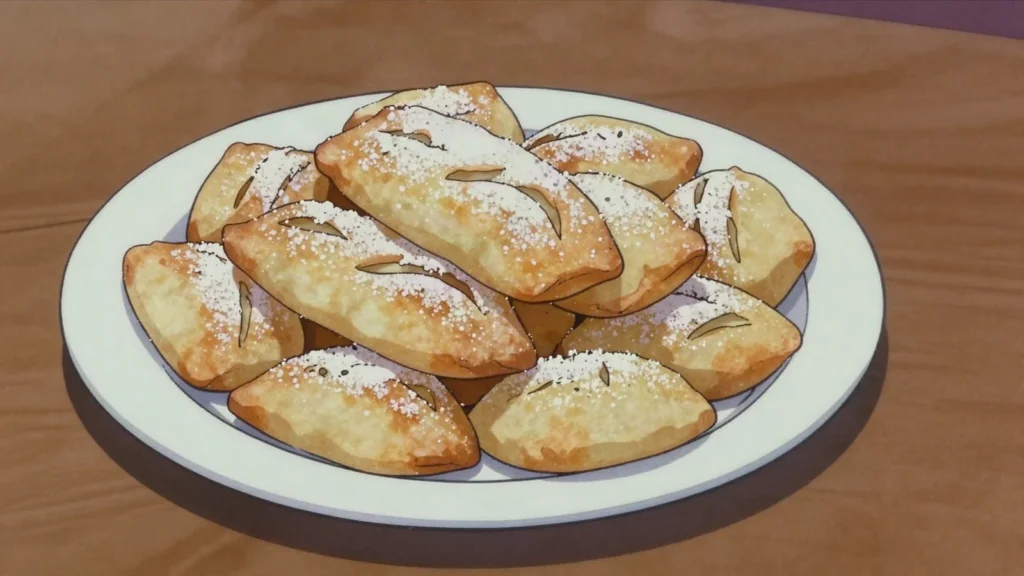
- Lift them onto a wire rack to drain. A rack keeps both sides crisp. Dust them very generously with icing sugar. Use far more than seems necessary. Do it while they are still warm.
Technique
- Fasiangy runs from Epiphany to Ash Wednesday, and rich fried food is eaten deliberately to use up eggs, fat and sugar before the Lenten fast, which is the practical origin of carnival baking.
- A spoonful of spirit in the dough evaporates fast in hot oil, which puffs the pastry, and it also inhibits gluten so the result is lighter and crisper.
- Nearly every country in the region fries a version of these, including Polish faworki, Hungarian csoroge and their German, Austrian, Swedish and Italian relatives.
Substitutions
- Any spirit works in place of slivovica, and rum is common.
- Soured cream can be replaced with plain yoghurt at a pinch.
Variations
- Some cooks tie them into loose knots rather than twisting them through a slit.
- Sisky, the filled carnival doughnuts, are fried alongside them.
- Faworki in Poland and csoroge in Hungary are the closest relatives.
History
Fried in Slovakia at fašiangy carnival before Lent, alongside šišky doughnuts.
Frequently asked questions
What is Fánky?
Fánky is a dessert from Slovakia: thin fried carnival pastries dusted with icing sugar. Fried in Slovakia at fašiangy carnival before Lent, alongside šišky doughnuts.
How long does Fánky take to make?
Fánky takes 40 minutes plus resting of preparation and 25 minutes of cooking. The recipe makes about 30 pastries. It is rated medium to make.
What can I substitute in Fánky?
Yes, within limits. Any spirit works in place of slivovica, and rum is common. Soured cream can be replaced with plain yoghurt at a pinch.
What is the most important thing to get right in Fánky?
Pour oil into a deep pan to eight centimetres. Never fill a pan more than halfway with oil. Heat the oil to about 180C for frying. A scrap of dough should sizzle up at once.