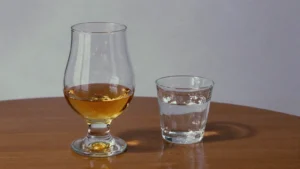

Double-distilled plum rakija and the Serbian national drink, protected as srpska šljivovica. UNESCO listed the social practices around it in 2022 — the listing is about what happens around the glass as much as what is in it.
Distilling without a licence is a criminal offence across the EU, and the cut that separates drinkable spirit from methanol-bearing heads is the step people get wrong when they learn it by trial.
What goes into it
- ripe plums, chiefly Požegača and Čačanska
- nothing else
How it is made
Crushed ripe plums ferment on their own sugars in a barrel for three to five weeks. The mash is distilled twice in a copper pot still: the first run gives a weak spirit, the second concentrates it, and the distiller discards the volatile head and the weak tail. Good šljivovica then rests in mulberry wood or glass for a year or more.
How long it takes: weeks to ferment, then a year or more resting
How it is eaten
In a small glass before a meal, offered to every guest, and poured at every family occasion.
History
A plum brandy, generally considered one of the most significant and widely produced spirits across Serbia and much of the wider Balkan region, made by fermenting and then distilling plums, a fruit long and abundantly cultivated across Balkan orchards for many centuries. Its production has historically often been a home or small-scale rural activity rather than purely industrial, with many rural Serbian and Balkan households maintaining their own family recipes and small stills, or having access to a local communal still, passed down and used across generations. Slivovitz carries significant social and ceremonial weight across the region, traditionally offered as a mark of hospitality to guests and served at celebrations, religious holidays and significant family gatherings throughout Serbia and neighboring Balkan countries.
Frequently asked questions
What is Slivovitz?
Slivovitz is a wine & spirit from Serbia: double-distilled plum rakija, the national drink. A plum brandy, generally considered one of the most significant and widely produced spirits across Serbia and much of the wider Balkan region, made by fermenting and then distilling plums, a fruit long and abundantly cultivated across Balkan orchards for many centuries. Its production has historically often been a home or small-scale rural activity rather than purely industrial, with many rural Serbian and Balkan households maintaining their own family recipes and small stills, or having access to a local communal still, passed down and used across generations. Slivovitz carries significant social and ceremonial weight across the region, traditionally offered as a mark of hospitality to guests and served at celebrations, religious holidays and significant family gatherings throughout Serbia and neighboring Balkan countries.
How is Slivovitz made?
Crushed ripe plums ferment on their own sugars in a barrel for three to five weeks. The mash is distilled twice in a copper pot still: the first run gives a weak spirit, the second concentrates it, and the distiller discards the volatile head and the weak tail. Good šljivovica then rests in mulberry wood or glass for a year or more. It takes weeks to ferment, then a year or more resting.
Can I make Slivovitz at home?
No, and the atlas gives no method for it. Distilling without a licence is a criminal offence across the EU, and the cut that separates drinkable spirit from methanol-bearing heads is the step people get wrong when they learn it by trial.
What goes into Slivovitz?
Ripe plums, chiefly Požegača and Čačanska, nothing else.
How is Slivovitz eaten?
In a small glass before a meal, offered to every guest, and poured at every family occasion.