
Ingredients
Pino (make the day before)
- 600 gbeef (posta or chuck), hand-chopped into 5 mm dice
- 800 gonions, cut into small dice (as much onion as meat by volume)
- 80 gbeef dripping or lard
- 1 tbspají de colour (Chilean sweet paprika)
- 2 tspground cumin
- 1 tspdried oregano
- 1 tspchilli flakes, or merkén
- 2 tbspplain flour
- 200 mlbeef stock
- Salt and plenty of black pepper
Dough
- 600 gplain flour
- 100 glard or beef dripping, melted
- 1 tspsalt
- 250–280 mlwarm milk or water
- 1egg yolk
To fill and finish
- 3hard-boiled eggs, quartered
- 12black olives, whole with stones
- 60 graisins
- 1egg beaten with 1 tbsp milk, for glazing
Directions
- Melt the dripping in a wide pan and cook the onions over medium-low heat for 20–25 minutes until completely soft, sweet and translucent, without browning; this slow sweat is the backbone of the pino.
- Push the onions aside, raise the heat and brown the diced beef in the same fat for 5 minutes, then stir everything together with the ají de colour, cumin, oregano and chilli.
- Dust in the flour, cook 2 minutes, add the stock and simmer 15 minutes until glossy and just loose. Season aggressively, cool, then refrigerate overnight; warm pino tears the dough and cold pino is far easier to wrap.
- For the dough, rub the melted fat and salt into the flour, then bring it together with the warm milk and yolk to a smooth, soft but not sticky dough. Knead 5 minutes, cover and rest 30 minutes.
- Divide into 12 pieces and roll each into a 16–18 cm round about 3 mm thick, keeping them under a cloth.
- Place 2 heaped tablespoons of cold pino slightly off-centre, then add a quarter egg, an olive and a few raisins on top.
- Brush the border with water, fold into a rectangle and press out the air, then fold the two side flaps in and the top flap down, sealing firmly into the classic squared Chilean parcel.
- Set seam-side down on a tray, prick the top twice with a skewer so steam escapes, glaze with egg wash and rest 15 minutes.
- Bake at 220°C (425°F) for 25–30 minutes until deep golden and blistered. Rest 10 minutes before eating: the juices inside are scalding, and warn guests about the olive stone.
Technique
- Pino comes from the Mapudungun word pigñeñ, meaning something embedded or hidden; it names the filling, not the pine tree.
- The one-to-one onion to beef ratio is not a mistake. The onion melts and becomes the sauce, and empanadas made short on onion come out dry and crumbly.
- Hand-chopping the beef rather than mincing it gives the coarse, meaty bite Chileans expect; ask a butcher to dice it if you are pressed for time.
Substitutions
- Vegetable shortening can replace lard in the dough, though the pastry will be less short and less flavourful.
- If you cannot find ají de colour, use two parts sweet paprika to one part hot smoked paprika.
Variations
- Empanada frita is the same pino in a thinner dough, deep-fried and eaten at the beach.
- Empanada de mariscos and empanada de queso are the standard Lent and vegetarian alternatives.
History
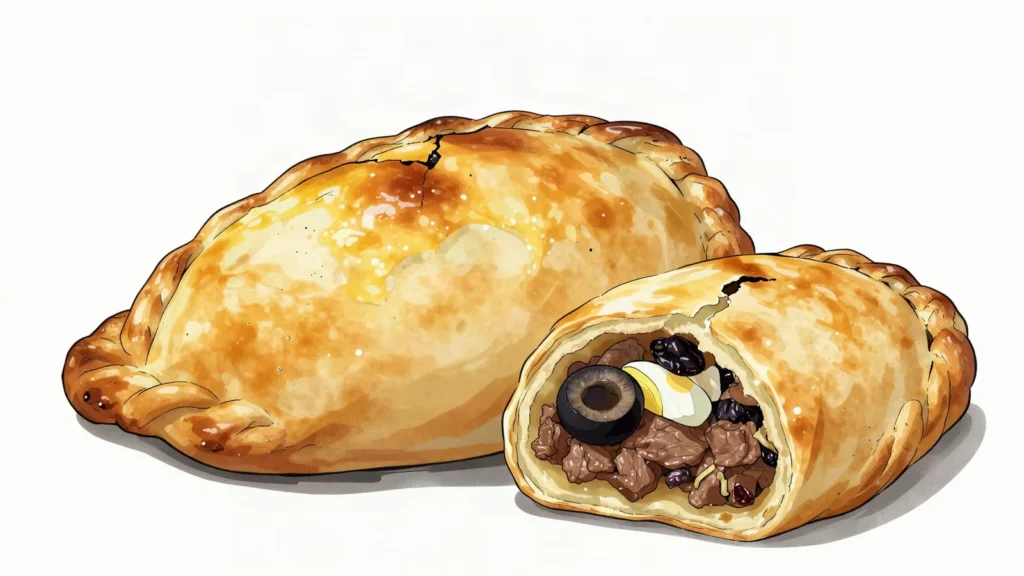
A baked pastry filled with a mixture of minced beef, onion, hard-boiled egg, olive and raisin, called pino, considered one of Chile’s most iconic and defining national dishes, with the empanada format itself brought to Chile through Spanish colonization beginning in the 1500s, while the specific pino filling developed its now-standard combination gradually over the following centuries of Chilean home cooking. It is especially closely associated with Chile’s Independence Day celebrations each September, when empanadas de pino are consumed in enormous quantities nationwide alongside other patriotic foods and drinks. A genuine, long-running debate exists among Chilean cooks over whether a proper pino filling requires raisins, olives or both, with strong regional and family preferences on the question.
Frequently asked questions
What is Empanada de pino?
Empanada de pino is a street food from Chile: baked turnover of beef pino with onion, olive, egg, raisin. A baked pastry filled with a mixture of minced beef, onion, hard-boiled egg, olive and raisin, called pino, considered one of Chile’s most iconic and defining national dishes, with the empanada format itself brought to Chile through Spanish colonization beginning in the 1500s, while the specific pino filling developed its now-standard combination gradually over the following centuries of Chilean home cooking. It is especially closely associated with Chile’s Independence Day celebrations each September, when empanadas de pino are consumed in enormous quantities nationwide alongside other patriotic foods and drinks. A genuine, long-running debate exists among Chilean cooks over whether a proper pino filling requires raisins, olives or both, with strong regional and family preferences on the question.
How long does Empanada de pino take to make?
Empanada de pino takes 1 hr of preparation and 30 min baking plus overnight resting of the pino of cooking. The recipe makes 12 empanadas. It is rated medium to make.
What can I substitute in Empanada de pino?
Yes, within limits. Vegetable shortening can replace lard in the dough, though the pastry will be less short and less flavourful. If you cannot find ají de colour, use two parts sweet paprika to one part hot smoked paprika.
What is the most important thing to get right in Empanada de pino?
Hand-chopping the beef rather than mincing it gives the coarse, meaty bite Chileans expect; ask a butcher to dice it if you are pressed for time.