
Ingredients
The cassava
- 1.2 kgcassava root
- a sweet variety, peeled thickly
- see the safety note
- or 1 kg frozen cassava
- cut into chunks
The fish
- 200 gsmoked fish
- smoked catfish, bonga or similar
- soaked and boned
- or 300 g fresh fish, flaked
The broth
- 1.5 litreswater
- 2large onions, chopped
- 4 clovesgarlic, crushed
- 2to 4 hot chillies
- scotch bonnet, to taste
- 3 tablespoonsred palm oil
- or vegetable oil
- 1stock cube
- or fish stock
- juice of 3 limes
- or more, to taste
- salt and black pepper
Sometimes added
- 1 tablespoondried crayfish powder
- or ground dried prawns
- 1 teaspoonground pepper soup spice
- a handful of parsley or coriander
To serve
- hot, in bowls
- extra lime wedges
- extra chilli
Directions
- Peel away the brown skin and the pink layer beneath. Both come off together in one thick strip. Boil it thoroughly in plenty of water. Boil the cassava in plenty of water first. Discard that water entirely. Never eat cassava raw at any point.
- Discard any root that tastes strongly bitter after cooking. It stores in the ground until it is needed. Cut one open before cooking it. The flesh should be pure white throughout. Discard any root showing those signs. Cut the root into lengths of about eight centimetres.
- Stand each piece upright. Cut down through the thick skin with a knife. Check the pink layer comes away with it. Put the cassava in a large pot of water. Bring it to a boil and cook it twenty minutes. It should be tender right through. Soak it in hot water for twenty minutes. Pick the bones out carefully. Flake the flesh. Keep the soaking water if it is not too salty.
- Heat the palm oil in a large pot. Add the chopped onions. Cook them for about eight minutes until soft. Add the garlic and cook two minutes. Ebbeh is meant to be genuinely hot. Adjust it to your own tolerance. The oil clings to skin for hours. Add the water and the stock cube. Add the flaked smoked fish.
- Add the crayfish powder if you have it. Bring it to a simmer. Simmer it for fifteen minutes. Season with salt and black pepper. Taste it carefully. Add the lime juice generously. The broth should be sharply sour.
- Taste and add more lime until it is right. Add the boiled cassava chunks to the broth. Simmer them together for five minutes. Others keep the chunks whole in a thin broth. Add hot water if it becomes too thick. Taste and correct the salt and the lime. Add chopped herbs if you are using them.
- Grind over black pepper. Serve it hot in deep bowls. Serve extra lime wedges alongside. Serve extra chilli for those who want it. It keeps two days refrigerated. Add water and more lime when reheating. Add fresh lime after reheating, which lifts it again.
Technique
- This dish serves the cassava in broth, so the first boil matters more than usual. Boil the peeled cassava in plenty of water, discard that water entirely, and build the broth separately. Cassava’s cyanogenic glycosides release cyanide when the tissue is damaged, and the boiling water is what carries them away.
- Use sweet cassava and peel it thickly so both the brown skin and the pink layer beneath come off. Never eat it raw, never taste raw cassava, and discard any piece that tastes strongly bitter after cooking — bitterness is the warning signal.
- Cut a root open before cooking. The flesh must be pure white; grey or blue streaks, black specks or dark rings mean it has started to spoil, and that deterioration raises the harmful compounds as well as spoiling the flavour.
- Chronic cyanide exposure from poorly processed cassava causes konzo, a permanent paralysis of the legs, appearing in drought and food shortage when processing gets shortened out of hunger. It is a disease of poverty rather than of cassava, which properly processed feeds hundreds of millions because it grows where little else will. Both facts belong together.
- Cook it until a knife slides in with no resistance. Undercooked cassava is not merely unpleasant here.
- Pull out the tough fibrous cord down the centre of each piece. It never softens and leaves a stringy centre.
- Be generous with the lime. Three is a starting point rather than a limit — the broth should be sharply sour, and that sourness is what ebbeh is. A mild version has missed the point. Add more after reheating too, which lifts it again.
- Soak smoked fish in hot water for twenty minutes to soften it and draw out salt, then bone it carefully. Keep the soaking water for the broth unless it is very salty.
- Season the broth carefully. The stock cube and the smoked fish both bring salt before you add any.
- Mashing some of the cassava thickens the broth considerably. Keeping the chunks whole gives a thinner soup — both are made and neither is wrong.
- Wear gloves with scotch bonnets and do not rub your eyes afterwards. The oil clings to skin for hours. Whole chillies added and removed give aroma without full heat.
- This contains fish and often dried crustaceans, both common and potentially severe allergens. Say so plainly.
- It is widely eaten as a hangover remedy. The atlas records that people say so and makes no claim of its own.
Substitutions
- Frozen peeled cassava replaces fresh and is often the better buy abroad.
- Fresh fish replaces smoked, giving a milder and less savoury broth.
- Vegetable oil replaces red palm oil, at the cost of colour and character.
- Lemon replaces lime, though lime is what is used.
- Crayfish powder or dried prawns deepen the broth and are optional.
- Yam or green plantain can replace some of the cassava.
Variations
- A version thickened by mashing much of the cassava is common and makes a heartier bowl.
- Domoda, the Gambian groundnut stew, is the country’s best known dish.
- Benachin, the one-pot rice, is the Gambian relative of Senegalese thieboudienne.
- Pepper soup across West Africa uses the same hot, sour, aromatic principle with meat or fish.
- Yassa, onion and lime cooked with chicken or fish, shares the lime-forward character.
- Boiled cassava served plain alongside a stew is the same root in a quieter role.
Frequently asked questions
What is Ebbeh?
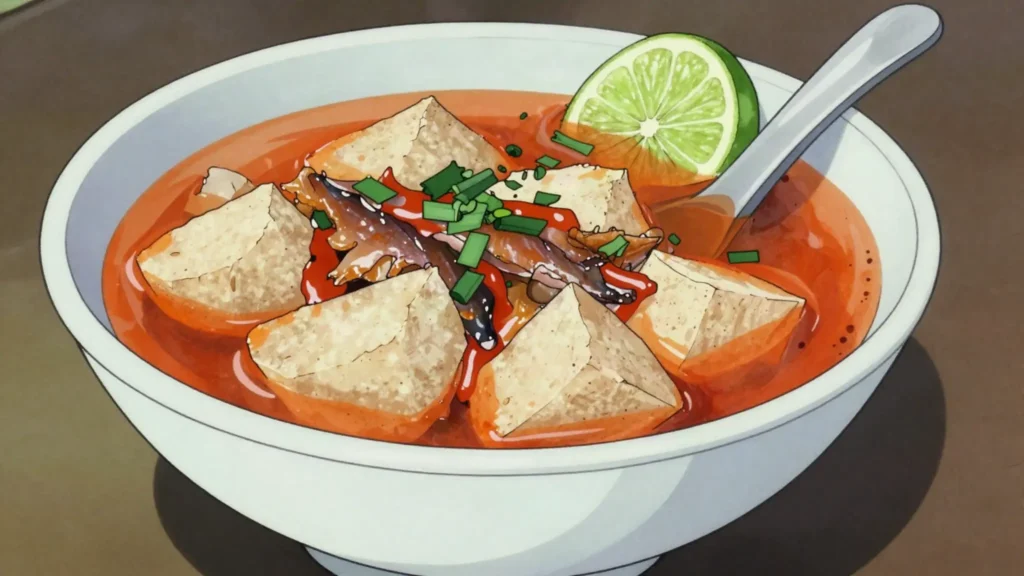
Ebbeh is a snack from Gambia: spicy tangy bowl of boiled cassava, smoked fish, lime and chili broth.
How long does Ebbeh take to make?
Ebbeh takes 25 minutes of preparation and 35 minutes of cooking. The recipe makes serves 6. It is rated easy to make.
What can I substitute in Ebbeh?
Yes, within limits. Frozen peeled cassava replaces fresh and is often the better buy abroad. Fresh fish replaces smoked, giving a milder and less savoury broth. Vegetable oil replaces red palm oil, at the cost of colour and character. Lemon replaces lime, though lime is what is used. Crayfish powder or dried prawns deepen the broth and are optional. Yam or green plantain can replace some of the cassava.
What is the most important thing to get right in Ebbeh?
Peel away the brown skin and the pink layer beneath. Both come off together in one thick strip. Boil it thoroughly in plenty of water. Boil the cassava in plenty of water first. Discard that water entirely. Never eat cassava raw at any point.