Ingredients
Cocoyam
- 1.5 kgcocoyam corms, macabo or taro
- 1 tspsalt
To enrich
- 200 mlred palm oil
- or 200 ml coconut milk, for kwacoco with coconut
Sometimes
- 200 gsmoked fish, flaked and boned
- 1onion, grated
- 1chilli, chopped
- a little ground crayfish
To wrap
- banana leaves, softened over a flame
- string or strips of leaf
To serve
- with banga soup, palm nut soup
- or with pepper soup
Directions
- Peel the corms and drop them into cold water as you go, since they discolour on contact with air. Grate them finely on the fine side of a box grater, or blend them with a little water.
- Grate it finely rather than coarsely, since the finished parcel should be smooth and dense rather than shredded. It will look like a thick pale porridge and it will be sticky, which is correct. Work in salt and either red palm oil or coconut milk, which gives two distinct versions. Add the oil or milk gradually and mix it in thoroughly.
- Mix it very thoroughly, since streaks of unmixed oil give patches that cook unevenly and taste raw. The mixture should be thick enough to hold a shape on a spoon rather than pouring off it. Check the seasoning by tasting a little of the raw mixture, since nothing can be added once it is wrapped.
- Season it more firmly than seems right, since a large dense parcel of starch absorbs a great deal of salt. Pass the leaves briefly over a flame or dip them in boiling water until they turn glossy and pliable.
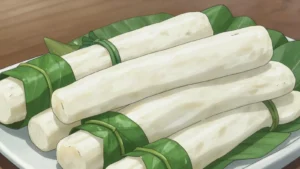
- Spoon a portion of mixture into the centre of a leaf, on the shiny side. Fold the sides over the mixture, then fold the ends up and tie the parcel firmly. Wrap them tightly, since a loose parcel lets steam and water in and the cocoyam becomes waterlogged and sloppy.
- Leave a little room for expansion, since the mixture swells slightly as it cooks. Set the parcels on a rack over simmering water, or on a bed of banana leaf stems in the bottom of the pot.
- Steam rather than boil them, since boiling water reaching the mixture dilutes it and ruins the texture. Cover the pot tightly and steam for an hour and a half. Top up the water as it goes, and never let the pot boil dry. Now judging when they are done, which needs some care. Serve them in their leaves, opened at the table.
- Serve with banga soup ladled over or alongside, which is the classic and expected pairing. They keep two or three days refrigerated in their leaves and are resteamed to reheat.
Technique
- Raw cocoyam irritates the skin, so peel it with gloves or oiled hands.
- The banana leaf keeps water out and adds its own aroma.
- Banga soup is the classic partner.
Substitutions
- Taro in place of macabo, and both are used.
- Foil in place of banana leaf, accepting the loss of aroma.
Variations
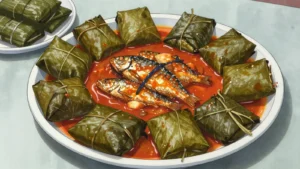
- Kwacoco bible, with smoked fish worked through it.
- Made with coconut milk rather than palm oil.
- Made plain, as an accompaniment.
Frequently asked questions
What is Kwacoco?
Kwacoco is a main from Cameroon: grated cocoyam steamed in banana leaves, coastal partner to banga soup.
How long does Kwacoco take to make?
Kwacoco takes 45 min of preparation and 1 hr 30 min of cooking. The recipe makes 8 parcels. It is rated medium to make.
What can I substitute in Kwacoco?
Yes, within limits. Taro in place of macabo, and both are used. Foil in place of banana leaf, accepting the loss of aroma.
What is the most important thing to get right in Kwacoco?
Grate it finely rather than coarsely, since the finished parcel should be smooth and dense rather than shredded. It will look like a thick pale porridge and it will be sticky, which is correct. Work in salt and either red palm oil or coconut milk, which gives two distinct versions. Add the oil or milk gradually and mix it in thoroughly.