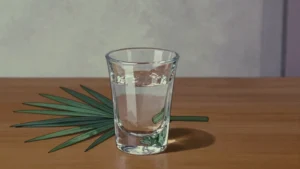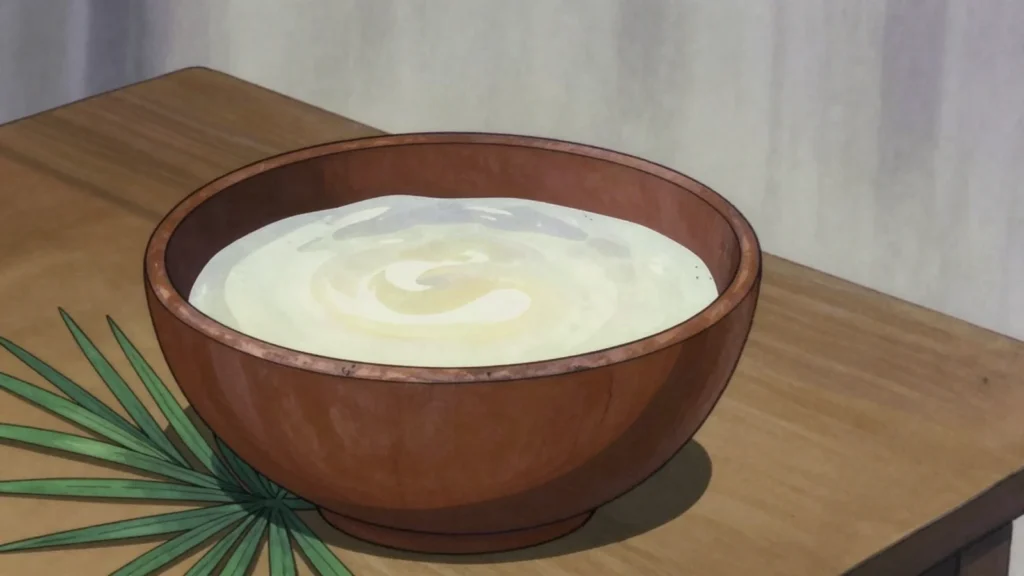

The milky sap of the raffia palm, tapped in the Northwest grassfields of Cameroon and drunk fresh or lightly fermented from calabashes. It is poured at meetings, weddings and funerals and is the Bamileke and Bamenda drink.
It is tree sap collected by climbing and tapping a living raffia palm, and the fermentation happens on its own in the container; there is no kitchen procedure, only a tree.
What goes into it
- raffia palm sap
- nothing else
How it is made
A tapper climbs the palm, cuts into the growing crown and hangs a container to collect the sap, returning twice a day. The sap begins fermenting the moment it leaves the tree, from yeasts already living on the bark and in the calabash, so it is sweet in the morning and sour and alcoholic by evening.
How long it takes: hours; sweet in the morning, sour by night
How it is eaten
From a calabash, passed around at gatherings; the first cup is offered to the eldest.
History
Tapped in the Northwest grassfields, where it is poured at meetings, weddings and funerals as the Bamileke and Bamenda drink.
Frequently asked questions
What is Sha’a?
Sha’a is a wine & spirit from Cameroon: milky sap of the raffia palm, drunk fresh and lightly fermented from calabashes. Tapped in the Northwest grassfields, where it is poured at meetings, weddings and funerals as the Bamileke and Bamenda drink.
How is Sha’a made?
A tapper climbs the palm, cuts into the growing crown and hangs a container to collect the sap, returning twice a day. The sap begins fermenting the moment it leaves the tree, from yeasts already living on the bark and in the calabash, so it is sweet in the morning and sour and alcoholic by evening. It takes hours; sweet in the morning, sour by night.
Can I make Sha’a at home?
No, and the atlas gives no method for it. It is tree sap collected by climbing and tapping a living raffia palm, and the fermentation happens on its own in the container; there is no kitchen procedure, only a tree.
What goes into Sha’a?
Raffia palm sap, nothing else.
How is Sha’a eaten?
From a calabash, passed around at gatherings; the first cup is offered to the eldest.