
Ingredients
The shellfish
- 500 gclams
- amêijoas, purged
- 500 gmussels, cleaned
- 400 graw prawns
- shell on
- or a mixture to the same weight
- 200 gmonkfish or firm white fish
- optional, in chunks
The base
- 4 tablespoonsolive oil
- 150 gsmoked pork
- chouriço or presunto, diced
- optional
- 2large onions, sliced
- 6 clovesgarlic, sliced
- 1red pepper, sliced
- 1green pepper, sliced
- 2bay leaves
The liquid
- 400 gripe tomatoes, chopped
- or 1 tin chopped tomatoes
- 200 mlwhite wine
- vinho verde or similar
- 1 teaspoonsweet paprika
- a pinch of piri-piri
- or dried chilli, to taste
- salt and black pepper
To finish
- a large bunch of coriander
- chopped
- juice of 1 lemon
- a splash of aguardente
- or brandy, optional
To serve
- good bread, plenty of it
- boiled potatoes, optional
- white wine
- lemon wedges
Equipment
- a cataplana
- the hinged clam-shaped pan
- or a wide pan with a tight lid
Directions
- Check yours before cooking anything acidic in it. Do not use an unlined copper pan for it. Discard any that stay open. Discard any with cracked or broken shells. The old rule says discard any that do not open when cooked.
- Put them in a bowl of cold salted water. Use about thirty-five grams of salt per litre. Leave them two hours, or longer. Lift them out rather than pouring them off. Never purge them in fresh water, which kills them. Pull off the beard, the fibrous tuft. Pull it towards the hinge to remove it. Leave the shells on if you like.
- Peel them if you prefer, and make stock from the shells. Heat the olive oil in the cataplana or pan. Add the diced chouriço if you are using it. Cook it until the fat runs and it colours. Add the sliced onions and peppers. Cook them slowly for about twelve minutes. They should soften completely.
- Add the sliced garlic and the bay leaves. Cook them for two minutes more. Add the chopped tomatoes. Add the paprika and the piri-piri. Cook it down for about eight minutes.
- Add the white wine and let it bubble. Give it three minutes to lose its rawness. Season with salt and pepper. Turn the heat down to medium. Add the fish chunks first if you are using them. Add the prawns on top. Scatter half the coriander over.
- Cook it over a medium heat. Give it eight to ten minutes. Turn the whole pan over after five minutes. Use both hands and oven gloves. The pan and the clasp get very hot.
- Steam escapes if the clasp is not secure. Check the clasp before you turn it. Turn it back before opening. Lift the lid with the far edge first. The clams and mussels should be open. Discard any shellfish that stayed shut. If most are still closed, cook two minutes more.
- Add the remaining coriander. Squeeze over the lemon juice. Add a splash of aguardente if you like. Taste the broth and correct the salt. It must be mopped up with bread. Serve a great deal of bread.
- Bring the closed cataplana to the table. That is how it is done and it is worth doing. Serve it straight from the pan. Serve bread, white wine and lemon. It does not keep well at all. Use it as a base for a rice or a soup. Do not freeze the finished dish. Keep them under a damp cloth, never in water. Never in a sealed bag, which suffocates them.
Technique
- Purge clams for at least two hours in cold water salted to about 35 g per litre, changing the water once and lifting them out rather than pouring them off. Sand ruins the dish completely and it is the one failure you cannot cook around. Never purge in fresh water, which kills them.
- Buy live and check: a live clam or mussel is shut, or closes within a few seconds of being tapped. Discard any that stay open and any with cracked shells. After cooking, discard any that stayed shut — some good shellfish simply have strong muscles, but there is no reliable way to tell, so the safe course is standard advice.
- Do not use an unlined copper cataplana for this. Unlined copper reacts with acidic food and this dish contains tomato and wine; most modern pans are tin- or stainless-lined, so check yours first.
- Open the pan away from your face and lift the far edge first. A cloud of scalding steam comes out and it burns badly.
- Check the clasp is secure before turning a cataplana over, and use two hands and oven gloves. The pan and the clasp get very hot and steam escapes from a loose seal.
- Underseason the base and correct at the end. Shellfish release a great deal of salty liquid and chouriço is salty too.
- Cook the onions and peppers slowly for a full twelve minutes. That base is what the broth is built on.
- The broth at the bottom is the prize, carrying everything the shellfish released. Serve a great deal of bread and expect it to be mopped up.
- Debeard the mussels shortly before cooking, pulling the beard towards the hinge. Debearding kills a mussel, so it is not something to do hours ahead.
- Smoked pork with shellfish is a long-standing Portuguese pairing, not a modern fusion — carne de porco à alentejana puts pork and clams in the same pan.
- Buy from a fishmonger with a known source and do not gather from unknown shores. Filter feeders accumulate biotoxins that cooking does not destroy, which is why authorities close beds after monitoring.
- This contains both molluscs and crustaceans, which are separate allergens and both potentially severe. Say so plainly.
- A wide pan with a tight lid substitutes for a cataplana at the cost of the turning and some of the seal. Do not attempt to turn a lidded pan over.
- The atlas holds no history line for this dish. The pan and its Algarvian home are well documented; the claim that its design is of Moorish origin is commonly stated and the atlas records it as a claim rather than as established fact.
Substitutions
- Any mixture of clams, mussels, prawns, langoustines and firm fish serves; use what the fishmonger has.
- A wide pan with a tight lid replaces a cataplana.
- Presunto, pancetta or bacon replaces chouriço, or leave the pork out entirely.
- Tinned chopped tomatoes replace fresh out of season.
- Any dry white wine replaces vinho verde.
- Brandy replaces aguardente, and both are optional.
Variations
- Cataplana de carne substitutes pork and sausage for the shellfish.
- Cataplana de peixe uses fish alone rather than shellfish.
- Carne de porco à alentejana pairs pork with clams in the same tradition.
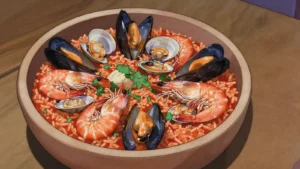
- Arroz de marisco is the soupy Portuguese seafood rice made from a similar base.
- Amêijoas à Bulhão Pato cooks clams simply with garlic, coriander, oil and white wine.
- Caldeirada is the Portuguese layered fish stew, cooked in a pot rather than a sealed pan.
History
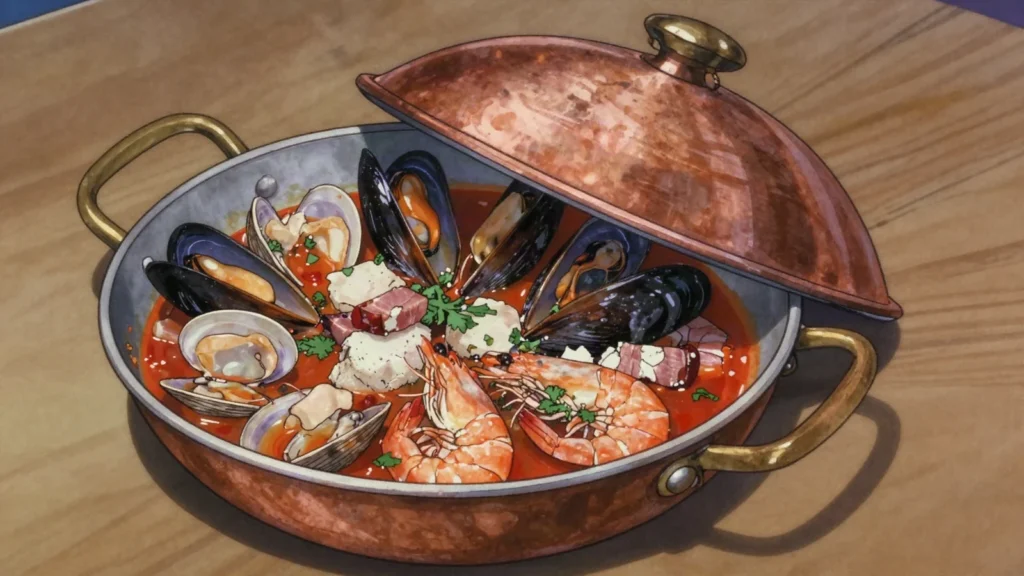
A seafood stew, combining clams, shrimp, mussels and often fish with tomato, onion, garlic and white wine, cooked inside a distinctive hinged, clamshell-shaped copper cooking vessel called a cataplana, developed in the Algarve region of southern Portugal. Its cooking vessel, the cataplana itself, sealing tightly to trap steam and allow the seafood to cook quickly in its own released juices combined with the surrounding sauce, reflects a specific regional cooking technology developed in the Algarve, with possible historical influence traced to Moorish cooking vessels used in the region during the period of Moorish rule over southern Iberia. Cataplana de marisco remains closely associated with the Algarve region specifically within the broader landscape of Portuguese coastal cuisine.
Frequently asked questions
What is Cataplana de marisco?
Cataplana de marisco is a soup & stew from Portugal: seafood and clams steamed in a copper clamshell pan. A seafood stew, combining clams, shrimp, mussels and often fish with tomato, onion, garlic and white wine, cooked inside a distinctive hinged, clamshell-shaped copper cooking vessel called a cataplana, developed in the Algarve region of southern Portugal. Its cooking vessel, the cataplana itself, sealing tightly to trap steam and allow the seafood to cook quickly in its own released juices combined with the surrounding sauce, reflects a specific regional cooking technology developed in the Algarve, with possible historical influence traced to Moorish cooking vessels used in the region during the period of Moorish rule over southern Iberia. Cataplana de marisco remains closely associated with the Algarve region specifically within the broader landscape of Portuguese coastal cuisine.
How long does Cataplana de marisco take to make?
Cataplana de marisco takes 30 minutes plus purging of preparation and 35 minutes of cooking. The recipe makes serves 4. It is rated medium to make.
What can I substitute in Cataplana de marisco?
Yes, within limits. Any mixture of clams, mussels, prawns, langoustines and firm fish serves; use what the fishmonger has. A wide pan with a tight lid replaces a cataplana. Presunto, pancetta or bacon replaces chouriço, or leave the pork out entirely. Tinned chopped tomatoes replace fresh out of season. Any dry white wine replaces vinho verde. Brandy replaces aguardente, and both are optional.
What is the most important thing to get right in Cataplana de marisco?
Check yours before cooking anything acidic in it. Do not use an unlined copper pan for it. Discard any that stay open. Discard any with cracked or broken shells. The old rule says discard any that do not open when cooked.