
Ingredients
Offal
- 800 glamb tripe, cleaned
- 300 glamb lung or heart, or a mix
- 200 glamb liver, cut late (optional)
- 3 tbspcoarse salt and 3 tbsp flour, for scrubbing
- juice of 2 lemons or 4 tbsp vinegar
Stew
- 4 tbspolive oil
- 2onions, finely chopped
- 6garlic cloves, crushed
- 2 tbsptomato puree
- 2tomatoes, grated
- 1 tbspsweet paprika
- 1 tbspground cumin
- 1 tspground caraway
- ½ tspcayenne
- 200 gdried chickpeas, soaked overnight
- 1bay leaf
- 1.5 litreswater
- salt and black pepper
Herbs to finish
- 2 tbspdried mint
- 1 tbspdried marjoram or oregano
- 1large handful fresh mint, chopped
- 1 handfulcoriander leaf, chopped
Directions
- Scrub the tripe hard with coarse salt and flour, rinse, then rub with lemon juice or vinegar and rinse again under cold running water; repeat until it smells clean and neutral, which usually takes three rounds.
- Blanch the tripe and lung in boiling water for 10 minutes, drain, discard that water and rinse the pieces. This first blanch removes the last of the strong smell.
- Cut the blanched offal into 3 cm squares and strips with kitchen scissors, which handle tripe far better than a knife.
- Heat the olive oil in a large heavy pot and sweat the onions over medium-low heat for 10 minutes until soft, then add the garlic and cook 1 minute more.
- Stir in the paprika, cumin, caraway and cayenne and fry for 1 minute until fragrant, then add the tomato puree and cook it out for 2 minutes until it darkens.
- Add the offal, grated tomatoes, drained chickpeas, bay leaf and water, season, bring to the boil and skim thoroughly.
- Cover and simmer very gently for 2 hours to 2 hr 30 min, topping up with hot water as needed, until the tripe is completely tender and yields like soft rubber to the tooth rather than bouncing back.
- Add the liver, if using, only in the last 10 minutes so it stays tender, along with the dried mint and marjoram crumbled between your palms.
- Uncover and reduce for a final 15 minutes until the sauce is thick enough to cling, then stir in the fresh mint and coriander off the heat and serve very hot with bread.
Technique
- Cleaning is the whole battle. Undercleaned tripe will taint the pot and no amount of spice will hide it, so keep scrubbing until the rinse water is completely clear.
- Dried mint is not a garnish here; it is a structural flavour, added during cooking, and its slight bitterness is what balances the fat of the offal.
- Douara is Ramadan food and Aid food, cooked from the sacrificed animal so nothing is wasted, and it is always better on the second day.
Substitutions
- Pre-cleaned honeycomb tripe from a butcher saves an hour; still blanch it once before stewing.
- If lung is unavailable or unappealing, use extra tripe plus 200 g diced lamb heart, which is meatier and milder.
Variations
- In Oran the stew leans on more chickpeas and less tomato, closer to a soup.
- An eastern version stirs in a handful of soaked dried broad beans alongside the chickpeas.
- Some households finish with a spoon of harissa and extra garlic pounded raw at the very end.
History
An offal dish traditionally cooked after Eid al-Adha, when the whole animal is used within days of slaughter.
Frequently asked questions
What is Douara?
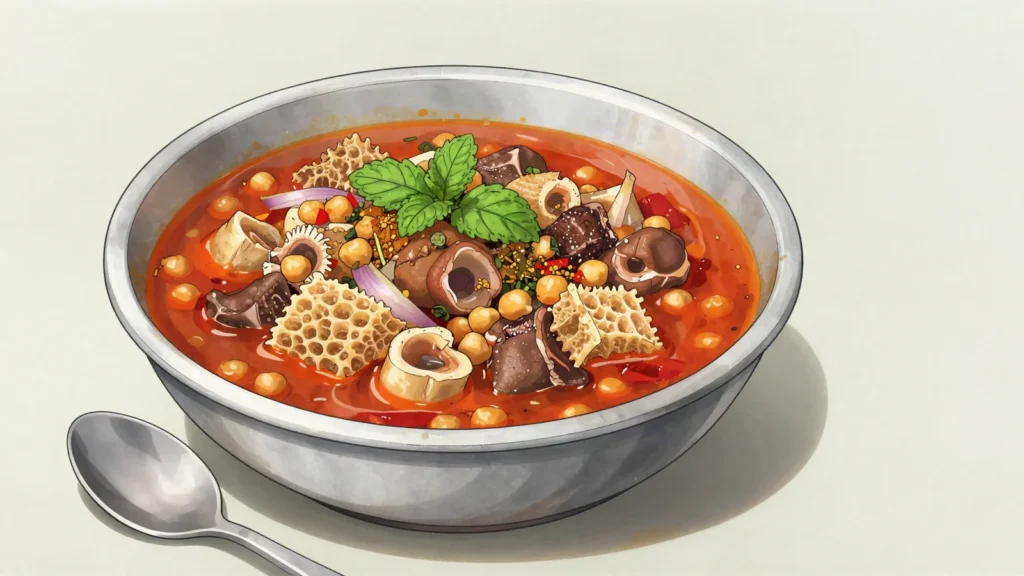
Douara is a soup & stew from Algeria: tripe and offal stewed with chickpeas, mint and dried herbs. An offal dish traditionally cooked after Eid al-Adha, when the whole animal is used within days of slaughter.
How long does Douara take to make?
Douara takes 45 min including cleaning of preparation and 2 hr 30 min of cooking. The recipe makes 6 servings. It is rated hard to make.
What can I substitute in Douara?
Yes, within limits. Pre-cleaned honeycomb tripe from a butcher saves an hour; still blanch it once before stewing. If lung is unavailable or unappealing, use extra tripe plus 200 g diced lamb heart, which is meatier and milder.
What is the most important thing to get right in Douara?
Cover and simmer very gently for 2 hours to 2 hr 30 min, topping up with hot water as needed, until the tripe is completely tender and yields like soft rubber to the tooth rather than bouncing back.