
Ingredients
Syrup
- 400 gcaster sugar
- 200 mlwater
- a strip of lemon peel
- 1cinnamon stick
Cake
- 300 gground almonds
- 10egg yolks
- 2whole eggs
- 60 gbutter, softened
- 40 gplain flour
- a pinch of salt
To finish
- icing sugar, for dusting
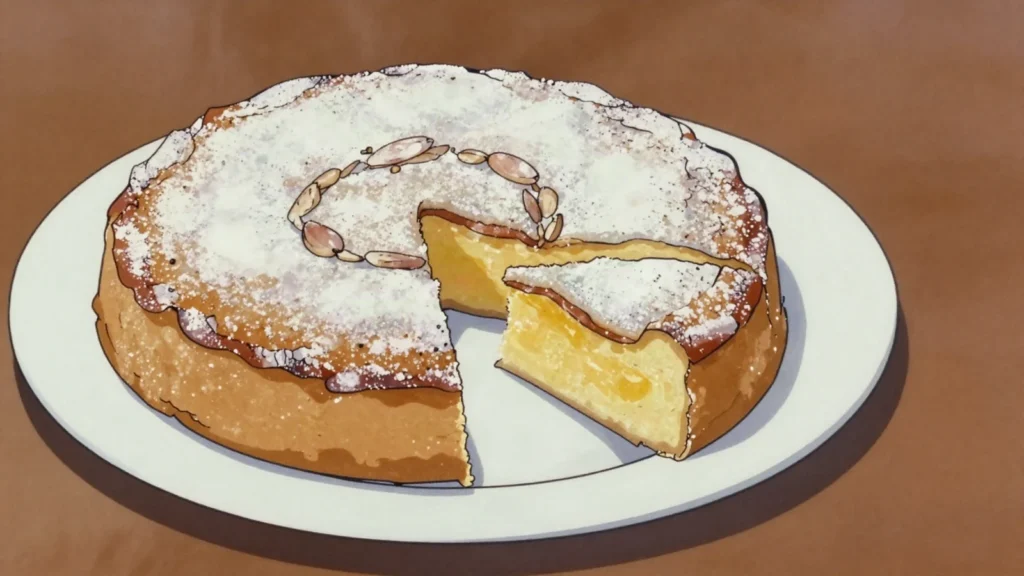
- flaked almonds, optional
For the Guimaraes style
- 150 gdoce de chila, candied fig-leaf gourd
Directions
- Put the sugar and water in a heavy pan. Add the lemon peel and the cinnamon stick. Stir over a low heat until the sugar dissolves. Brush the sides of the pan with a wet brush. Once clear, stop stirring and raise the heat.
- Boil it until it reaches the thread stage. That is about 105C on a sugar thermometer. Take it off the heat at that point. Adding the almonds is done straight away. Stir the ground almonds into the hot syrup. It will thicken into a stiff paste immediately. Beat it well to break up any lumps. Return it to a low heat for two minutes.
- Stir constantly so the bottom does not catch. Then take it off and let it cool considerably. Beat the yolks and whole eggs together in a bowl. Stir the softened butter into the warm almond paste.
- Beat thoroughly after each addition. Sift in the flour and the salt. Fold it through until it is evenly combined. Stir in chopped doce de chila for the Guimaraes style. Baking it needs a moderate oven and a lined tin.
- Heat the oven to 180C with a shelf in the middle. Butter a round tin and line the base with paper. Dust the sides with flour or ground almonds.
- Pour the mixture in and level the top. Scatter flaked almonds over it if you like. Bake it for about forty-five minutes. The top should be deep golden and set. Cover it loosely with foil if it browns too fast.
- Let it cool completely in the tin. It is fragile while warm and will break. Dust it generously with icing sugar. Cut small slices because it is extremely rich. It keeps for a week in a sealed tin.
Technique
- Portuguese conventual sweets are a documented category, and their heavy use of egg yolks follows directly from convent uses for the whites.
- Toucinho do ceu is made in several towns with local variations, and Murca and Guimaraes are the two most associated with it.
Substitutions
- Doce de chila is sold in Portuguese shops and can be left out entirely for the simpler Murca style.
- Butter replaces the original lard in almost all modern versions.
Variations
- The Guimaraes version includes candied gourd and is often baked in a shallower tin.
- Some recipes use whole blanched almonds ground at home for a coarser texture.
- A version scented with orange rather than lemon is made in the Algarve.
History
A convent sweet of Murça and Guimarães, made with yolks left over after nuns used egg whites to starch habits.
Frequently asked questions
What is Toucinho do ceu?
Toucinho do ceu is a dessert from Portugal: dense almond and egg-yolk cake, once enriched with lard as its name implies. A convent sweet of Murça and Guimarães, made with yolks left over after nuns used egg whites to starch habits.
How long does Toucinho do ceu take to make?
Toucinho do ceu takes 30 minutes of preparation and 45 minutes of cooking. The recipe makes one cake, 10 slices. It is rated medium to make.
What can I substitute in Toucinho do ceu?
Yes, within limits. Doce de chila is sold in Portuguese shops and can be left out entirely for the simpler Murca style. Butter replaces the original lard in almost all modern versions.