
Ingredients
The choux paste
- 250 mlwater
- 100 gbutter
- 1 tablespoonsugar
- a pinch of salt
- 150 gplain flour
- 4eggs
Sometimes added
- grated zest of 1 lemon
- 1 tablespoonrum
- a pinch of vanilla
To fry
- oil, for deep frying
To finish
- icing sugar, to dust
- or caster sugar, to roll
Directions
- Flour is cooked into boiling water and butter. That water turns to steam in the hot oil. Put the water, butter, sugar and salt in a pan. Bring it up to a full rolling boil. The butter must be fully melted first.
- Take the pan right off the heat. Tip in all of the flour at once. Beat it hard with a wooden spoon. Beat it immediately and very hard. Return the pan to a very low heat.
- Beat the paste for two full minutes. It forms a smooth ball on the spoon. Tip the paste out into a bowl. Let it cool for about ten minutes. Hot paste scrambles the eggs instead. Beat the eggs in one at a time. Beat each one in fully before the next. Keep beating and it comes back together. Judging the paste takes a look.
- Add the very last egg gradually. Stop if the paste is already right. Beat in lemon zest or a little rum. Keep them small in overall quantity. Heating the oil takes attention. Pour the oil into a deep heavy pot. Fill it no more than half full.
- Heat it to about one hundred and sixty degrees. Choux needs time to puff and cook through. Keep a lid nearby to smother a flare-up. Never put water on an oil fire at all.
- Keep children well away from the pot. They also move about as they puff. Fry only a few at a time for that. Shaping them is done with two spoons. Take a small spoonful of the paste. Make them small rather than large. A single teaspoonful is about right.
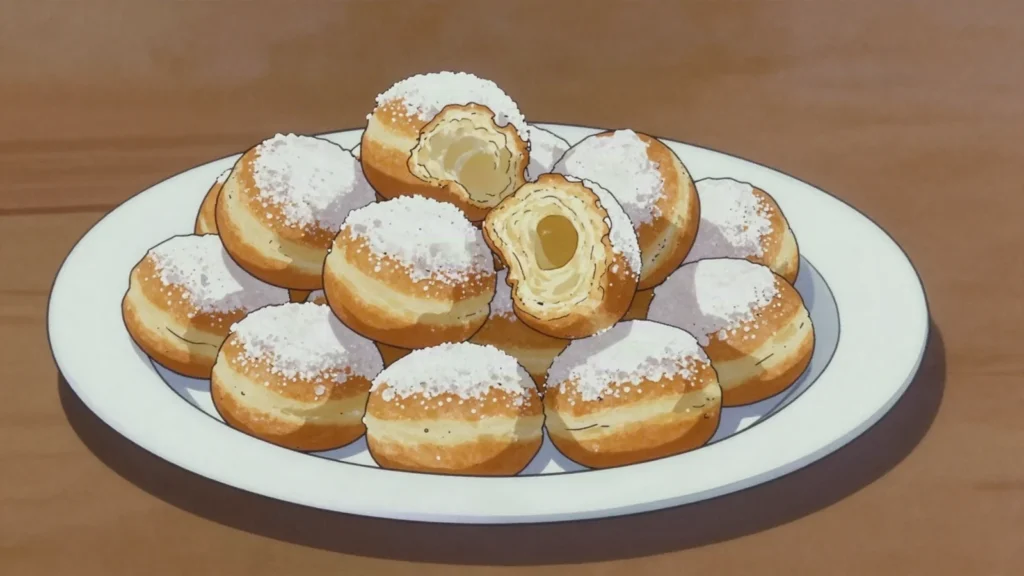
- Break the first one open to check. It should be hollow and dry inside. Lift them out onto a wire rack. Let all the excess oil drip away. That softens them within minutes. Dust them heavily with icing sugar. Or roll them in caster sugar while warm. Pile them onto a serving plate. They are best within the hour.
Technique
- These are made from choux paste rather than a yeast dough, which is unusual for a doughnut: the flour is cooked into boiling water and butter until the starch gelatinises, eggs are beaten in, and the water held in the paste turns to steam in the oil and inflates each ball from inside. No yeast or baking powder is used at all — the lift is entirely steam, which is what makes them almost hollow and so light that the name is a joke about it.
- Fry at about one hundred and sixty degrees, cooler than most deep frying, and give them a full six minutes: choux needs time to puff and cook through, and hot oil sets the outside before the inside cooks. A collapsed doughnut or one wet in the middle was fried too hot — lower the heat and the next batch will be right.
- Add the eggs one at a time and beat each in fully before the next; the paste separates and looks slippery and wrong as each goes in, then comes back together. Add the last egg gradually and stop if the paste is already smooth, glossy and holding a soft peak, since egg sizes vary and too much makes it too slack.
Substitutions
- Lemon zest or a little rum beaten in with the last egg are both common in Luxembourg.
- Roll them in caster sugar while warm for a crunchy coating, or dust with icing sugar once cooler; hot doughnuts melt icing sugar away.
Variations
- Pets de nonne is the French name for the same thing and means exactly the same, so the Luxembourgish is a direct equivalent.
- They are eaten at Fuesent carnival before Lent, when fat and eggs were traditionally used up before the fast.
- Make them teaspoon-sized, since they swell to several times their size and large ones stay raw in the middle.
History
Eaten in Luxembourg during Fuesent carnival; the name translates literally as nuns’ farts.
Frequently asked questions
What is Nonnefäscht?
Nonnefäscht is a dessert from Luxembourg: small round carnival doughnuts fried and dusted with sugar. Eaten in Luxembourg during Fuesent carnival; the name translates literally as nuns’ farts.
How long does Nonnefäscht take to make?
Nonnefäscht takes 20 minutes of preparation and 25 minutes of cooking. The recipe makes about 40 small doughnuts. It is rated medium to make.
What can I substitute in Nonnefäscht?
Yes, within limits. Lemon zest or a little rum beaten in with the last egg are both common in Luxembourg. Roll them in caster sugar while warm for a crunchy coating, or dust with icing sugar once cooler; hot doughnuts melt icing sugar away.
What is the most important thing to get right in Nonnefäscht?
Flour is cooked into boiling water and butter. That water turns to steam in the hot oil. Put the water, butter, sugar and salt in a pan. Bring it up to a full rolling boil. The butter must be fully melted first.