
Ingredients
Coffee
- 18 gcoffee, freshly ground fine
- filtered water
Equipment
- an espresso machine
- a scale
- a tamper
Directions
- Use coffee roasted within the last month and grind it immediately before brewing. Ground coffee loses its aromatics within minutes and there is nowhere for that to hide in 30 ml of liquid.
- Weigh the dose rather than guessing by volume. Eighteen grams into a standard double basket is a sound starting point.
- Distribute the grounds level in the basket, tapping and settling them so there are no gaps or mounds anywhere.
- Tamp firmly and, above all, level. An uneven bed lets the water find a channel and rush through one side, and channelling is the commonest cause of a bad shot by a wide margin.
- Flush the group head briefly and lock the portafilter in immediately afterwards.
- Start the shot and the timer at the same moment.
- Aim for about 36 g of liquid in 25 to 30 seconds, which is roughly twice the weight of the dry coffee.
- Judge it by weight and time together rather than by how it looks. Too fast and it will be sour and thin; too slow and it will be bitter and harsh.
- Adjust the grind rather than the tamp to correct the timing. Finer slows the shot down, coarser speeds it up.
- Drink it within a minute, standing at the bar if you are doing it properly. The crema collapses and the flavour flattens within about two.
- Machines were patented by Luigi Bezzera in 1901 and commercialised by Desiderio Pavoni, and Achille Gaggia’s 1948 lever pump is what created the crema everyone now expects.
Technique
- Grind, dose, tamp level. Almost every problem with espresso traces back to one of those three.
- Crema is a sign of freshness rather than of quality. Stale coffee makes almost none, and very fresh coffee makes too much.
- In Italy it is ordered simply as un caffè, and asking for an espresso marks you out immediately.
Substitutions
- A moka pot, which makes something strong and good and is not espresso.
- An Aeropress pulled short, which is closer than a moka pot in body.
Variations
- Ristretto, pulled shorter and sweeter.
- Lungo, pulled longer and more bitter.
- Macchiato, marked with a spoonful of foamed milk.
History
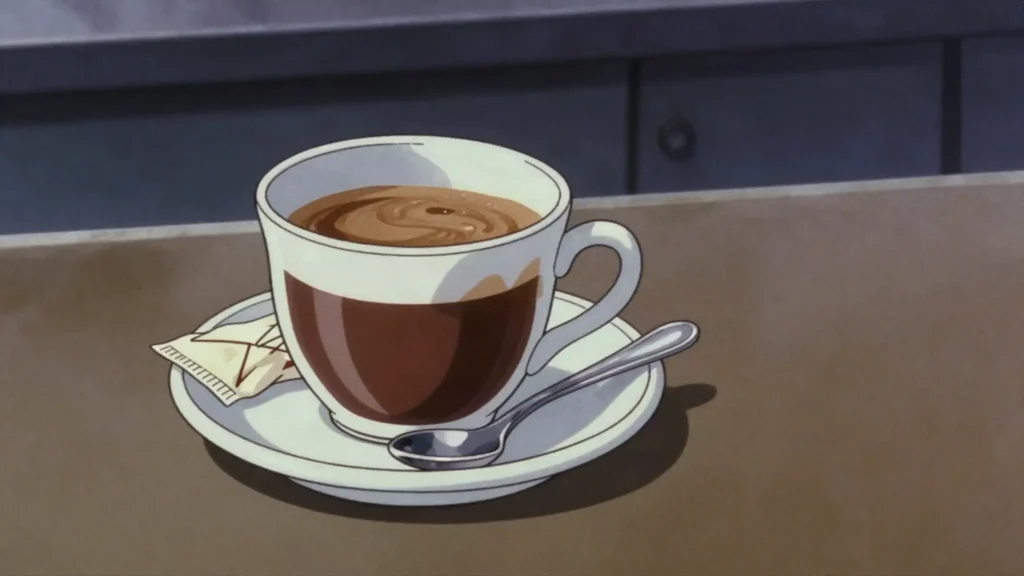
A concentrated coffee, brewed by forcing hot water under high pressure through finely ground coffee beans, documented across Italy since the early 1900s, with the specific pressurized brewing machine generally credited to Angelo Moriondo, who patented an early espresso machine design in Turin in 1884, later refined and commercialized more widely by other Italian inventors and manufacturers through the early and mid-1900s. Its distinctive crema, a thin layer of reddish-brown foam that forms atop a well-pulled shot, results directly from that high-pressure brewing method and is considered by Italian coffee culture an essential marker of a properly made espresso. Espresso remains one of Italy’s most significant and globally influential culinary and cultural exports.
Frequently asked questions
What is Espresso?
Espresso is a drink from Italy: short, intense coffee drunk standing at the bar. A concentrated coffee, brewed by forcing hot water under high pressure through finely ground coffee beans, documented across Italy since the early 1900s, with the specific pressurized brewing machine generally credited to Angelo Moriondo, who patented an early espresso machine design in Turin in 1884, later refined and commercialized more widely by other Italian inventors and manufacturers through the early and mid-1900s. Its distinctive crema, a thin layer of reddish-brown foam that forms atop a well-pulled shot, results directly from that high-pressure brewing method and is considered by Italian coffee culture an essential marker of a properly made espresso. Espresso remains one of Italy’s most significant and globally influential culinary and cultural exports.
How long does Espresso take to make?
Espresso takes 3 min of preparation and 1 min of cooking. The recipe makes 1 double shot. It is rated medium to make.
What can I substitute in Espresso?
Yes, within limits. A moka pot, which makes something strong and good and is not espresso. An Aeropress pulled short, which is closer than a moka pot in body.
What is the most important thing to get right in Espresso?
Weigh the dose rather than guessing by volume. Eighteen grams into a standard double basket is a sound starting point.