
Ingredients
The stew
- 1 kgbeef chuck or brisket, cut in 3 cm cubes
- 3 tbspsunflower oil
- 2onions, chopped
- 1red pepper, diced
- 3garlic cloves, minced
- 1 tspsweet pimentón
- 1 tspground cumin
- 1 tspdried oregano
- 400 gtinned tomatoes, chopped
- 1.2 litresbeef stock or water
- 2bay leaves
- 2 tspsalt
- ½ tspblack pepper
Vegetables and fruit
- 3corn cobs, cut into 3 cm rounds
- 500 gorange sweet potato, in 3 cm chunks
- 400 gpotatoes, in 3 cm chunks
- 300 gpumpkin (calabaza), in 3 cm chunks
- 3firm peaches, stoned and quartered, or 8 dried peach halves soaked 30 min
- 2 tbspraisins, optional
If serving in a pumpkin
- 1whole pumpkin of about 4 kg, top cut off and seeds scooped out
- 2 tbspbutter and 1 tsp salt, for rubbing the cavity
Directions
- Pat the meat dry, season it and brown hard in the oil in a heavy pot, in three batches, 4–5 minutes each, until a real crust forms. Crowding the pot steams the meat and costs you the flavour base.
- Lift out the meat, drop the heat and sweat the onion, pepper and garlic in the same fat for 8 minutes until soft and just golden.
- Add the pimentón, cumin and oregano and stir for 30 seconds off the direct heat so the paprika toasts without burning.
- Return the meat, add the tomatoes, stock, bay, salt and pepper, bring to a simmer, cover and cook gently 1 hour until the meat is beginning to yield.
- Add the potatoes and corn and simmer uncovered 15 minutes, then add the sweet potato and pumpkin and cook another 15 minutes, until everything is tender and the pumpkin is starting to break down and thicken the broth.
- Add the peaches and raisins in the last 8 minutes only. They should hold their shape and stay distinct; cooked longer they dissolve and the whole stew turns sweet.
- Taste and correct the salt. Carbonada should be savoury with sweetness arriving as an accent, not a fruit stew with meat in it.
- For carbonada en zapallo, rub the pumpkin cavity with butter and salt, bake it at 180°C (350°F) for 45 minutes until the flesh is tender but the shell still stands, then ladle in the stew, replace the lid and return to the oven 15 minutes. Serve from the pumpkin, scraping flesh from the walls with each portion.
Technique
- Carbonada is a criollo stew of colonial origin and belongs to the same family as Chilean and Peruvian carbonadas: meat, native tubers and maize, with fruit as the signature.
- The fruit is what distinguishes it. Peaches in summer, dried peaches or pears in winter; adding them late is the difference between a good carbonada and a cloying one.
- The pumpkin shell is presentation, not gimmick: it is used at patriotic dates and family gatherings, and the flesh scraped from the walls is part of the dish.
- Cut everything the same size. Uneven chunks mean the potato collapses before the sweet potato is done.
Substitutions
- No fresh corn cobs: use 300 g frozen corn kernels added with the pumpkin, though you lose the pleasure of gnawing the cob.
- Dried apricots can replace the peaches, giving a sharper, more acidic sweetness.
- Beef can be replaced with veal shin, which is common in Cuyo and gives a silkier broth.
Variations
- Carbonada criolla, served straight from the pot.
- Carbonada en zapallo, baked in and served from a whole pumpkin.
- A northern version with charqui (dried salted meat) rehydrated in place of fresh beef.
History
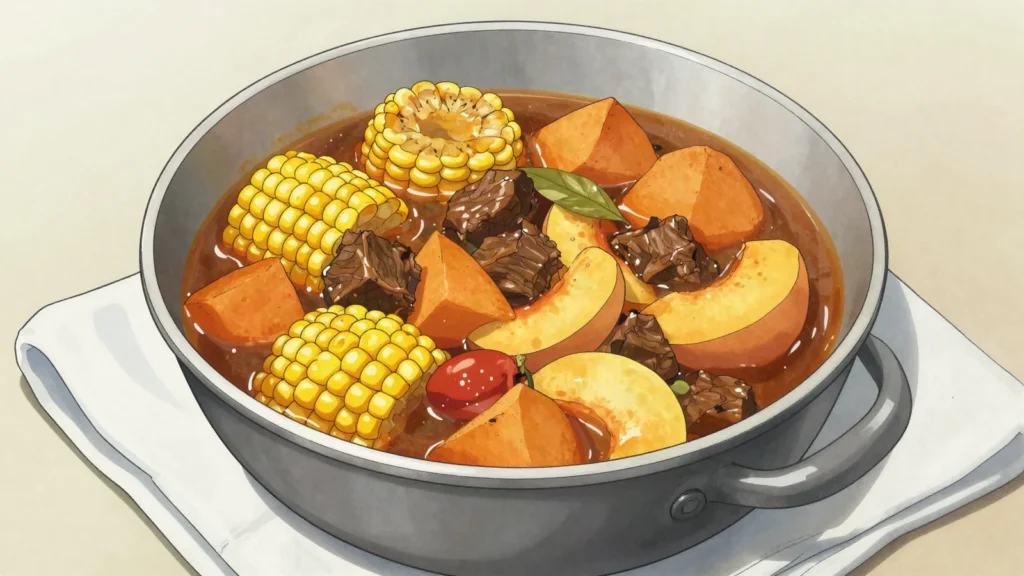
A stew combining beef, corn, squash, sweet potato and other vegetables, sometimes prepared and served inside a hollowed-out pumpkin, documented across Argentina, particularly in the country’s northern and Andean regions, reflecting a layering of Spanish colonial-era beef cooking onto Indigenous Andean agricultural staples including corn and squash that predate European contact. Its sweet-and-savory character, often including dried fruit such as peach or apricot mixed into the stew, reflects a broader Spanish colonial culinary influence found across several traditional Latin American dishes that combine fruit with savory meat. Carbonada remains a traditional dish particularly associated with Argentina’s interior and Andean regions, especially prepared during the cooler autumn season when its core vegetables are harvested.
Frequently asked questions
What is Carbonada?
Carbonada is a soup & stew from Argentina: beef stew with corn, sweet potato and peaches, sometimes in pumpkin. A stew combining beef, corn, squash, sweet potato and other vegetables, sometimes prepared and served inside a hollowed-out pumpkin, documented across Argentina, particularly in the country’s northern and Andean regions, reflecting a layering of Spanish colonial-era beef cooking onto Indigenous Andean agricultural staples including corn and squash that predate European contact. Its sweet-and-savory character, often including dried fruit such as peach or apricot mixed into the stew, reflects a broader Spanish colonial culinary influence found across several traditional Latin American dishes that combine fruit with savory meat. Carbonada remains a traditional dish particularly associated with Argentina’s interior and Andean regions, especially prepared during the cooler autumn season when its core vegetables are harvested.
How long does Carbonada take to make?
Carbonada takes 35 min of preparation and 1 hr 30 min of cooking. The recipe makes 6 servings. It is rated medium to make.
What can I substitute in Carbonada?
Yes, within limits. No fresh corn cobs: use 300 g frozen corn kernels added with the pumpkin, though you lose the pleasure of gnawing the cob. Dried apricots can replace the peaches, giving a sharper, more acidic sweetness. Beef can be replaced with veal shin, which is common in Cuyo and gives a silkier broth.
What is the most important thing to get right in Carbonada?
Add the peaches and raisins in the last 8 minutes only. They should hold their shape and stay distinct; cooked longer they dissolve and the whole stew turns sweet.