
Ingredients
Chicken and marinade
- 1.6 kgchicken, jointed into 10 pieces, skin on
- 6garlic cloves, crushed to a paste
- juice of 2 lemons
- 2 tspsalt
- 1 tspblack pepper
Stew
- 150 mlred palm oil (óleo de palma)
- 2large onions, sliced
- 4ripe tomatoes, chopped
- 2 tbsptomato puree
- 300 gokra, whole with the tops trimmed but not cut open
- 500 gpumpkin or butternut squash, in 4 cm chunks
- 2jindungo or scotch bonnet chillies, one whole and one chopped
- 500 mlwater or light chicken stock
- 1 tspsalt
To serve
- funge or plain rice
- lemon wedges
Directions
- Rub the chicken with the garlic paste, lemon juice, salt and pepper and leave it to marinate at least 2 hours, or overnight in the fridge. The lemon and garlic penetrate the meat and are the base note of the whole dish.
- Warm the palm oil in a wide heavy pot over medium heat until it loosens and turns bright orange, but do not let it smoke: overheated palm oil goes acrid and loses its colour.
- Brown the chicken pieces in batches, 4 minutes a side, until golden. Lift them out.
- Soften the onions in the same oil for 8 minutes until translucent and sweet, add the chopped chilli and the tomato puree and fry 2 minutes.
- Add the tomatoes and cook 8 minutes until they break down into a thick red sauce and the oil separates and pools at the edges.
- Return the chicken with any marinade, add the water and the whole chilli, cover and simmer gently for 25 minutes.
- Add the pumpkin and the whole okra and cook uncovered a further 20 minutes, until the pumpkin is soft enough to crush against the pot and thickens the sauce, and the okra is tender but still holding its shape.
- Rest 10 minutes off the heat so the palm oil rises and glazes the surface, check the salt, and serve with funge, tearing off pieces to scoop up chicken and sauce.
Technique
- Leave the okra whole and uncut. Sliced okra releases its mucilage and turns the sauce ropey, which in muamba is a fault rather than a feature.
- The pumpkin is a thickener as much as a vegetable: as it collapses it gives the sauce its body, and no flour or cornflour belongs anywhere near this dish.
- Muamba de galinha is widely called Angola’s national dish and its Portuguese-era name, muamba de dendem, points to the palm oil that defines it. A related Angolan dish, muamba de ginguba, is thickened with peanut paste instead.
Substitutions
- Red palm oil is essential for the colour and flavour; if you truly cannot find it, use 100 ml neutral oil plus 2 tbsp annatto oil, and accept that the result is a different, milder stew.
- Gimboa or sweet potato leaves are sometimes added; spinach stirred in for the last 5 minutes is the easiest stand-in.
Variations
- Muamba de ginguba, the peanut-thickened version served in the interior provinces.
- A Cabinda style with more chilli and a handful of dried shrimp added with the tomatoes.
History
Chicken stewed in a sauce built on palm oil and ground peanut, or groundnut, considered Angola’s national dish and closely related to similar palm-oil-and-peanut stews found across other Portuguese-colonized regions of Africa, reflecting a shared colonial-era trade history that carried peanut, a South American crop, into West and Central African cooking through Portuguese networks beginning in the 1500s and 1600s. Palm oil itself, extracted from the fruit of the oil palm native to West and Central Africa, gives the stew its distinctive deep orange-red colour and rich flavour, and quissange, an okra-like vegetable used to add body and thickness, is a traditional regional addition specific to Angolan preparations of the dish rather than found in closely related recipes elsewhere on the continent.
Frequently asked questions
What is Muamba de galinha?
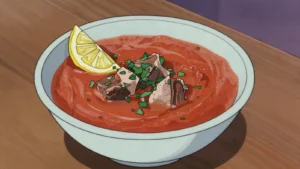
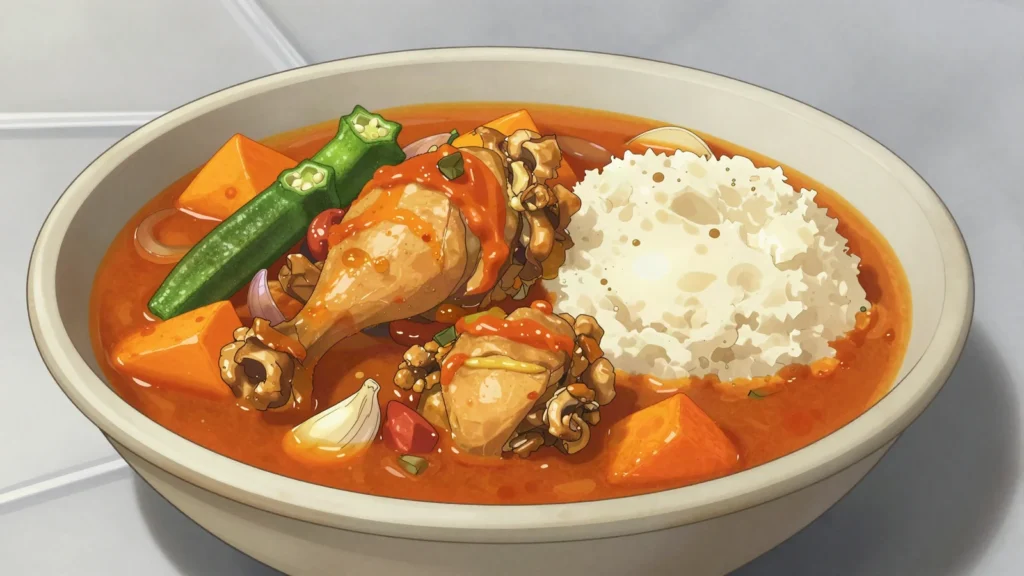
Muamba de galinha is a soup & stew from Angola: chicken stewed in red palm oil with okra and garlic; national dish. Chicken stewed in a sauce built on palm oil and ground peanut, or groundnut, considered Angola’s national dish and closely related to similar palm-oil-and-peanut stews found across other Portuguese-colonized regions of Africa, reflecting a shared colonial-era trade history that carried peanut, a South American crop, into West and Central African cooking through Portuguese networks beginning in the 1500s and 1600s. Palm oil itself, extracted from the fruit of the oil palm native to West and Central Africa, gives the stew its distinctive deep orange-red colour and rich flavour, and quissange, an okra-like vegetable used to add body and thickness, is a traditional regional addition specific to Angolan preparations of the dish rather than found in closely related recipes elsewhere on the continent.
How long does Muamba de galinha take to make?
Muamba de galinha takes 25 min of preparation and 1 hr of cooking. The recipe makes 6 servings. It is rated medium to make.
What can I substitute in Muamba de galinha?
Yes, within limits. Red palm oil is essential for the colour and flavour; if you truly cannot find it, use 100 ml neutral oil plus 2 tbsp annatto oil, and accept that the result is a different, milder stew. Gimboa or sweet potato leaves are sometimes added; spinach stirred in for the last 5 minutes is the easiest stand-in.
What is the most important thing to get right in Muamba de galinha?
Rub the chicken with the garlic paste, lemon juice, salt and pepper and leave it to marinate at least 2 hours, or overnight in the fridge. The lemon and garlic penetrate the meat and are the base note of the whole dish.