
Ingredients
Maicena dough
- 250 gcornflour (maicena)
- 150 gplain flour
- 1 tspbaking powder
- ½ tspbicarbonate of soda
- 150 gsoft unsalted butter
- 120 gcaster sugar
- 3egg yolks
- 1 tbspbrandy or cognac
- 1 tspvanilla essence
- Finely grated zest of 1 lemon
Filling and finish
- 400 gdulce de leche repostero (the thick pastry-grade kind)
- 100 gdesiccated coconut, for rolling the edges
- or 300 g dark chocolate, 55%, tempered, for coating
Directions
- Beat the butter and sugar for 3–4 minutes until pale and light, then beat in the yolks one at a time, followed by the brandy, vanilla and lemon zest.
- Sift the cornflour, flour, baking powder and bicarbonate together twice, then fold into the butter mixture with a spatula until it just comes together as a soft, sandy dough. Do not knead: gluten makes alfajores hard.
- Wrap and rest in the fridge 1 hour so the cornflour hydrates and the dough rolls without cracking.
- Roll to a generous 7 mm thickness between two sheets of baking paper and cut 5 cm rounds. Alfajores are thick biscuits, not wafers.
- Lay on a lined tray and bake at 170°C (350°F) for 10–12 minutes. They should stay pale, with only the base faintly coloured; a browned alfajor is overbaked and will be dry.
- Cool completely on the tray for 5 minutes, then on a rack. They are extremely fragile while warm.
- Pipe or spoon a generous 25 g mound of dulce de leche onto the flat side of half the biscuits and press a second biscuit on top until the filling reaches the edge and bulges slightly.
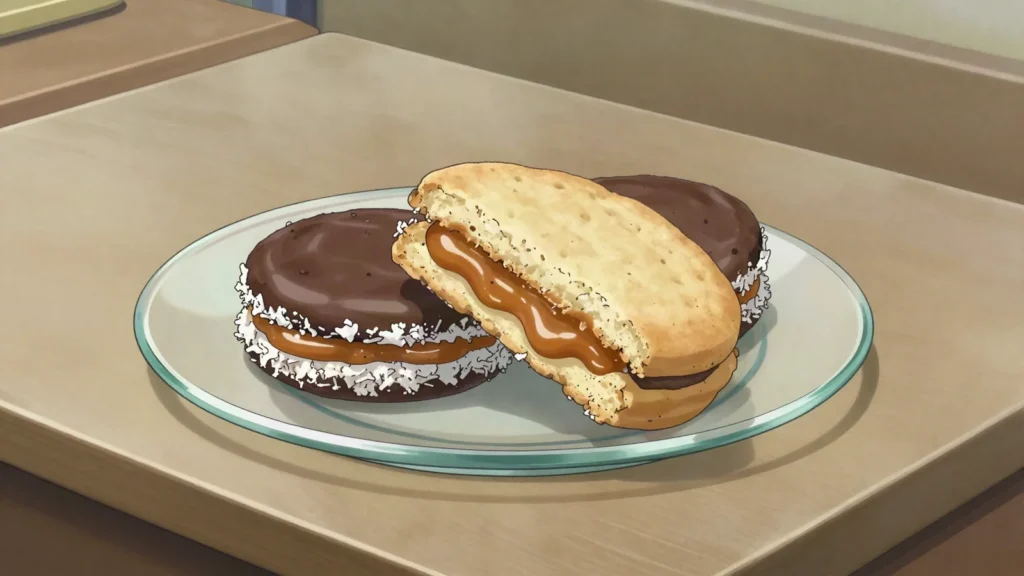
- Roll the exposed rim in desiccated coconut, or dip the whole alfajor in tempered chocolate and set on paper. Rest at least 4 hours before eating so the biscuit softens against the filling.
Technique
- Dulce de leche repostero is thicker than the spreadable kind and is what holds the two halves together. Ordinary dulce de leche runs out of the sides within an hour.
- The maicena alfajor should collapse into powder in the mouth. That texture comes from the high cornflour ratio and from handling the dough as little as possible.
- Alfajores improve overnight in a sealed tin as moisture migrates from filling into biscuit; Argentines rarely eat them the day they are made.
Substitutions
- No cornflour version wanted: a plain wheat shortbread dough of 300 g flour, 200 g butter and 100 g sugar makes the sturdier alfajor de nieve style used for chocolate coating.
- Brandy can be replaced with 1 tbsp lemon juice, though the classic Argentine dough always carries a splash of spirit.
Variations
- Alfajor de maicena, rolled in coconut, the Buenos Aires standard.
- Alfajor cordobés, glazed with sugar icing and filled with fruit jam.
- Alfajor santafesino, three layers of thin pastry glazed in hot sugar.
History
A sandwich cookie filled most commonly with dulce de leche and often coated in chocolate or powdered sugar, generally traced back through Moorish influence on medieval Spain, where a dense, spiced honey-and-nut confection called alajú was documented well before Spanish colonization carried related recipes to the Americas beginning in the 1500s. Argentine cooks reworked that older Spanish confection substantially over the following centuries into the now-standard light, crumbly cookie filled with dulce de leche, a filling that itself only became closely associated with Argentina after dulce de leche’s own popularization there through the 1800s. Alfajores became significant enough to Argentine identity that they are treated as a defining national snack and gift item, commonly given as souvenirs by Argentine travelers abroad.
Frequently asked questions
What is Alfajor?
Alfajor is a dessert from Argentina: cookie sandwich of dulce de leche, coated in chocolate or coconut. A sandwich cookie filled most commonly with dulce de leche and often coated in chocolate or powdered sugar, generally traced back through Moorish influence on medieval Spain, where a dense, spiced honey-and-nut confection called alajú was documented well before Spanish colonization carried related recipes to the Americas beginning in the 1500s. Argentine cooks reworked that older Spanish confection substantially over the following centuries into the now-standard light, crumbly cookie filled with dulce de leche, a filling that itself only became closely associated with Argentina after dulce de leche’s own popularization there through the 1800s. Alfajores became significant enough to Argentine identity that they are treated as a defining national snack and gift item, commonly given as souvenirs by Argentine travelers abroad.
How long does Alfajor take to make?
Alfajor takes 40 min of preparation and 25 min, plus 1 hr resting of cooking. The recipe makes about 14 alfajores. It is rated medium to make.
What can I substitute in Alfajor?
Yes, within limits. No cornflour version wanted: a plain wheat shortbread dough of 300 g flour, 200 g butter and 100 g sugar makes the sturdier alfajor de nieve style used for chocolate coating. Brandy can be replaced with 1 tbsp lemon juice, though the classic Argentine dough always carries a splash of spirit.
What is the most important thing to get right in Alfajor?
Sift the cornflour, flour, baking powder and bicarbonate together twice, then fold into the butter mixture with a spatula until it just comes together as a soft, sandy dough. Do not knead: gluten makes alfajores hard.