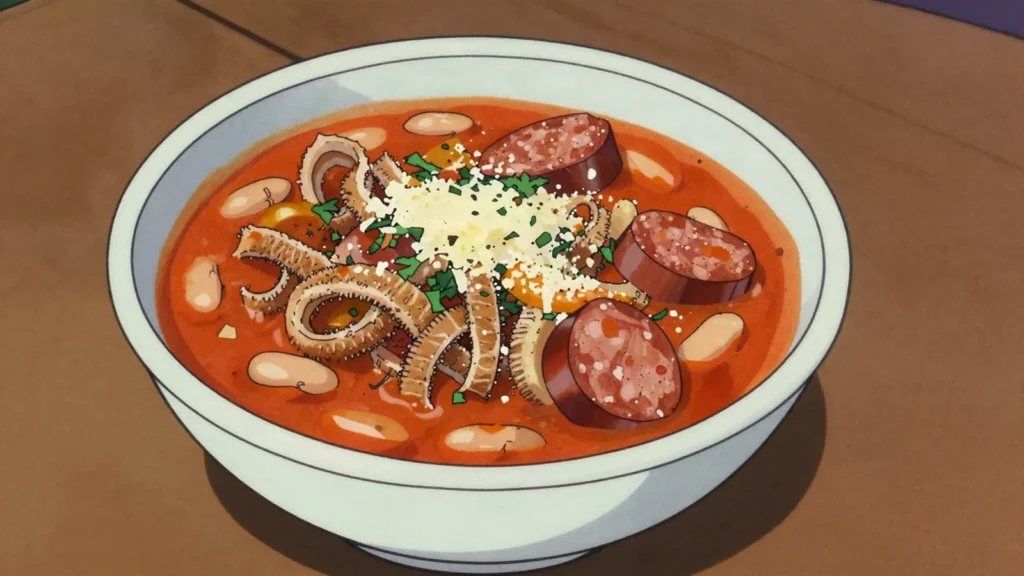

Ingredients
Tripe
- 1 kghoneycomb tripe
- 2lemons
- 3 tbspvinegar
- 2 tbspcoarse salt
Beans
- 400 gdried white beans, soaked overnight
- 1bay leaf
Base
- 2onions, chopped
- 1red pepper
- 4 clovesgarlic
- 2carrots, diced
- 1 stickcelery
- 4 tbspolive oil
Also
- 2chorizo, sliced
- 150 gpancetta or bacon
- 400 gtinned tomatoes
- 2 tbsptomato paste
- 1 tspsweet paprika
- 1 tspdried oregano
- 2bay leaves
- 1.5 litresstock
- salt and pepper
To serve
- with bread, in winter
Directions
- Rinse it repeatedly under cold running water, rubbing every fold with your fingers. Now rub it with cut lemon and vinegar and leave it for twenty minutes.
- Rinse it thoroughly afterwards, since lingering vinegar sours the stew. Bring it to a boil in fresh water and boil hard for ten to fifteen minutes. Drain it, rinse it, and wash out the pot before starting again. Do not skip this, since it decides whether the finished stew tastes clean or muddy.
- Cut the tripe into strips about a centimetre wide and five long. Cut it before the long simmer, since cooked tripe is slippery and awkward to handle. Cover the tripe with fresh water and simmer it for two to two and a half hours. Tripe needs genuinely long cooking to become tender, and undercooked it is rubbery in a way nothing later can fix.
- Soak the white beans overnight and cook them separately with a bay leaf until tender. Cook them separately rather than in the stew, since the acid in tomato genuinely slows beans softening. A bean added to a tomato stew before it is soft will stay hard indefinitely.
- Keep their cooking liquid, which adds body. Fry the onion, pepper, carrot and celery in olive oil for fifteen minutes until soft. Add the garlic, then the pancetta and chorizo, and let them render and colour. Now the paprika, and the rule about it.
- Take the pan off the heat before the paprika goes in. Paprika burns in seconds and turns bitter, and the stew is dark enough that you will not see it happening. Add the tomato paste and fry it for three or four minutes until it darkens. Add the tinned tomatoes, the cooked tripe, the stock and the herbs. Simmer for a further forty-five minutes so the flavours combine.
- Add the cooked beans for the last twenty minutes. Now the consistency it should reach. Crush a few of the beans against the side of the pot to help thicken it. Taste and season firmly with salt and pepper. Let it stand off the heat for twenty minutes before serving. Serve it in deep bowls with plenty of bread.
Technique
- It descends from Milanese busecca, brought by Italian immigrants.
- The tripe must be scrubbed with salt and acid, then parboiled.
- Cook the beans separately, since tomato acid stops them softening.
Substitutions
- Tinned white beans, added at the end.
- A pressure cooker to soften the tripe far faster.
Variations
- Made with chickpeas rather than white beans.
- With more chorizo, for a richer stew.
- Made hotter, with chilli.
History
Brought by Italian immigrants from the busecca of Lombardy; a cheap winter stew of River Plate kitchens.
Frequently asked questions
What is Buseca?
Buseca is a soup & stew from Uruguay: tripe stewed with white beans, tomato and chorizo, a winter dish. Brought by Italian immigrants from the busecca of Lombardy; a cheap winter stew of River Plate kitchens.
How long does Buseca take to make?
Buseca takes 45 min plus overnight soaking of preparation and 3 hr of cooking. The recipe makes 8 servings. It is rated medium to make.
What can I substitute in Buseca?
Yes, within limits. Tinned white beans, added at the end. A pressure cooker to soften the tripe far faster.
What is the most important thing to get right in Buseca?
Rinse it thoroughly afterwards, since lingering vinegar sours the stew. Bring it to a boil in fresh water and boil hard for ten to fifteen minutes. Drain it, rinse it, and wash out the pot before starting again. Do not skip this, since it decides whether the finished stew tastes clean or muddy.