
Ingredients
Meat
- 1 kglamb on the bone
- shoulder, in large pieces
- 3 tablespoonsoil or butter
- 2onions, sliced
- salt and black pepper
The spices
- 2cinnamon sticks
- 1 teaspoonground cinnamon
- 1/2 teaspoongrated nutmeg
- a pinch of saffron
- 1 teaspoonground ginger
- 4cloves
The fruit
- 3quinces
- peeled, cored and quartered
- or 4 pears
- 200 gprunes, stoned
- 100 graisins
- or dried apricots
To sweeten
- 4 tablespoonssugar
- or 4 tablespoons honey
- 2 tablespoonsrosewater, optional
- about 800 ml water
To finish
- 80 gblanched almonds, fried
- 2 tablespoonssesame seeds, toasted
Directions
- Warm spices go in along with them. The sweetness must not overwhelm the meat. Salt is what keeps it savoury. Season it as you would any stew. It goes soft, fragrant and pink. Use a heavy sharp knife and take care. Keep the pieces in acidulated water.
- Add them much later in the cooking. It takes time and good ingredients. Heat the oil in a large heavy pot. Add the lamb pieces in batches. Brown them well on all of their sides. Do not crowd the pot at any point. Set each batch aside as it browns. Add the sliced onions to the pot. Cook them for a good ten minutes. Let them soften and turn golden.
- Add the cinnamon sticks and cloves. Add the ground cinnamon and ginger. Add the nutmeg and the saffron. Cook them for one full minute. Crush the threads between your fingers first. Steep them in a little warm water.
- Put the browned lamb back in the pot. Add the water to just cover it. Season it with salt and black pepper. Bring it up to a gentle simmer. Cover the pot and let it cook on. Give it at least ninety full minutes. Cook it on if it still resists. Peel the quinces with a peeler. Cut them into quarters with a heavy knife.
- Cut out the hard core entirely. They do not soften at all in cooking. Cut them out quite generously. Put the pieces in water with lemon juice. Cut quince browns very fast indeed. It also stops them going grey in the pot. Add the drained quince to the pot.
- Let it cook for about thirty minutes. Quince takes a long time to soften. Add the prunes and the raisins. Let them cook for about fifteen minutes. That is not necessary in a wet stew.
- Stir the sugar or honey into the pot. Let it cook for ten more minutes. Judging the sweetness takes real tasting. Taste it and adjust the sugar. It should be clearly sweet to taste. Add sugar a spoonful at a time. Taste it between each addition. Take the lid right off the pot.
- Let it simmer on there uncovered. Give it about twenty full minutes. Stir the rosewater in off the heat. Add it in just a little at a time. Too much makes it taste soapy. Add it gradually and taste as you go. Fry the blanched almonds in a little oil. Give them about three minutes.
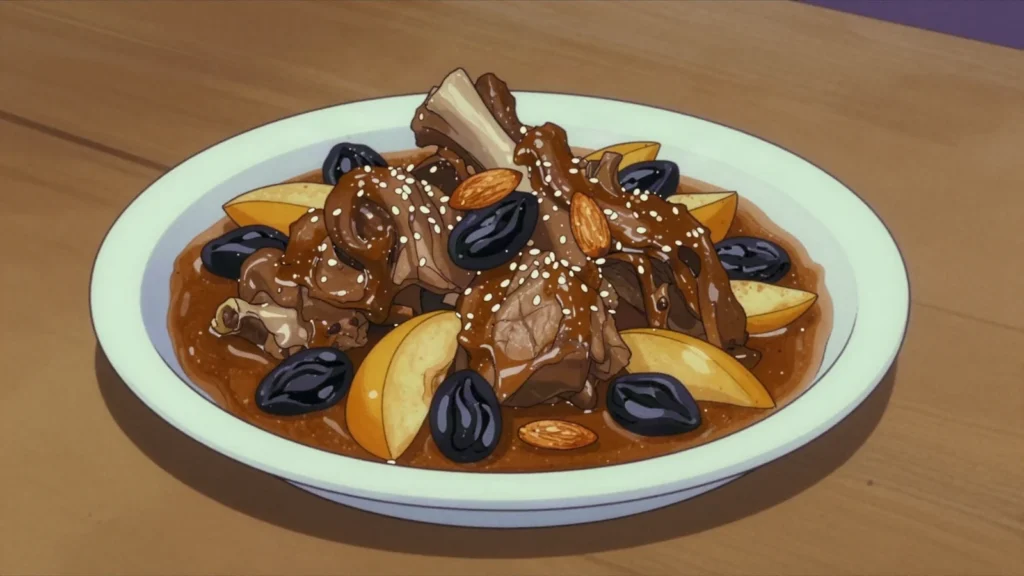
- Drain them all on kitchen paper. Warm the sesame seeds in a dry pan. Shake it constantly as they toast. Give them about two full minutes. Spoon the lamb and fruit into a dish. Pour the thick sauce over them. Scatter the fried almonds over the top. Scatter the toasted sesame over that. Serve warm bread alongside it. It keeps three days refrigerated.
Technique
- The sweetness must not overwhelm the meat: the lamb should still taste of lamb, with the fruit sitting alongside rather than over it, and salt is what keeps it savoury — under-salted it tastes like a pudding. Add the sugar a spoonful at a time near the end and taste between each addition, since it is easier to add than to remove.
- Quince is hard and astringent raw and cannot be eaten uncooked, but long cooking transforms it entirely, turning it soft, fragrant and deep pink; that colour change is a sign of proper cooking. It also browns fast once cut, so keep the pieces in acidulated water.
- Quince needs about thirty minutes and goes in well before the dried fruit; pears, which stand in where quince is unavailable, are softer and cook far faster and should be added much later.
Substitutions
- Pears stand in for quince, added much later since they cook far faster and lack its perfume.
- Honey in place of sugar gives a rounder sweetness.
Variations
- Prunes, raisins and dried apricots are all used, alone or together.
- Rosewater is stirred in off the heat in some households.
- Fried almonds and toasted sesame are scattered over to serve.
History
A festive dish of the Tunisian holiday table, part of the Maghreb tradition of sweet-savoury meat stews.
Frequently asked questions
What is Marka hlowa?
Marka hlowa is a soup & stew from Tunisia: sweet lamb stew with quince, prunes or dried fruit and cinnamon. A festive dish of the Tunisian holiday table, part of the Maghreb tradition of sweet-savoury meat stews.
How long does Marka hlowa take to make?
Marka hlowa takes 30 minutes of preparation and 2 hours of cooking. The recipe makes serves 6. It is rated medium to make.
What can I substitute in Marka hlowa?
Yes, within limits. Pears stand in for quince, added much later since they cook far faster and lack its perfume. Honey in place of sugar gives a rounder sweetness.
What is the most important thing to get right in Marka hlowa?
Warm spices go in along with them. The sweetness must not overwhelm the meat. Salt is what keeps it savoury. Season it as you would any stew. It goes soft, fragrant and pink. Use a heavy sharp knife and take care. Keep the pieces in acidulated water.