
Ingredients
The gnocchi
- 1 kgfloury potatoes
- unpeeled
- about 250 g plain flour
- 1egg
- 1 teaspoonsalt
- grated nutmeg, optional
To cook
- a large pot of water
- plenty of salt
To serve
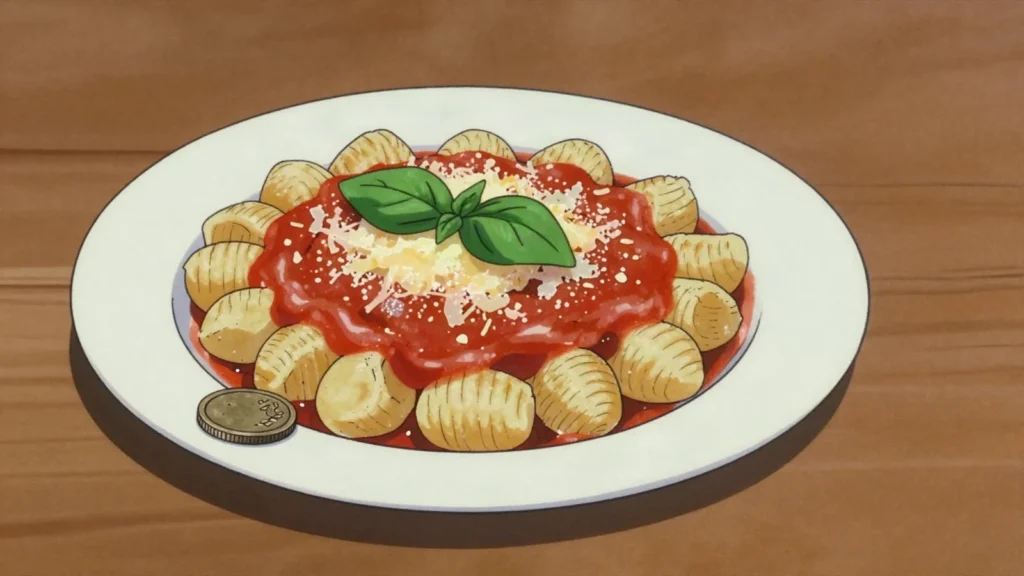
- tomato sauce
- or butter and sage
- grated hard cheese
The custom
- a banknote or coin
- placed under each plate
Directions
- Bake the potatoes whole in their skins. The flesh comes out dry and floury. Prick the potatoes with a fork. Bake them at two hundred degrees. Give them about a full hour in there.
- Steam builds up inside a whole potato. Judging them takes a careful test. Cut them open as soon as you can handle them. Scoop the flesh out with a spoon. Work while they are still hot. Hot potato is far drier than cooled. Steam escapes out as you work it. Push the hot flesh through a ricer.
- Spread the riced potato on the surface. Let it cool for a few minutes. It should be warm rather than hot. Sprinkle the salt over the potato. Add the grated nutmeg if using it. Beat the egg and pour it over. Adding the flour is done gradually.
- Scatter about half the flour over it. Bring it together with your hands. Fold and press rather than kneading. Use the lightest touch you can. Add more flour only as needed. Stop as soon as it holds together.
- Roll one gnocco out and boil it. It saves the whole batch if it fails. Add a little more flour if it disintegrates. It takes two minutes and is worth it. Divide the dough up into pieces. Roll each one into a long rope. Roll them about two centimetres thick.
- Use a light touch and plenty of flour. Do not compress the dough as you roll. Cut the ropes into short pieces. Aim for about two centimetres. Keep them all about the same size.
- Roll each piece down a fork back. They also thin the middle slightly. Press the piece lightly with your thumb. Roll it away down along the tines. Flour the fork up if it sticks. Set them out on a floured tray. Keep them separate from each other. Flour the whole tray generously. Do not stack any of them up at all.
- Bring a large pot of water to a boil. Salt the water quite generously. Use plenty of water in a big pot. Cook them all in separate batches. Boiling them takes only minutes. Drop the gnocchi into the water.
- Stir them through once very gently. One gentle stir stops them sticking. Use the back of a large spoon. Do not leave them boiling on there. Lift them out as soon as they float. Draining them is straightforward enough. Lift them out with a slotted spoon. Drain them all very briefly after. Toss them gently in the sauce.
- Fold them through rather than stirring. Use a wide pan and a light hand. Serving them is always done hot. Spoon them out onto warm plates. Grate hard cheese over the top. Put a banknote or coin under each plate. They do not keep at all once cooked.
Technique
- The custom has a practical root: the twenty-ninth falls near the end of the month when money was short before payday, and potato and flour fed a family for very little. The luck ritual of a banknote under the plate grew around that cheap dish at the leanest point, and both parts belong together. It is observed monthly rather than once a year, in both Uruguay and Argentina.
- The less flour used the lighter the gnocchi, but too little and they fall apart — finding that balance is the whole skill and it varies with every batch of potatoes. Wet potato needs far more flour, so bake them whole in their skins rather than boiling, which drives moisture out rather than in, and rice them while still hot, when they are driest.
- Never use a food processor on the potato: it breaks the starch cells, releases starch and makes glue, and the gnocchi come out rubbery beyond recovery. Work the dough as little as possible, folding and pressing rather than kneading, and stop the moment it holds together. Boil one test gnocco before shaping the batch.
Substitutions
- Boiling the potatoes whole in their skins is the alternative to baking, though baking keeps them drier and is better.
- A potato ricer gives a lighter more even result than a masher and avoids overworking.
Variations
- Ridge them down a fork or a gnocchi board, which holds sauce better and thins the middle slightly so they cook evenly.
- They sink and float back up when cooked; give them thirty seconds more and lift them out, since they absorb water and break if left.
- Uncooked gnocchi freeze well spread on a tray, though cooked ones do not keep.
History
A monthly Italian-Uruguayan custom for luck in the lean days before payday, shared with Argentina.
Frequently asked questions
What is Ñoquis del 29?
Ñoquis del 29 is a main from Uruguay: potato gnocchi eaten on the twenty-ninth with money under the plate. A monthly Italian-Uruguayan custom for luck in the lean days before payday, shared with Argentina.
How long does Ñoquis del 29 take to make?
Ñoquis del 29 takes 45 minutes of preparation and 20 minutes of cooking. The recipe makes serves 6. It is rated medium to make.
What can I substitute in Ñoquis del 29?
Yes, within limits. Boiling the potatoes whole in their skins is the alternative to baking, though baking keeps them drier and is better. A potato ricer gives a lighter more even result than a masher and avoids overworking.
What is the most important thing to get right in Ñoquis del 29?
Spread the riced potato on the surface. Let it cool for a few minutes. It should be warm rather than hot. Sprinkle the salt over the potato. Add the grated nutmeg if using it. Beat the egg and pour it over. Adding the flour is done gradually.