
Ingredients
Dough
- 500 gplain or low-protein flour
- 260 mlwarm water or milk
- 6 ginstant yeast
- 40 gsugar
- 1 tbspoil
- 1 tspbaking powder
- a pinch of salt
Pork filling
- 500 gminced pork, with 20 per cent fat
- 1onion or 4 spring onions
- 2cm ginger, grated
- 2 tbsplight soy sauce
- 1 tbspoyster sauce
- 1 tbspShaoxing wine
- 1 tspsesame oil
- 1 tspsugar
- white pepper
- 150 mlcold stock, added gradually
Equipment
- a bamboo steamer
- squares of baking paper
- a rolling pin
To serve
- hot, with black vinegar and chilli oil
Directions
- Mix the flour, yeast, sugar, baking powder and salt, then add the warm water and oil. Knead for ten to twelve minutes until the dough is completely smooth and satiny. Knead it thoroughly, since any roughness in the dough shows on the surface of the finished bun.
- Prove it, covered, for about an hour until doubled. Now the filling, and one technique makes the difference between a dry filling and a juicy one. Mix the pork with the aromatics and seasonings, then add cold stock a spoonful at a time.
- Beat it in one direction with chopsticks or your hand after each addition, letting the meat absorb the liquid before adding more. The mince will gradually take up a surprising amount of liquid and become sticky and glossy rather than wet.
- Use pork with a good fat content, since lean pork gives a dry, crumbly filling however much stock goes in. Chill the filling for thirty minutes, which firms it and makes it far easier to wrap. Roll each into a ball, then roll each ball into a round about ten centimetres across. Now the important detail about rolling.
- Roll the edges thinner than the centre, leaving a slight dome in the middle. The pleats gather all the dough from the edges into the top, so an evenly rolled circle gives a thick doughy knot and a thin base that splits.
- Hold the round in one palm and put a generous spoonful of filling in the centre. Work around the whole circle and twist the top to close it. Set each finished bun on a small square of baking paper.
- Let the shaped buns rest for twenty to thirty minutes before steaming. They should look visibly puffed and feel light, and a bun steamed without this rest comes out dense and wrinkled. Arrange them in the steamer with space between, since they expand considerably.
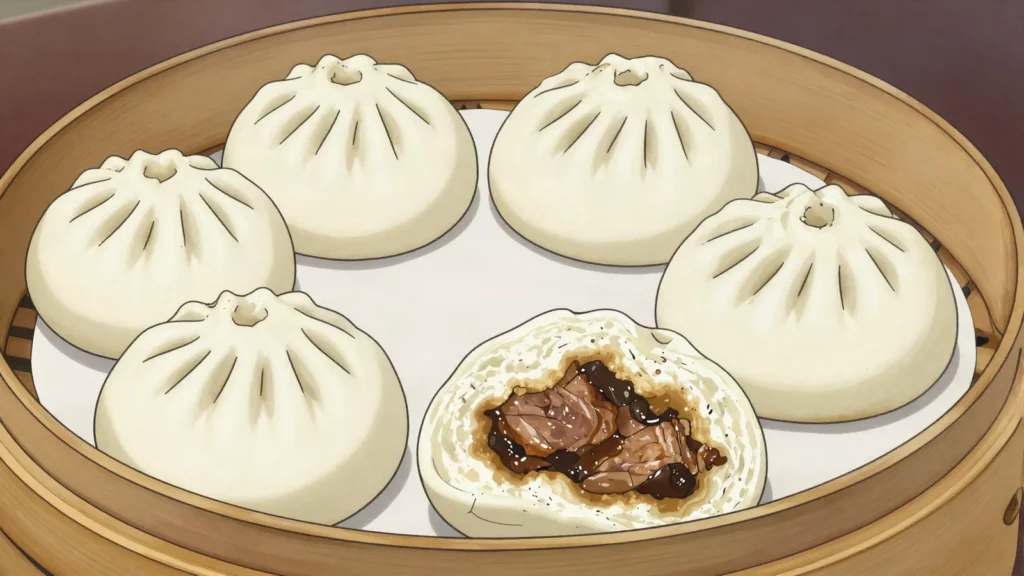
- Steam over a rolling boil for twelve to fifteen minutes depending on size. Do not open the steamer during cooking, which drops the temperature and collapses the rising buns. Serve them hot, with black vinegar and chilli oil for dipping.
Technique
- Low-protein bao flour gives a whiter, softer bun than bread flour.
- Beating cold stock into the filling is what makes it juicy.
- Resting the lid closed after steaming prevents wrinkled surfaces.
Substitutions
- Plain flour in place of low-protein bao flour.
- Vegetable or mushroom filling in place of pork.
Variations
- Char siu bao, filled with Cantonese barbecue pork.
- Sheng jian bao, pan-fried on the base.
- Filled with mushroom, cabbage and vermicelli.
History
Steamed, filled buns made from leavened wheat dough, wrapped around a savory or sweet filling, documented in Chinese cooking for many centuries, with legend popularly crediting the invention of the filled steamed bun to Zhuge Liang, a famous strategist of China’s Three Kingdoms period around the 3rd century, who is said to have created an early version as a substitute for a human sacrifice demanded by local spirits during a military campaign, a story treated by historians as folklore rather than verified fact. Regional Chinese baozi vary enormously in size, filling and dough style, from small, delicate Shanghai-style buns to larger, heartier northern Chinese versions, and the distinction between a filled baozi and a plain steamed mantou bun is considered a meaningful, defining difference within Chinese bread-making tradition.
Frequently asked questions
What is Baozi?
Baozi is a snack from China: fluffy steamed buns stuffed with seasoned pork or vegetables. Steamed, filled buns made from leavened wheat dough, wrapped around a savory or sweet filling, documented in Chinese cooking for many centuries, with legend popularly crediting the invention of the filled steamed bun to Zhuge Liang, a famous strategist of China’s Three Kingdoms period around the 3rd century, who is said to have created an early version as a substitute for a human sacrifice demanded by local spirits during a military campaign, a story treated by historians as folklore rather than verified fact. Regional Chinese baozi vary enormously in size, filling and dough style, from small, delicate Shanghai-style buns to larger, heartier northern Chinese versions, and the distinction between a filled baozi and a plain steamed mantou bun is considered a meaningful, defining difference within Chinese bread-making tradition.
How long does Baozi take to make?
Baozi takes 40 min plus 2 hr rising of preparation and 20 min of cooking. The recipe makes 16 buns. It is rated hard to make.
What can I substitute in Baozi?
Yes, within limits. Plain flour in place of low-protein bao flour. Vegetable or mushroom filling in place of pork.
What is the most important thing to get right in Baozi?
Prove it, covered, for about an hour until doubled. Now the filling, and one technique makes the difference between a dry filling and a juicy one. Mix the pork with the aromatics and seasonings, then add cold stock a spoonful at a time.