
Ingredients
Dried goods, each soaked separately
- 6dried abalone
- 4sea cucumbers
- 100 gdried scallops
- 8dried shiitake
- 50 gfish maw
- 30 gdried bamboo pith fungus
Meat
- 300 gpork belly
- 300 gchicken, in pieces
- 200 gJinhua ham
- 200 gcooked pork tendon
- 6quail eggs, boiled and peeled
Broth
- 2 litressuperior stock made from chicken, pork bone and ham
- 250 mlShaoxing wine
- 6 slicesginger
- 4spring onions
- 2 tbsplight soy sauce
- 1 tspsugar
- salt
Also
- 200 gwinter bamboo shoots
- 6chestnuts, peeled
- 1 tbspgoji berries
To seal
- 1dried lotus leaf, soaked
- a wide-mouthed clay jar
Directions
- Rehydrate every dried ingredient separately and on its own timetable: abalone and sea cucumber for 48 hours in several changes of cold water, fish maw for 12 hours, scallops and shiitake for 4 hours. Soaked together they trade flavours with one another, and distinctness is the entire justification for a dish this laborious.
- Blanch the pork belly, chicken and tendon in boiling water for 5 minutes, then drain and rinse both the meat and the pot. Scum carried into the jar clouds a broth that has to arrive clear.
- Simmer the ham with chicken and pork bones for 4 hours to make the superior stock, then strain it through muslin and skim off the fat.
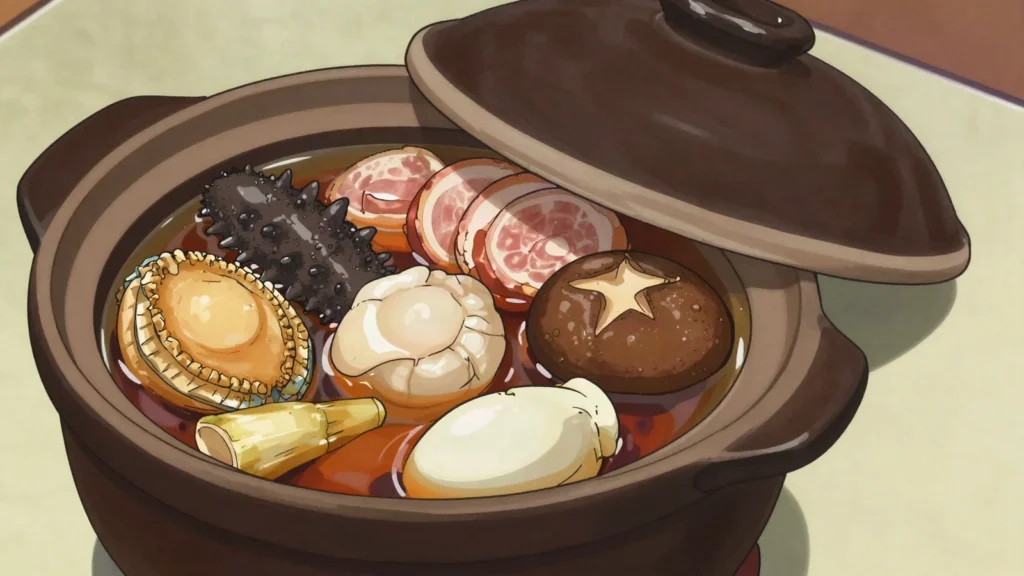
- Layer the jar in order of how long each thing needs to cook, with the toughest at the bottom: tendon, pork belly and chicken first, then ham, bamboo shoots and chestnuts, then shiitake, scallops and fish maw.
- Put the abalone, sea cucumber and quail eggs on top. The layering is the recipe, and anything delicate placed low down will have dissolved into the broth by the end.
- Pour in the stock and the Shaoxing wine until everything is just covered, and tuck the ginger and spring onion down the sides.
- Cover the mouth of the jar with the soaked lotus leaf and tie it down, then set the lid on top. The leaf is not decoration: it perfumes the steam and traps the aroma, which is the thing the name of the dish is about.
- Steam over a low, steady heat for 5 hours, checking the water in the steamer but not opening the jar. Never let the contents boil, because a hard boil breaks the sea cucumber down and clouds the broth.
- Lift the jar out and take it to the table whole, scattering the goji berries in at the last moment.
- Open the lotus leaf in front of the guests so the aroma escapes there rather than in the kitchen, and serve straight from the jar.
Technique
- Shark fin appears in many older versions of this dish and is deliberately left out here. Shark populations have collapsed under the fin trade, several of the species used are protected, and the fin contributes texture rather than flavour, which the fish maw supplies perfectly well.
- This is a two-day dish and most of that time is unattended soaking. The actual work is a few hours.
- It was created in Fuzhou around 1876, and the name comes from a diner’s poem claiming that even a Buddha would vault the monastery wall to reach the smell of it.
Substitutions
- Tinned abalone, at a small fraction of both the cost and the labour of dried.
- Prosciutto or Yunnan ham in place of Jinhua, which is close enough in a broth this complex.
- There is no substitute for dried scallops. They are the backbone of the flavour.
Variations
- Served in individual lidded pots rather than one large jar, which is how restaurants now present it.
- A vegetarian temple version built on mushrooms, bamboo pith and gluten, which given the name is an old Fujian joke.
- A shorter home version steamed for 3 hours with fewer dried goods.
History
Created in Fuzhou around 1876; a diner’s poem said even a Buddha would leap the wall for its aroma, and the name stuck.
Frequently asked questions
What is Buddha Jumps Over the Wall?
Buddha Jumps Over the Wall is a soup & stew from China: lavish Fujian pot of abalone, sea cucumber, ham and mushrooms simmered in wine. Created in Fuzhou around 1876; a diner’s poem said even a Buddha would leap the wall for its aroma, and the name stuck.
How long does Buddha Jumps Over the Wall take to make?
Buddha Jumps Over the Wall takes 2 days, mostly soaking of preparation and 9 hr of cooking. The recipe makes 8 servings. It is rated hard to make.
What can I substitute in Buddha Jumps Over the Wall?
Yes, within limits. Tinned abalone, at a small fraction of both the cost and the labour of dried. Prosciutto or Yunnan ham in place of Jinhua, which is close enough in a broth this complex. There is no substitute for dried scallops. They are the backbone of the flavour.
What is the most important thing to get right in Buddha Jumps Over the Wall?
Rehydrate every dried ingredient separately and on its own timetable: abalone and sea cucumber for 48 hours in several changes of cold water, fish maw for 12 hours, scallops and shiitake for 4 hours. Soaked together they trade flavours with one another, and distinctness is the entire justification for a dish this laborious.