
Ingredients
The cassava
- 1.5 kgcassava root
- a sweet variety
- peeled thickly and cut into batons
- see the safety notes carefully
- or 1.5 kg frozen cassava
- water and salt, to parboil
For frying
- 1 litrevegetable oil
- or enough for 6 cm depth
- or lard, traditionally
The chicharrón
- 800 gpork belly
- with the skin on
- cut into chunks
- or 400 g pork rind, fried
- 2 teaspoonssalt
- juice of 1 sour orange
- water, to start
The curtido
- half a white cabbage
- shredded very finely
- 2carrots, grated
- 1onion, sliced paper-thin
- 150 mlwhite vinegar
- 150 mlwater
- 1 tablespoonsalt
- 1 teaspoondried oregano
- a few slices of hot chilli
To serve
- salsa roja, a cooked tomato sauce
- lime wedges
- fried fish, as an alternative
- banana leaf, to serve on
Directions
- Discard the boiling water afterwards. The root is dense and it needs boiling first. Cut the root into manageable lengths. Cut both of the ends off each piece.
- Score the thick skin lengthways. Cassava skin is thick and brown. Use a sharp knife and peel thickly. Cut out the fibrous central core. Rinse the peeled flesh thoroughly. Cut it into batons for frying. Aim for pieces about the size of a thick chip. Keep them a similar size for even cooking.
- Put the batons in a large pot. Cover them with cold salted water. Bring it to a boil and then simmer. Simmer for about twenty minutes. The cassava must be cooked through. Drain it and discard the water.
- Let the boiled cassava dry completely. Spread it on a tray or a rack. Let it steam dry for at least twenty minutes. Let it cool to room temperature. Wet cassava spits violently in hot oil. Heat the oil in a deep heavy pan. Fill it no more than one third full.
- Oil bubbles up sharply when food goes in. Never leave hot oil unattended at all. Keep a well fitting lid within reach. If the oil catches fire, turn off the heat. Heat the oil to one hundred and eighty degrees. It should bubble immediately and steadily.
- Fry each batch for about five minutes. The pieces should be deep golden and crisp. Turn them once or twice as they fry. Lift them out with a slotted spoon. Drain them on a rack over kitchen paper. A rack keeps them crisper than paper alone.
- Sprinkle salt over while they are hot. Hot cassava holds salt much better. Let the oil recover between batches. The water boils away and the fat takes over. Put the pork into a large heavy pot. Add water to come halfway up the pork. Add salt and the sour orange juice. Simmer it uncovered for about an hour. The last water spatters through hot fat.
- Stand well back at that stage. Wear long sleeves if you possibly can. Use a splatter guard if you have one. Do not lean over the pot at all. Keep children out of the kitchen. Turn the pieces as they colour. Fry until deep golden and crisp. The skin should crackle and blister.
- Check no piece is pink inside. Pork must be cooked right through. Drain the pork on a wire rack. Shred the cabbage as finely as possible. Grate the carrot on a coarse grater. Slice the onion as thin as paper. Pour boiling water over the cabbage.
- Let it sit for exactly one minute. Combine everything in a large bowl. Add the vinegar, water and salt. Add the oregano and the chilli. Toss it all thoroughly together. Pack it down so the liquid covers it. Let it stand at least two hours.
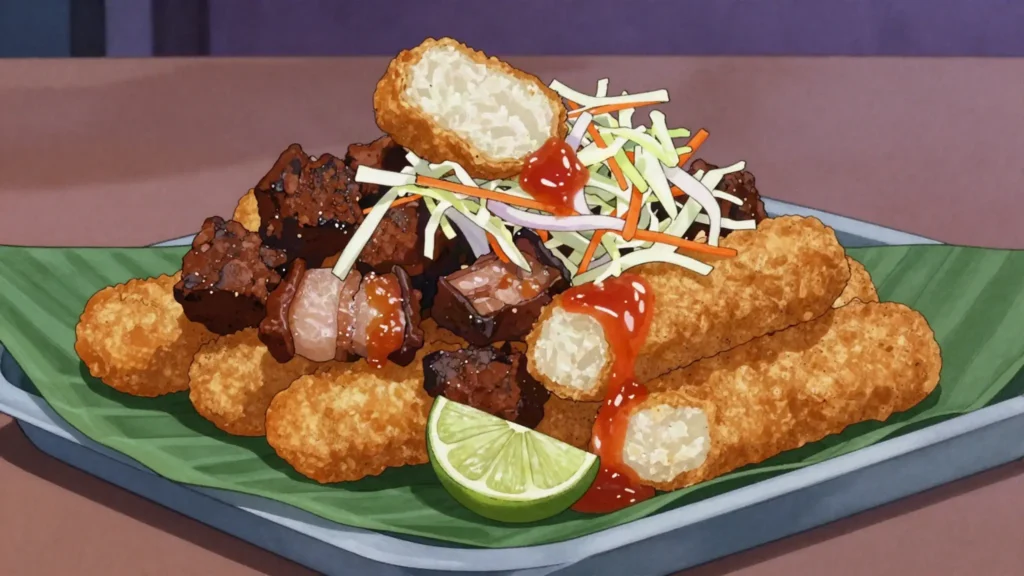
- Keep the vinegar version refrigerated. Do not reduce the vinegar quantity. Use a clean spoon every single time. Never put a used spoon back in the jar. Discard it if it smells wrong or bubbles. For a true ferment, keep it cool and covered loosely. Discard it if any mould appears. Lay a piece of banana leaf on a plate. Pile the hot fried cassava on it. Lay the crisp chicharrón over that.
- Pile the curtido generously on top. Spoon over a cooked tomato salsa. Squeeze lime over the whole plate. Serve it immediately while hot. Hot crisp cassava against cold sharp curtido. Fry it from frozen with extra time. Chicharrón keeps three days refrigerated.
Technique
- Cassava must be boiled before frying. Frying it raw burns the outside while the dense root stays hard inside — the same reason potatoes are parboiled before making chips. That two-stage cooking is the technique of the dish.
- Take the cassava out of the water slightly underdone. It cooks further in the oil, and overcooked cassava disintegrates in the fryer, making a mess and wasting the batch.
- Let the boiled cassava steam dry and cool completely before frying, and chill it if you can. Wet cassava spits violently in hot oil and fries into something soggy; cold dry cassava crisps best.
- Scrape each baton lightly with a fork before frying. Roughing up the surface creates more area to crisp — the same trick used for roast potatoes, and it makes a real difference.
- Cassava contains linamarin, which converts to hydrogen cyanide when the tissue is damaged, with documented poisonings including konzo, a permanent leg paralysis. Never eat it raw, peel it thickly with a knife, cook it right through, discard the boiling water, and discard any root that tastes bitter.
- Yuca is cassava. Yucca, with two Cs, is a completely different ornamental plant and not a food crop at all. The spelling difference genuinely matters.
- The chicharrón transition — when the last simmering water evaporates and the pork begins frying in its own fat — spits violently. Stand well back, wear long sleeves, use a splatter guard, do not lean over the pot and keep children out.
- Deep-frying rules apply: fill the pan no more than a third, never leave it unattended, keep a lid within reach, and never throw water on burning oil.
- Some curtido is genuinely fermented, left at room temperature for days to sour naturally; the vinegar version given here is a quick pickle and is far more common now. Keep the vinegar version refrigerated, use a clean spoon every time, and discard a fermented batch if mould appears.
- Honduras’s yuca con chicharrón is the close relative, with the cassava usually boiled and served soft rather than fried. Both countries do both, and the atlas records them as one shared tradition rather than competing dishes.
Substitutions
- Frozen cassava, already peeled and cut, replaces fresh and saves the peeling entirely.
- Fried fish replaces the pork for yuca con pescado, which is at least as common on the coast.
- Lard replaces oil for frying and is the more traditional fat.
- Boiled rather than fried cassava makes the Honduran version of the same plate.
- Lime with a little sweet orange replaces sour orange for the pork.
- The chilli in the curtido can be left out for a milder version.
Variations
- Yuca con chicharrón in Honduras serves the cassava boiled rather than fried.
- Yuca con pescado tops the cassava with small fried fish instead of pork.
- Pupusas, the filled corn cakes, are served with the same curtido and are El Salvador’s best known dish.
- A version served with both chicharrón and fish is sold at some stalls.
- Some stalls offer a plain fried cassava with just salt and lime as a cheaper option.
- Fermented curtido, soured over days rather than pickled in vinegar, is the older version and is still made.
History
Fried cassava with curtido and chicharron or fried fish, sold from street stalls; cassava was a staple long before the Spanish arrived.
Frequently asked questions
What is Yuca frita?
Yuca frita is a snack from El Salvador: fried cassava topped with chicharrón and pickled cabbage. Fried cassava with curtido and chicharron or fried fish, sold from street stalls; cassava was a staple long before the Spanish arrived.
How long does Yuca frita take to make?
Yuca frita takes 40 minutes plus curtido time of preparation and 1 hour 30 minutes of cooking. The recipe makes serves 6. It is rated medium to make.
What can I substitute in Yuca frita?
Yes, within limits. Frozen cassava, already peeled and cut, replaces fresh and saves the peeling entirely. Fried fish replaces the pork for yuca con pescado, which is at least as common on the coast. Lard replaces oil for frying and is the more traditional fat. Boiled rather than fried cassava makes the Honduran version of the same plate. Lime with a little sweet orange replaces sour orange for the pork. The chilli in the curtido can be left out for a milder version.
What is the most important thing to get right in Yuca frita?
Put the batons in a large pot. Cover them with cold salted water. Bring it to a boil and then simmer. Simmer for about twenty minutes. The cassava must be cooked through. Drain it and discard the water.