
Ingredients
Dough
- 500 gstrong white flour
- 250 mlwater
- 1 tspsalt
Garlic water
- 6 clovesgarlic, crushed
- 100 mlcold water
- 1 tspsalt
Dressing
- 4 tbspchilli oil with sediment
- 3 tbspChinkiang black vinegar
- 2 tbsplight soy sauce
- 1 tspsugar
- 1 tspground Sichuan pepper, optional
To serve
- 1cucumber, julienned
- 200 gbean sprouts, blanched
- the mianjin gluten, steamed and torn
- coriander
Directions
- Make a firm dough with the flour, water and salt, knead it 10 minutes, and rest it 30 minutes. Submerge the dough in a large bowl of cold water and knead and squeeze it under the surface.
- Keep working until the dough stops releasing white and what remains in your hands is a springy yellow lump. Let the starch water stand undisturbed for at least 4 hours, or overnight, until the starch settles into a dense layer at the bottom.
- Pour off the clear water on top very carefully and discard it, keeping the thick paste beneath. Poured off too early, the batter is too thin to set, and disturbing it re-suspends the starch you have been waiting for.
- Stir the settled starch into a smooth batter, about the thickness of single cream, adding a little water if needed. Steam the mianjin separately for 20 minutes, until it puffs into a spongy block, then cool and tear it into pieces.
- Oil a flat metal pan or a round cake tin and float it on a wok of boiling water. Pour in a thin ladleful of batter and swirl it to coat the base in an even layer. Keep the layer thin and even. Thick patches stay gummy and thin ones tear when you lift them. Cover and steam for 2 to 3 minutes, until the sheet bubbles up and turns translucent.
- Lift the pan out, plunge the base into cold water to cool it, then brush the sheet with oil and peel it off. Cool the pan before peeling, or the hot sheet stretches and tears as it comes away. Stack the sheets brushed with oil between each, then roll and cut them into wide ribbons.
- Crush the garlic into cold water with salt and let it stand. It spreads the flavour evenly through a cold dish without the harshness of raw cloves in pieces. Toss the noodles with the garlic water, chilli oil, vinegar, soy and sugar.
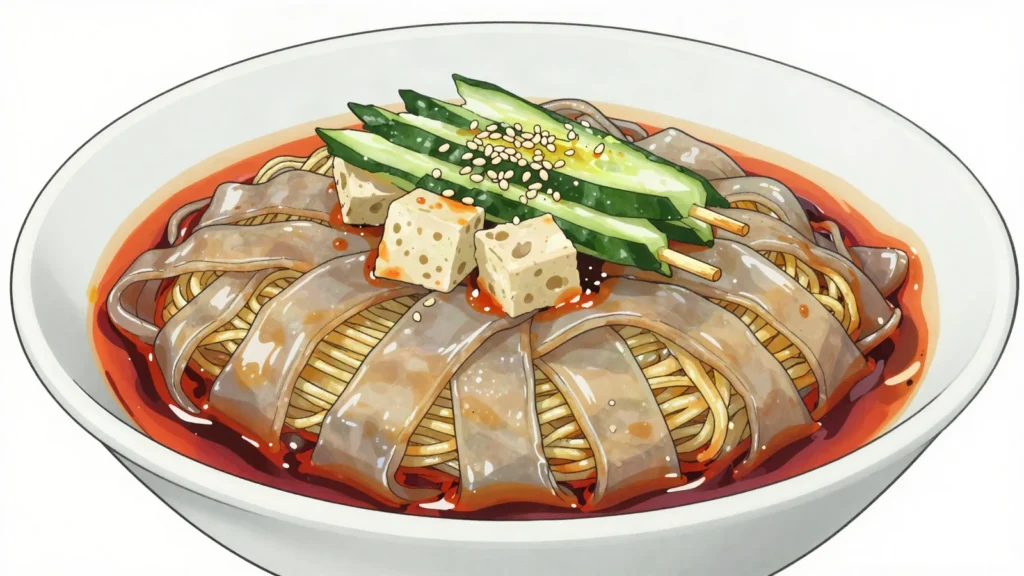
- Top with cucumber, bean sprouts, torn mianjin and coriander, and serve cold. It is Shaanxi street food, from Xi’an and the surrounding province, eaten cold in summer from a stall.
Technique
- The whole starch-washing process is a full day’s undertaking and shop-bought liangpi sheets are widely sold.
- The gluten, mianjin, is a required part of the bowl rather than a by-product.
- There are rice-flour versions and versions made from potato starch, and Shaanxi has several regional variants.
Substitutions
- Ready-made liangpi or wide rice noodles, which is a real shortcut and a real compromise.
- Wheat starch bought as a powder, mixed to a batter, skipping the washing.
Variations
- Mianpi, the version made without washing.
- Rou jia mo alongside, which is the standard Xi’an pairing.
- With sesame paste in the dressing, as in some Shaanxi towns.
History
Cold, chewy wheat or rice starch noodles, tossed in a tangy, spicy sauce built on vinegar, chili oil and garlic, developed in China’s Shaanxi province, closely associated, like roujiamo, with that region’s distinct regional cooking tradition. Its production, extracting starch from wheat or rice flour dough by washing it repeatedly in water before steaming the resulting starch liquid into sheets, is a labor-intensive traditional technique, and different Shaanxi towns and regions maintain their own particular liangpi variations differing in exact noodle texture and sauce composition. It became an especially popular cold noodle dish across China more broadly, particularly favored during hot summer months for its cooling, refreshing character compared to hot noodle soups more commonly eaten in colder weather.
Frequently asked questions
What is Liangpi?
Liangpi is a street food from China: cold wheat-starch noodles dressed with chilli oil, vinegar and garlic water. Cold, chewy wheat or rice starch noodles, tossed in a tangy, spicy sauce built on vinegar, chili oil and garlic, developed in China’s Shaanxi province, closely associated, like roujiamo, with that region’s distinct regional cooking tradition. Its production, extracting starch from wheat or rice flour dough by washing it repeatedly in water before steaming the resulting starch liquid into sheets, is a labor-intensive traditional technique, and different Shaanxi towns and regions maintain their own particular liangpi variations differing in exact noodle texture and sauce composition. It became an especially popular cold noodle dish across China more broadly, particularly favored during hot summer months for its cooling, refreshing character compared to hot noodle soups more commonly eaten in colder weather.
How long does Liangpi take to make?
Liangpi takes 1 hr plus 4 hr resting of preparation and 30 min of cooking. The recipe makes 4 servings. It is rated hard to make.
What can I substitute in Liangpi?
Yes, within limits. Ready-made liangpi or wide rice noodles, which is a real shortcut and a real compromise. Wheat starch bought as a powder, mixed to a batter, skipping the washing.
What is the most important thing to get right in Liangpi?
The whole starch-washing process is a full day’s undertaking and shop-bought liangpi sheets are widely sold.