
Ingredients
Aubergines
- 3large aubergines, about 1 kg
To dress
- 4 tbsptahini, well stirred
- juice of 2 lemons
- 3 clovesgarlic, crushed to a paste
- 1 tspsalt
- 3 tbspolive oil
To finish
- olive oil
- pomegranate seeds
- chopped parsley
- a dusting of sumac or paprika
Optional
- 1 tbspyoghurt, for a milder version
- ½ tspground cumin
To serve
- with warm flatbread, as part of a mezze
Directions
- Set them straight on the flame and turn them every few minutes until the skin is black and papery all over. The whole surface should be blackened, including the ends, and the aubergine should collapse and feel completely soft when pressed.
- Prick each aubergine once or twice before charring so steam can escape. Let the charred aubergines cool slightly, then split them and scoop out the flesh. Put the flesh in a colander and let it drain for at least 30 minutes. Aubergine holds a great deal of water, and undrained flesh gives a watery, loose baba ghanoush that separates in the bowl within an hour.
- Press it gently with the back of a spoon to help it along. Now pick out any large pieces of blackened skin, but do not rinse the flesh. Mash the flesh with a fork or chop it with a knife rather than blending it. A food processor turns it into a smooth pale emulsion, which is a different and blander thing entirely.
- Stir the tahini thoroughly in its jar, right down to the bottom, before measuring it. Tahini separates in the jar and the oil rises, so an unstirred spoonful is either pure oil or a dry paste.
- Add the lemon juice gradually and taste as you go, since aubergines vary and so do lemons. It should taste sharp and garlicky, with the smoke behind everything and the tahini giving body rather than dominating. Crush the garlic to a paste with a little salt rather than chopping it, so it disperses evenly. Now let it stand for at least 30 minutes before serving.
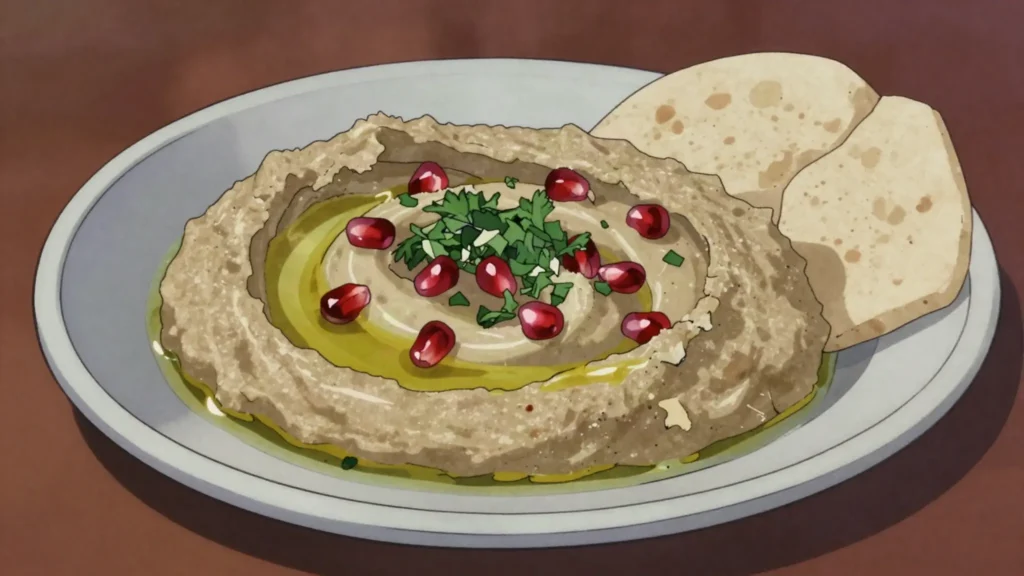
- Taste it again before serving, since the garlic will have strengthened. Serve it in a shallow bowl, spread with the back of a spoon into a swirl. Pour good olive oil generously into the hollow and scatter parsley, sumac and pomegranate seeds over.
- Serve it at room temperature rather than fridge-cold, which mutes the flavour considerably. It keeps three days refrigerated, and it is best taken out well before serving.
Technique
- In the Levant the tahini version is often called mutabbal rather than baba ghanoush.
- Charring over a live flame is what gives the smokiness, and oven roasting does not.
- Draining the flesh is what stops it going watery.
Substitutions
- A grill or a very hot oven if you have no live flame, accepting less smoke.
- Yoghurt in place of some of the tahini, for a milder version.
Variations
- Mutabbal, the tahini version, as distinguished in the Levant.
- Without tahini, dressed with oil, lemon and pomegranate.
- With chopped tomato and onion stirred through.
History
A dip made from roasted aubergine, mashed and combined with tahini, garlic, lemon and olive oil, documented across Lebanon and the wider Levant region for many generations as a significant part of the mezze tradition, the shared assortment of small dishes central to Levantine dining. Its smoky flavour, achieved by roasting or charring the aubergine directly over an open flame before mashing, distinguishes baba ghanoush clearly from other aubergine preparations, and the technique reflects a broader Levantine culinary practice of using direct fire to add depth of flavour to vegetables before further preparation. Baba ghanoush remains one of the most internationally recognized dishes of Lebanese cuisine, commonly served alongside pita bread as part of a mezze spread.
Frequently asked questions
What is Baba ghanoush?
Baba ghanoush is a salad & side from Lebanon: smoky charred aubergine mashed with tahini and lemon. A dip made from roasted aubergine, mashed and combined with tahini, garlic, lemon and olive oil, documented across Lebanon and the wider Levant region for many generations as a significant part of the mezze tradition, the shared assortment of small dishes central to Levantine dining. Its smoky flavour, achieved by roasting or charring the aubergine directly over an open flame before mashing, distinguishes baba ghanoush clearly from other aubergine preparations, and the technique reflects a broader Levantine culinary practice of using direct fire to add depth of flavour to vegetables before further preparation. Baba ghanoush remains one of the most internationally recognized dishes of Lebanese cuisine, commonly served alongside pita bread as part of a mezze spread.
How long does Baba ghanoush take to make?
Baba ghanoush takes 20 min of preparation and 40 min of cooking. The recipe makes 6 servings. It is rated easy to make.
What can I substitute in Baba ghanoush?
Yes, within limits. A grill or a very hot oven if you have no live flame, accepting less smoke. Yoghurt in place of some of the tahini, for a milder version.
What is the most important thing to get right in Baba ghanoush?
Set them straight on the flame and turn them every few minutes until the skin is black and papery all over. The whole surface should be blackened, including the ends, and the aubergine should collapse and feel completely soft when pressed.