The dried and coarsely ground crimson berries of a Middle Eastern shrub — sour, fruity, faintly astringent — the souring agent of the Levant, Turkey and Iran before the lemon arrived and still the one that goes on a fattoush or a kebab.
Where it comes from
Sumac grows wild across the Mediterranean and Middle East, and the Romans used its berries for sourness before lemons reached them. In the Levant, Turkey, Iran and Iraq it never went out of use: the berries are dried, rubbed from their seeds and ground coarsely, often with a little salt, into a dark red, slightly moist powder that is used as much as a table condiment as a cooking spice. It is one of the three parts of za’atar, with thyme and sesame.
Its sourness comes from malic acid — the acid of apples — which is gentler and fruitier than the citric acid of a lemon and does not add liquid, so it can be sprinkled over a salad or a grilled meat without wetting it. That dry sourness is why it works on a fattoush, over hummus, on kebabs and onions, and in the Persian rice dishes where a lemon would make the rice soggy.
Varieties
- Levantine sumac — Deep red, coarse, slightly moist and salted. The Lebanese, Syrian and Palestinian table spice.
- Turkish sumac (sumak) — Similar, often slightly finer; on lahmacun, kebabs and the onion salad served with them.
- Persian sumac (somāq) — On chelo kebab and in rice; a table shaker of it sits beside the salt in Iran.
- Whole dried sumac berries — Steeped in water for a sour infusion, or ground fresh. Less commonly sold.
In the kitchen
It is a finishing spice. Sprinkle it over hummus, labneh, salads, grilled meat and fish, eggs and rice at the table or just before serving; its brightness fades if cooked long. Rubbed into onions with a little salt it makes the sharp onion salad served with kebabs across Turkey and the Levant.
In za’atar it is one of three equal parts. In a marinade it works with olive oil, garlic and thyme for chicken. A tablespoon over a fattoush replaces much of the lemon.
Choosing and keeping
Good sumac is deep crimson to purple, slightly damp and clumping from its own oil and salt, and tastes clearly sour. Brown, dry, dusty sumac is old or adulterated — it is sometimes bulked with salt or coloured. Buy from a Middle Eastern grocer and keep it sealed in the fridge, where it lasts a year.
The plant’s poisonous relatives — poison sumac, poison ivy — are not the source of the spice and look nothing like it dried. Culinary sumac is safe and has been eaten for millennia.
Dishes with sumac
 ZarbBedouin lamb and vegetables slow-roasted in underground sand oven
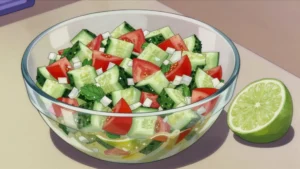 Salad Shirazidiced cucumber, tomato and onion in lime-mint dressing
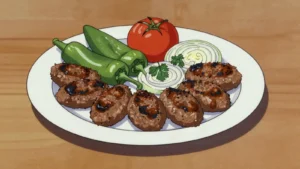 Koftegrilled minced-meat patties with onion and spices; countless regional styles
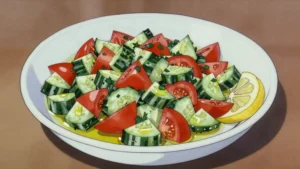 Israeli saladfinely diced cucumber-tomato salad with lemon and olive oil
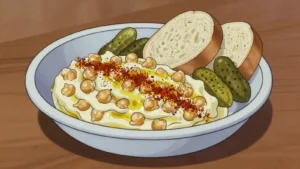 Musabbahawarm whole chickpeas under loose tahini, lemon and cumin
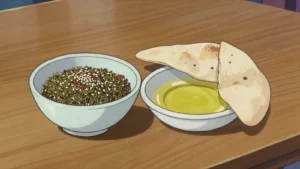 Za’atarwild thyme, sumac and sesame blend eaten with oil and bread
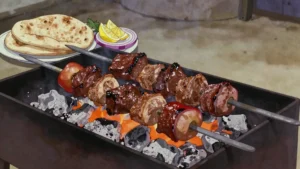 Souvlalarge chunks of pork or lamb turned slowly over charcoal
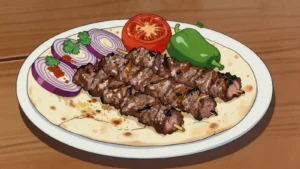 Adana kebabspicy hand-minced lamb skewer grilled over charcoal, served with sumac onions
Sumac is tagged on 50 dishes from 19 countries in the atlas. These notes are written from general knowledge and carry no per-fact citation — see About.