
Ingredients
Meat
- 1.5 kglamb shoulder, cut in 2 cm cubes
- 1 kglamb tail fat or lamb fat, chopped
- 3 tbspcoarse salt
- 1 tspground black pepper
- ½ tspground cinnamon, optional
Equipment
- a heavy pan
- a sterilised clay or glass jar with a lid
To serve
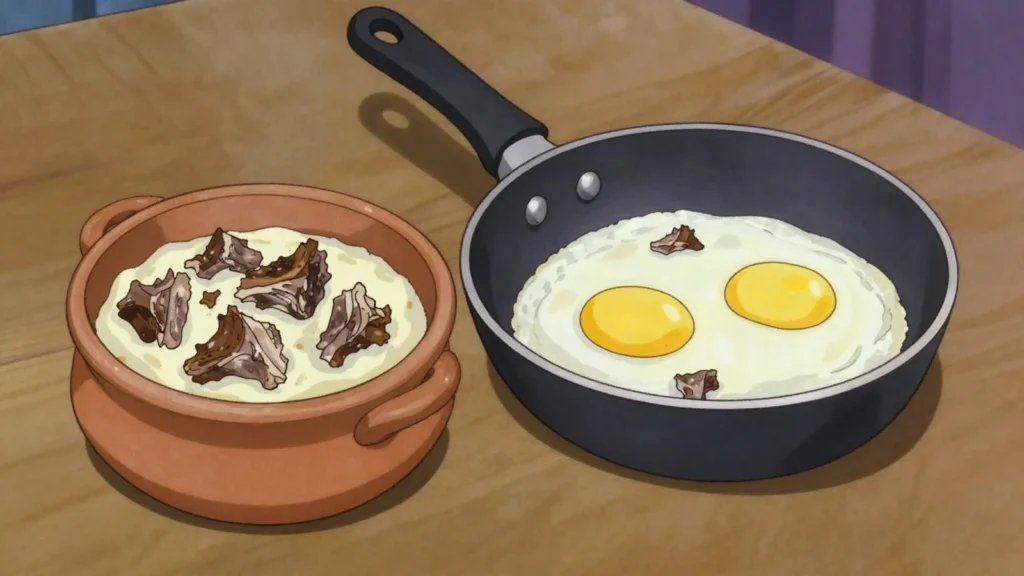
- fried eggs
- kibbeh nayyeh, hummus
- flatbread
Directions
- Toss the lamb cubes with the salt and leave them in the fridge for a few hours. Salting first draws out surface moisture, which is what lets the meat fry rather than steam.
- Render the fat slowly in a heavy pan over low heat for about 40 minutes, until it has melted to clear liquid and the solid pieces have shrunk to golden cracklings. Lift the cracklings out and keep them.
- Pat the salted lamb dry and add it to the hot fat. Cook over medium-low heat for an hour to an hour and a half, stirring occasionally.
- It is done when the meat is deeply browned, completely dry, and the fat has stopped bubbling and spitting. That silence is the signal: bubbling means water is still leaving the meat, and any water left behind is where a jar spoils.
- Stir in the pepper and cinnamon and cook two minutes more.
- Pack the hot meat into a sterilised jar and pour the hot fat over until the meat is completely submerged with a 2 cm layer of fat on top. Tap the jar to release trapped air.
- Cool completely, then seal and refrigerate. Traditionally awarma sat in a cool larder all winter, but a modern kitchen is warmer than a Lebanese mountain store — keep it in the fridge and use it within two months.
- Lift out spoonfuls with a clean dry spoon and fry into eggs, stir into hummus, or spoon over kibbeh.
Technique
- Cook until the bubbling stops. That is the doneness test, not a colour or a clock.
- Keep the meat submerged under fat and always use a dry spoon. Introducing water or crumbs is how a good jar goes bad.
- Refrigerate. Meat under fat at ambient temperature is a low-oxygen store, and a modern kitchen does not give the cold a mountain larder did.
Substitutions
- Beef in place of lamb, which is done in some households.
- Ordinary lamb fat or clarified butter if tail fat is unavailable, though the flavour is different.
Variations
- The cracklings lifted out during rendering are salted and eaten as they are.
- Fried with eggs for breakfast is the classic use; it also goes into fatteh and stuffed vegetables.
History
Part of the mouneh pantry: autumn meat is cooked down and sealed under fat in clay jars for winter.
Frequently asked questions
What is Awarma?
Awarma is a charcuterie & cured from Lebanon: lamb confited in its own tail fat, spooned into eggs and kibbeh. Part of the mouneh pantry: autumn meat is cooked down and sealed under fat in clay jars for winter.
How long does Awarma take to make?
Awarma takes 30 min of preparation and 2 hours of cooking. The recipe makes makes about 1.2 kg. It is rated easy to make.
What can I substitute in Awarma?
Yes, within limits. Beef in place of lamb, which is done in some households. Ordinary lamb fat or clarified butter if tail fat is unavailable, though the flavour is different.
What is the most important thing to get right in Awarma?
Toss the lamb cubes with the salt and leave them in the fridge for a few hours. Salting first draws out surface moisture, which is what lets the meat fry rather than steam.