
Ingredients
Salad
- 400 gflat-leaf parsley, about 4 large bunches, very finely chopped
- 40 gmint leaves, finely shredded
- 60 gfine bulgur (burghul no. 1)
- 400 gripe tomatoes, deseeded and cut into 5 mm dice
- 6spring onions, or 1 small white onion, finely chopped
Dressing
- 80 mllemon juice, freshly squeezed
- 100 mlextra virgin olive oil, Lebanese if possible
- 1.5 tspfine salt
- ¼ tspground cinnamon or allspice, optional
- ¼ tspblack pepper
To serve
- Romaine lettuce hearts, or small white cabbage leaves, for scooping
Directions
- Wash the parsley in a sink of cold water, then dry it completely, in a salad spinner and then on a cloth. Wet parsley waters the salad down and no dressing will cling.
- Strip the leaves and the finest stems from the bulk of the stalks. Gather them into a tight bundle and slice with a very sharp knife in one direction only, taking your time to reach a fine shred without crushing.
- Do the same with the mint, cutting it last so it does not blacken.
- Dice the tomatoes, discarding the seeds and jelly, and set the dice in a sieve over a bowl to catch the juice.
- Put the dry bulgur in a small bowl and pour over the collected tomato juice and half the lemon juice. Leave 15 minutes. Lebanese tabbouleh soaks the bulgur in tomato and lemon, never in water, and uses it as a seasoning rather than a base.
- Combine the parsley, mint, spring onion and the soaked bulgur in a wide bowl. Do not add the tomato yet.
- Just before serving, add the tomato, the remaining lemon juice, the olive oil, salt, pepper and cinnamon, and toss lightly with your fingertips from the bottom up, no more than ten turns.
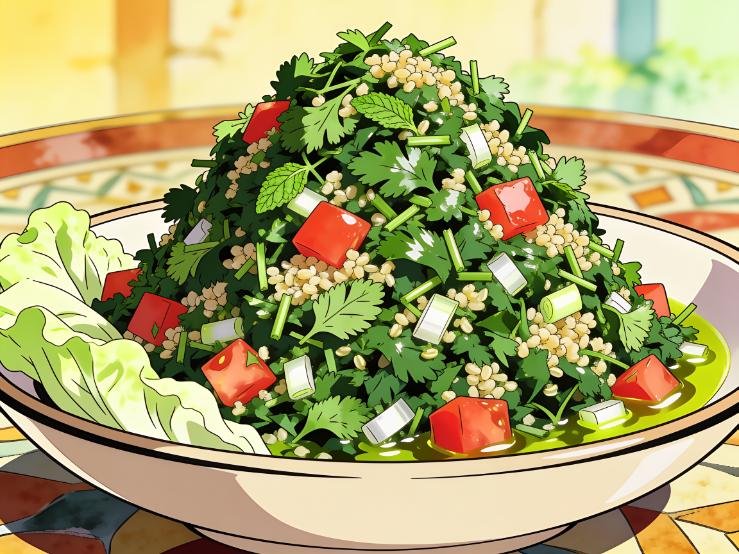
- Taste for salt and acid: it should taste sharp and green, with the olive oil rounding rather than dominating. Serve immediately, piled high, with lettuce leaves to scoop it.
Technique
- Parsley is the dish. A Lebanese tabbouleh is at least three parts herb to one part everything else; a bulgur-heavy salad with a little parsley is the diaspora version, not the original.
- Never chop parsley in a food processor. The blades bruise the leaves, release chlorophyll and turn the salad to dark green sludge within minutes.
- Salt and lemon go in at the last moment. Dressed early, the tomatoes and parsley weep and the bottom of the bowl fills with pink liquid.
- Fine burghul no. 1 needs no cooking at all, only the acid soak. Coarse bulgur stays hard and gritty.
Substitutions
- No fine bulgur: use the same weight of fine couscous soaked in the tomato juice for 10 minutes, or leave it out entirely as some Beirut restaurants now do.
- Out of season, use 300 g cherry tomatoes, which stay sweet and firm when the large winter tomatoes are watery.
Variations
- Tabbouleh with a pinch of cinnamon and allspice, the older mountain style.
- A Syrian version with a higher proportion of bulgur and a little tomato paste.
- Kisir, the Turkish cousin, built on bulgur with pepper paste and pomegranate molasses.
History
A parsley salad whose exact age is not documented, but which food historians place among the older dishes of the mountain villages of Lebanon and Syria, likely predating the country of Lebanon itself by centuries given how deeply it is embedded in home cooking across the wider Levant. The name comes from the Arabic tabil, meaning seasoning or spice, and the dish’s defining ratio — finely chopped parsley as the main body of the salad, with bulgur wheat, tomato, mint, lemon and olive oil in supporting amounts rather than the reverse — sets it apart from many Western adaptations that reverse those proportions, using parsley as a garnish over a bulgur-heavy base rather than the other way around.
Frequently asked questions
What is Tabbouleh?
Tabbouleh is a salad & side from Lebanon: parsley-dominant salad with bulgur, mint, tomato and lemon. A parsley salad whose exact age is not documented, but which food historians place among the older dishes of the mountain villages of Lebanon and Syria, likely predating the country of Lebanon itself by centuries given how deeply it is embedded in home cooking across the wider Levant. The name comes from the Arabic tabil, meaning seasoning or spice, and the dish’s defining ratio — finely chopped parsley as the main body of the salad, with bulgur wheat, tomato, mint, lemon and olive oil in supporting amounts rather than the reverse — sets it apart from many Western adaptations that reverse those proportions, using parsley as a garnish over a bulgur-heavy base rather than the other way around.
How long does Tabbouleh take to make?
Tabbouleh takes 35 min of preparation and 15 min standing of cooking. The recipe makes 4–6 servings. It is rated easy to make.
What can I substitute in Tabbouleh?
Yes, within limits. No fine bulgur: use the same weight of fine couscous soaked in the tomato juice for 10 minutes, or leave it out entirely as some Beirut restaurants now do. Out of season, use 300 g cherry tomatoes, which stay sweet and firm when the large winter tomatoes are watery.
What is the most important thing to get right in Tabbouleh?
Put the dry bulgur in a small bowl and pour over the collected tomato juice and half the lemon juice. Leave 15 minutes. Lebanese tabbouleh soaks the bulgur in tomato and lemon, never in water, and uses it as a seasoning rather than a base.