
Ingredients
Rice and peas
- 600 glong grain rice
- 400 gpigeon peas, guandu, fresh or tinned
- or 250 g dried pigeon peas, soaked and boiled
Coconut
- 400 mlthick coconut milk
- 600 mlthin coconut milk or water
Sofrito
- 1onion, chopped
- 1red pepper, chopped
- 4garlic cloves, chopped
- 2tomatoes, chopped
- 3 tablespoonsoil
- 1 tablespoontomato paste
- a handful of culantro or coriander
To season
- 2 teaspoonssalt
- 1 teaspoondried oregano
- 1 teaspoonground cumin
- black pepper
- 1chilli, whole, optional
Directions
- Keep some of the cooking liquid either way. Grate a mature coconut and squeeze it hard. The first squeezing gives thick milk. Add warm water and squeeze again for thin milk. Let a tin settle and spoon off the thick top.
- Heat the oil in a large heavy pot. Add the onion and the red pepper. Cook them slowly for eight minutes. Add the garlic and cook for a minute. Stir in all of the tomato paste. Fry it for two minutes to cook out the raw taste. Add the chopped tomatoes to it. Cook them down for five minutes.
- Add the oregano, cumin and pepper. Chop it and add it to the pot. Stir the rice into the sofrito. Coat every grain in the oil and seasoning. Cook it for about two minutes. That toasting keeps the grains separate. Add all the drained pigeon peas.
- Stir them through the pot gently. Adding the liquid needs measuring. Pour in the thin coconut milk. Add the salt and the whole chilli. The liquid should cover the rice by about a centimetre.
- Add water if there is not enough. Bring it to a boil over a high heat. Taste the cooking liquid right now. It should be very clearly salty.
- Let it boil uncovered until the liquid drops. The surface should show holes in the rice. Turn the heat right down to the lowest setting. Cover the pot with a tight lid.
- Let it steam for twenty-five minutes. Do not lift the lid during that time. Take the pot right off the heat. Leave it covered for ten more minutes. The grains finish absorbing and firm up. Pile it onto a large serving platter. It keeps three days refrigerated.
Technique
- Rice and pigeon peas cooked in coconut milk appear across the Caribbean and Central America under many names.
- The Panamanian version is particularly associated with Christmas, when the fresh peas are in season.
Substitutions
- Tinned pigeon peas are the easiest option and are widely sold.
- Ordinary coriander replaces culantro, though it is milder.
Variations
- Arroz con guandu y coco is the full name used in some places.
- A version with salted pork or chicken cooked in is common.
- Black-eyed beans or red beans are used in related dishes.
History
Rice cooked with pigeon peas and coconut milk; the pea came from Africa and the dish is central to Panamanian Christmas.
Frequently asked questions
What is Arroz con guandú?
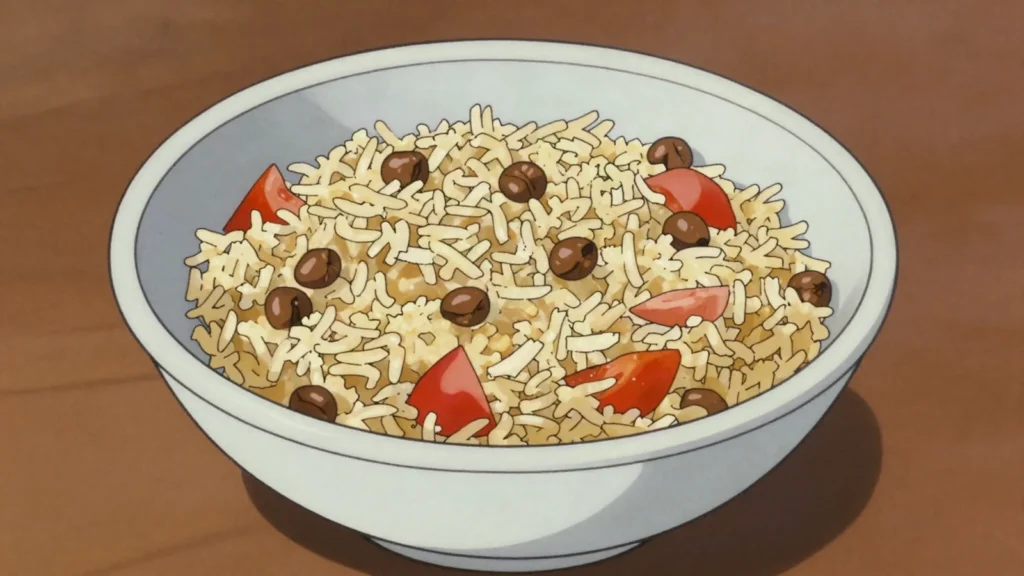
Arroz con guandú is a salad & side from Panama: coconut rice with pigeon peas, a holiday staple. Rice cooked with pigeon peas and coconut milk; the pea came from Africa and the dish is central to Panamanian Christmas.
How long does Arroz con guandú take to make?
Arroz con guandú takes 20 minutes of preparation and 45 minutes of cooking. The recipe makes serves 8. It is rated easy to make.
What can I substitute in Arroz con guandú?
Yes, within limits. Tinned pigeon peas are the easiest option and are widely sold. Ordinary coriander replaces culantro, though it is milder.
What is the most important thing to get right in Arroz con guandú?
Stir them through the pot gently. Adding the liquid needs measuring. Pour in the thin coconut milk. Add the salt and the whole chilli. The liquid should cover the rice by about a centimetre.