
Ingredients
Grains and pulses
- 200 gwhole wheat berries, or pearled wheat
- 100 gdried chickpeas
- 100 gdried white beans
- water, for soaking
To cook
- 3 litreswater
- 300 gsugar, or to taste
- a pinch of salt
Dried fruit
- 100 gdried apricots, chopped
- 100 gdried figs, chopped
- 80 graisins
- 80 gcurrants
- the zest of 1 orange
To finish
- 2 tablespoonsrosewater
- 80 gwalnuts, chopped
- 60 ghazelnuts
- pomegranate seeds
- ground cinnamon
- dried currants, for the top
Directions
- Put the wheat berries in one bowl and cover them deeply with water. Put the chickpeas and beans in another bowl and do the same. Leave both to soak overnight, or for a full day. Drain and rinse everything thoroughly the next day.
- Put the drained wheat in a large pot with plenty of water. Bring it to the boil and then lower it to a simmer. Let it cook for about ninety minutes. Whole wheat berries take a long time to soften.
- Top up with hot water whenever the level drops. Cooking the pulses is done separately. Boil the chickpeas and beans in their own pot. Bring them to a hard boil for ten minutes first. Then simmer them until they are completely tender. Drain them and set them aside. Add the cooked chickpeas and beans to the wheat pot.
- Add enough hot water to make it soupy again. Bring it back to a gentle simmer. Add the chopped apricots and figs. Let them cook for about twenty minutes and soften. Add the raisins, currants and orange zest. Simmer for another ten minutes. Sweetening it is done near the end of cooking. Stir in the sugar and the pinch of salt. Stir until every grain of sugar has dissolved.
- Taste it and adjust the sweetness to your liking. Judging the consistency takes some attention. Add hot water if it has already gone too thick. Stir it often at this stage, since it catches easily. Finishing it is done off the heat.
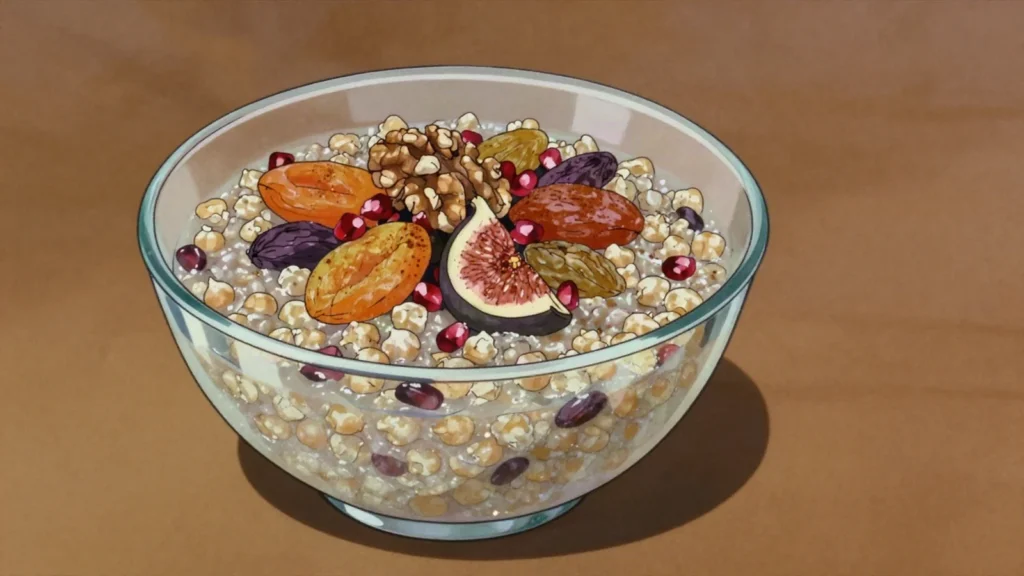
- Take the pot off the heat completely. Stir in all of the rosewater now. Ladle it into individual bowls while it is still warm. Let the bowls cool completely and then chill them. Scatter chopped walnuts and hazelnuts in patterns.
- Add pomegranate seeds for colour. Dust ground cinnamon over the top. Scatter a few dried currants across it. Households take real care over this decoration.
Technique
- Ashura is the tenth day of Muharram in the Islamic calendar and holds different significance for Sunni and Shia Muslims.
- The pudding is cooked in Turkey, the Balkans and parts of the Middle East, and the tradition of distributing it to neighbours is central to it.
Substitutions
- Pearled wheat or barley cooks much faster than whole wheat berries.
- Tinned chickpeas and beans can be used, which saves the soaking and boiling entirely.
Variations
- Recipes vary enormously and some versions contain a dozen or more ingredients.
- Some households add rice or maize to the grain mixture.
- A version thickened with a little starch is made where the wheat does not release enough.
History
Also called Noah’s pudding; cooked during the month of Muharram and carried to neighbours in bowls.
Frequently asked questions
What is Asure?
Asure is a dessert from Turkey: pudding of grains, pulses, dried fruit and nuts, shared with neighbours. Also called Noah’s pudding; cooked during the month of Muharram and carried to neighbours in bowls.
How long does Asure take to make?
Asure takes 30 minutes plus overnight soaking of preparation and 2 hours of cooking. The recipe makes serves 12. It is rated medium to make.
What can I substitute in Asure?
Yes, within limits. Pearled wheat or barley cooks much faster than whole wheat berries. Tinned chickpeas and beans can be used, which saves the soaking and boiling entirely.